How HP is embracing the AI era

Add Axios as your preferred source to
see more of our stories on Google.
HP headquarters. Photo: Ina Fried
HP may not have the brand draw of Apple or the buzz of OpenAI, but the venerable tech company thinks the ubiquity of its computers, printers and other tech gear in the workplace gives it a unique place in the AI world.
Driving the news: HP plans to release its latest line of AI computers late Monday at CES.
The big picture: HP sees three main opportunities from AI, PC unit head Alex Cho told Axios during a recent interview at the company's headquarters
- "We have the opportunity to spend more time with an employee than anyone else," he said, referencing the company's presence in PCs, printers and teleconferencing gear.
- In PCs, Cho sees a future in which more AI software runs natively on PCs, putting a premium on the performance and security his company can deliver with features such as higher-speed memory.
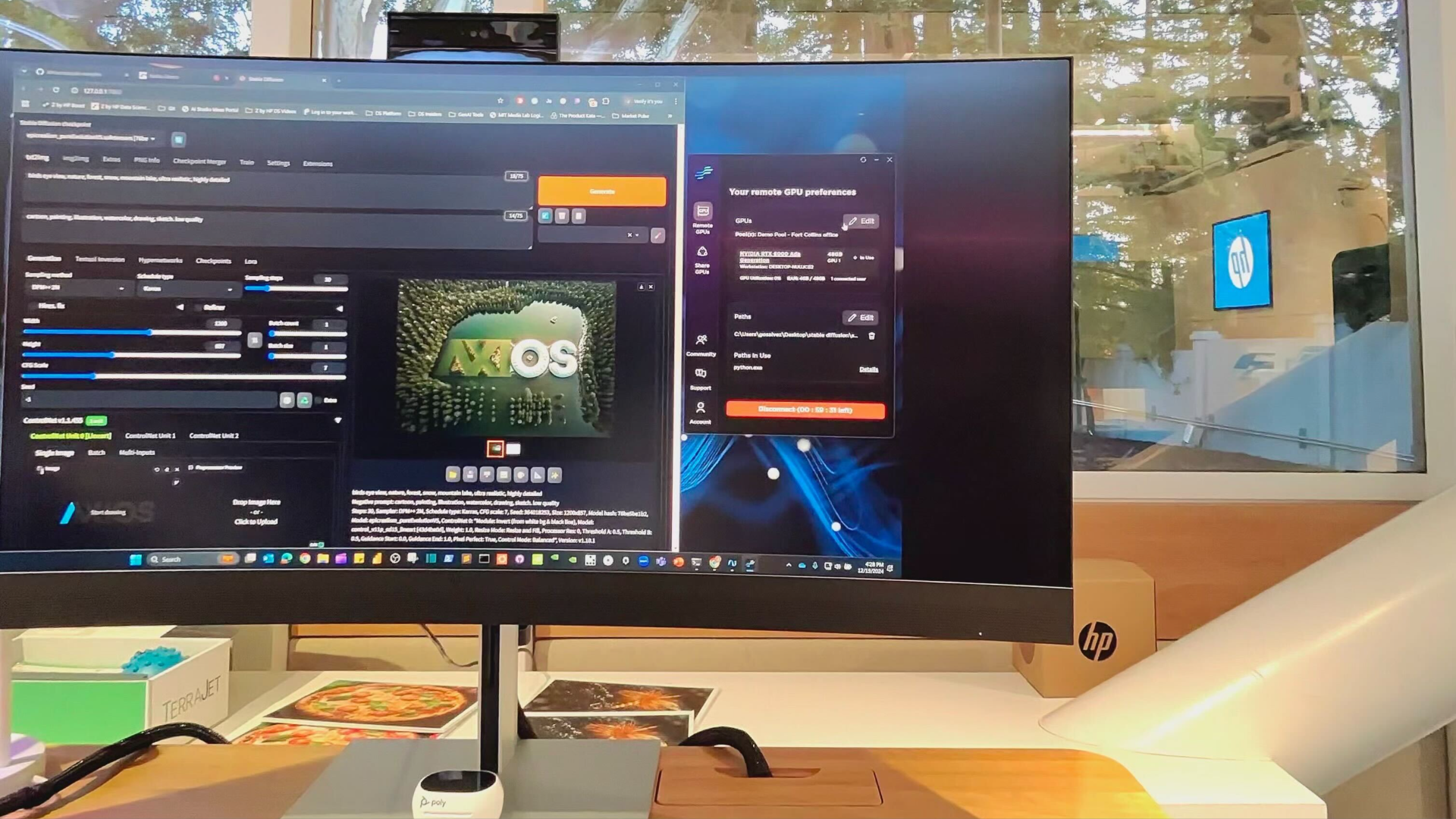
- In high-end PCs, also known as workstations, HP has a program called Boost that allows users to access graphics chips inside other machines on the network to help with AI tasks.
- This allows AI tasks to run within a company's firewall — instead of in the cloud — even from a machine that itself couldn't do such a task.
Beyond the PC, HP sees its AI reach extending to other parts of the office, including the conference room thanks to the company's acquisition of Poly, a company that makes video conferencing tools.
- The company is already running some algorithms on-device that help its cameras better identify participants, determine who is speaking and make lighting and other adjustments.
Between the lines: Cho says that his work is informed by a recent company study that found just 28% of workers feel they have a healthy relationship with work.
- Those who are actively using AI rated their work experience 11 percentage points higher than those who aren't using AI.
- A lack of connection with co-workers — fueled by increasingly remote collaboration — is another issue.
- On that front, the company has a two-pronged approach. It is adding AI smarts in both its PCs and Poly camera bars to ensure people on video calls are better framed and lit.
What's next: HP is also building a commercial product based on Google's Project Starline immersive 3D video conferencing booth.
- The two companies announced their partnership in May, with HP aiming to start selling the systems later this year. The company has given no indication how much the devices will cost but has started taking sign-ups from businesses interested in being among the earliest adopters.
- As part of its work on the product — codenamed Sequoia — HP is working to improve upon Google's Starline prototype. HP wants a better design, with less visible cameras as well as improved audio and a doubling of the current frame rate, from 30 frames per second to 60 frames per second.
- The goal is to have a more engaging interaction with distant coworkers, but HP says there is also a tangible benefit: It helps people retain the information conveyed up to 30% better.
