Axios Future of Defense
April 15, 2026

Hey, y'all. Two quick calendar updates before we get going:
- I'm headed to Sea-Air-Space next week. Coffee? Drinks? Y/N?
- I'm also headed to Huntsville for our next Axios event! Aerospace, energy, the future workforce. Come kick it!
🔭 Situational awareness: Windward and Vantor have partnered. Their collab, revealed this morning, aims to create a streamlined system to detect, identify, verify and analyze illicit activity at ports and at sea.
What's happening: Turion Space's Series B, Icon Prime's printers and Viktor Orbán's defeat.
Today's newsletter is 1,830 words, a 7-minute read.
1 big thing: Exclusive ... The British are coming

The U.S. launched a killer-drone competition in February. It was won, according to public leaderboards, by a small British company with frontline Ukrainian experience and a manufacturing footprint in Atlanta.
Why it matters: Skycutter's stateside success, after flying well under the radar, is a reminder that:
- Flash does not necessarily signal substance;
- Innovation exists outside the big-money bubbles of Silicon Valley and Washington;
- And the Russia-Ukraine war is influencing the battlefield tech of today and tomorrow.
Driving the news: Skycutter scored an overall 99.3 at the first Gauntlet, an attack drone fly-off at Fort Benning, Georgia. In second was Neros, a California startup, at 87.5.
- "We were nervous going into it, but we performed so exceedingly well compared to the competition," Vincent Gardner, Skycutter's operations director, told me. "We just aced every mission profile they gave us."
- That included long-distance and urban strikes.
Zoom in: Skycutter competed with the Shrike 10-F, a 10-inch first-person view (FPV) drone that can be operated via fiber optic cable, which counters electronic jamming and spoofing. The drone is the result of collaboration with SkyFall, a Ukrainian outfit the company has worked closely with in the past.
- "They make one every 23 seconds, 123,000 units per month," Gardner said of SkyFall, "and we redesigned it with them to exclude any Chinese parts or components, which is one of the requirements of the Drone Dominance program."
- "A lot of people came with, I would argue, quite overengineered solutions," he added. "These drones, they're like mechanical wasps."
Context: More than two-dozen companies were invited to participate in Gauntlet I. Among them were Auterion, Firestorm Labs, Performance Drone Works and Teal Drones.
Zoom out: The Defense Department's Drone Dominance push is designed to arm American troops with expendable drones on a massive scale in a few short years.
- Like the Biden-era Replicator initiative, it's a tacit recognition of how ill-prepared the U.S. is to match some combat conditions seen overseas.
- Roughly 75% of casualties in the Russia-Ukraine war are caused by drones.
Follow the money: Skycutter is now on contract for more than 2,500 drones.
- It plans to beef up its U.S. manufacturing in the near term.
The bottom line: "We're using this opportunity, really, to poke our head above the parapet, go fast and accelerate into establishing our own dominance within the drone industrial base in Western markets," Gardner said.
- "This has opened, as you might imagine, a huge amount of doors for us."
2. Turion turns it up

Turion Space raised more than $75 million and plans to spend the money on improving its spacecraft production rates and its reconnaissance capabilities in orbit.
Why it matters: Turion is one of 14 companies recently selected by the Space Force to compete for work on the Andromeda program.
- The indefinite delivery, indefinite quantity contract is pegged at $1.8 billion. The first order will fund satellites for the RG-XX project.
- The pool of suppliers spans big and small, including Anduril Industries, L3Harris Technologies, Northrop Grumman and True Anomaly.
State of play: Turion was founded in 2021. Its founders previously worked at Lockheed Martin and SpaceX and are joined by executives from Palantir Technologies.
- It's worked with NASA and the National Reconnaissance Office as well.
Follow the money: Turion's Series B was led by Washington Harbour Partners.
- Other backers include Aurelia Foundry, Forward Deployed VC and FoundersX.
The bottom line: "This round is a credibility signal and a validation of our team, our portfolio and our vision," CEO Ryan Westerdahl told me.
- "It is also an inflection point in our growth and our expanding capabilities."
Go deeper: Global powers brace for space warfare
3. Primetime printing

Icon, a 3D-printing construction company, is launching a dedicated defense-and-space division dubbed Icon Prime.
- It's led by Will Hurd, the former Republican presidential candidate and CIA clandestine officer.
Why it matters: The business specializes in government work, including construction of military barracks and potential space bases, as well as the advanced robotics needed for such ventures.
- "We need an ability to build infrastructure, to have this force projection, in really hard places," Hurd told me, mentioning both the Arctic and the Indo-Pacific.
State of play: Icon is already building — printing, rather — at Fort Bliss, Texas, where the company is on contract for 10 barracks. That $63 million project will eventually house hundreds of soldiers.
- The company also secured millions of dollars from NASA to figure out lunar construction. That involves building with local materials, often referred to as regolith, and contending with incredible temperature swings.
- In 2020, it helped Marines print a shelter for a large vehicle at Camp Pendleton, California.
Friction point: Traditional military housing has been under the gun for years.
- The Government Accountability Office in 2023 documented instances of hot-water outages, malfunctioning elevators, broken locks and methane leaks.
What's next: Hurd wants "to build 900 barracks in the next five years."
- "This is about making sure their quality of life allows the warfighter to be ready to do their ultimate job," he said.
4. Old Hog, new tricks
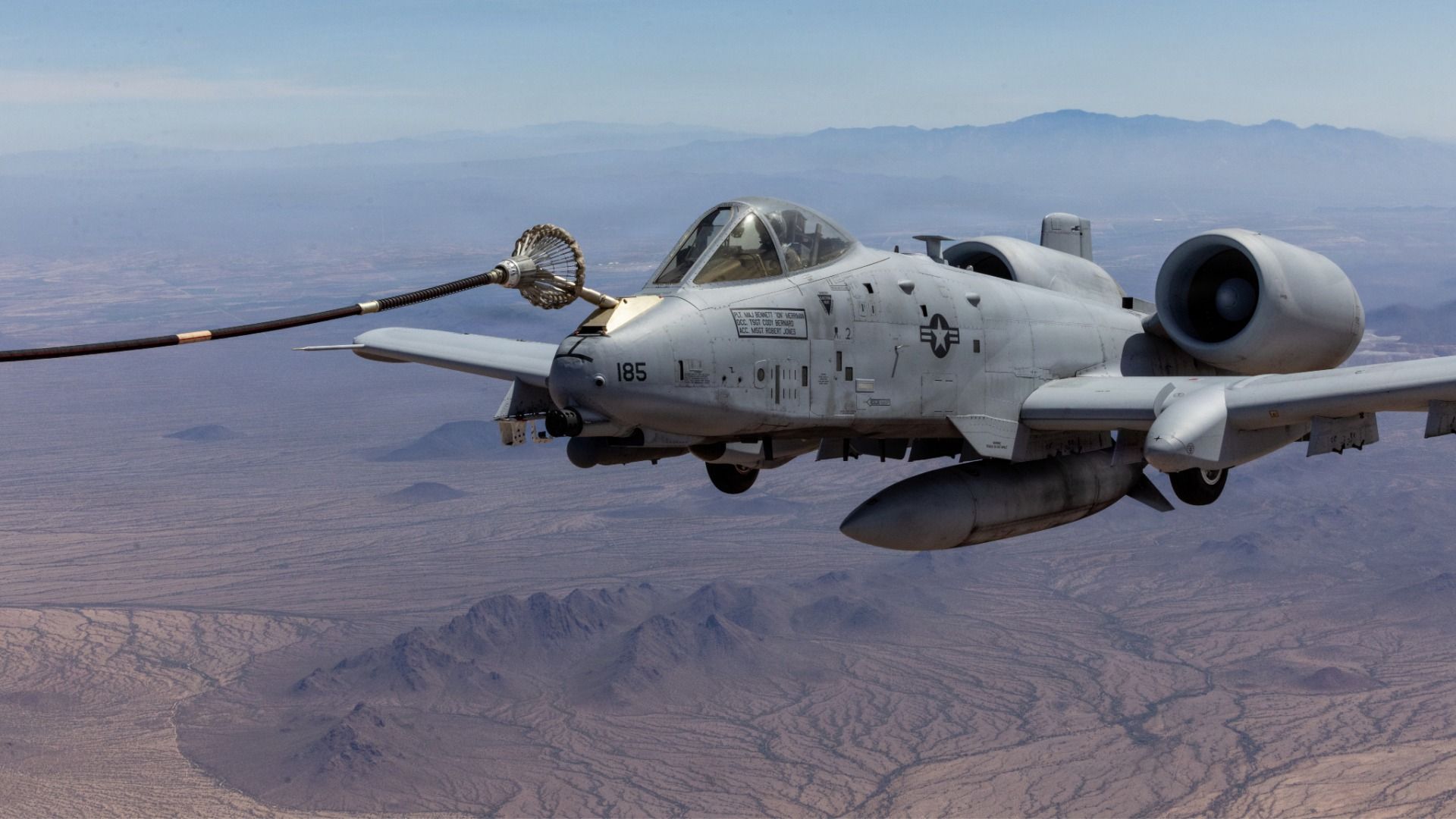
The U.S. Air Force is developing and deploying refueling adapters for the A-10, giving the beloved-but-aging attack aircraft additional means of staying aloft.
Why it matters: The A-10, often referred to as the Warthog, has played a key role in Operation Epic Fury.
- The warplanes have strafed boats in the Strait of Hormuz and aided the rescue of an F-15E Strike Eagle pilot and weapon-system officer deep inside Iran.
Driving the news: Images and videos of the adapter in action quickly gained attention when they emerged online this month.
- The demand for the adapter came from a combatant command, according to the Air Force. The service did not disclose exactly which one.
How it works: The new device — manufactured by an undisclosed contractor — fits into the standard air-refueling receptacle on the A-10 nose. That converts it from boom to probe-and-drogue, making it compatible with C-130-based tankers.
- The device can be installed or removed in a matter of hours by flight line personnel, according to the Air Force.
Friction point: Until now, the A-10 was dependent on the KC-135 for refueling.
Go deeper: Northrop and Embraer join forces for KC-390 refueling boom
5. ICYMI: Bye-bye Boise
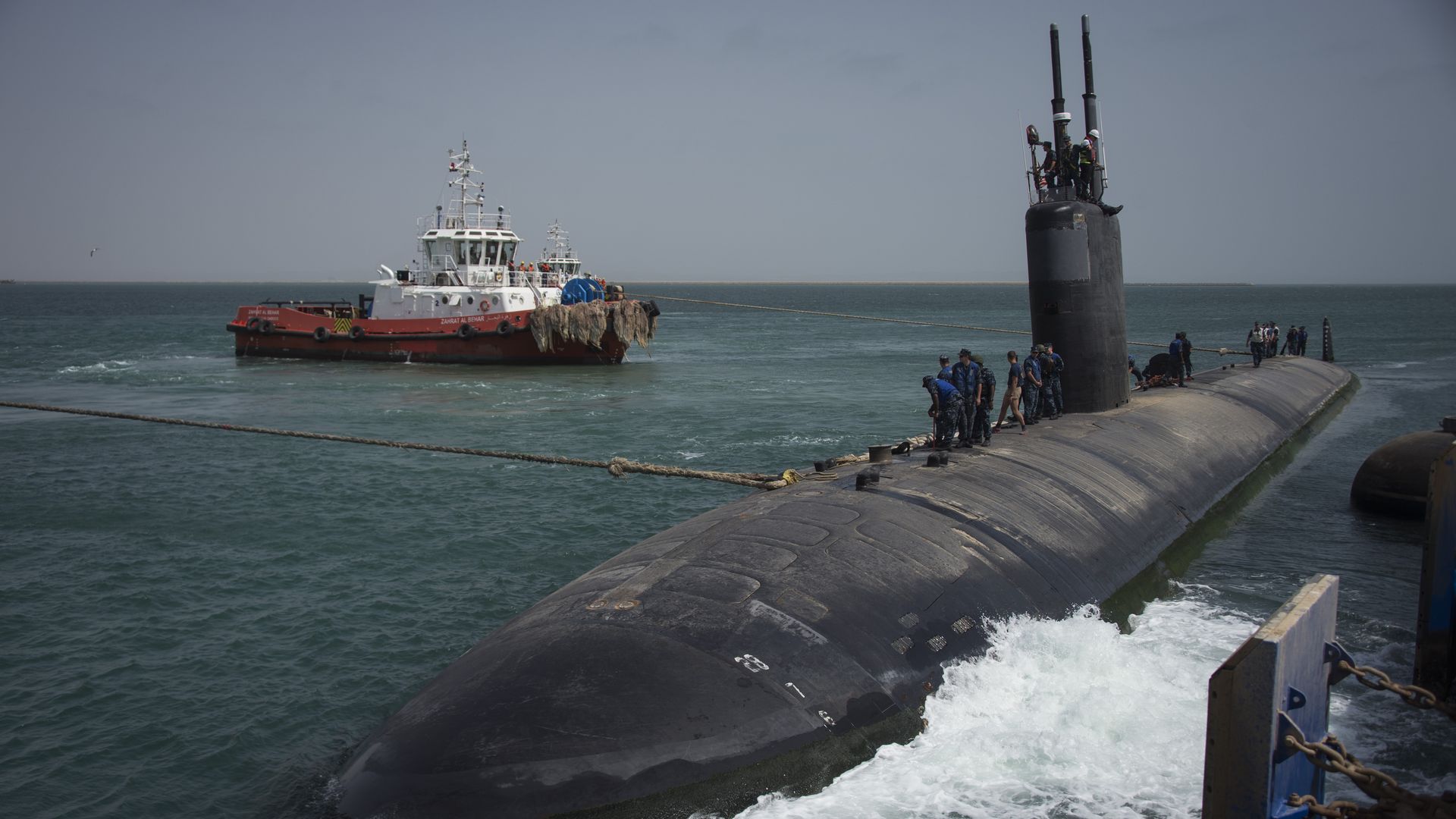
The U.S. Navy is pulling the plug on the USS Boise, an attack submarine that has for years sat pier-side and become synonymous with the service's maintenance backlog.
Why it matters: Walking away means saving billions of dollars, Navy Secretary John Phelan told me, as well as freeing up precious manpower for shipyards and other boats.
- "It's about discipline. It's about having every dollar delivering capability in a smart, cost-effective manner," he said. "I've got a bunch of people focused on this ship that could be focused on a Virginia-class."
- "The crew will be taken care of," he added. "They will be managed with care and priority and we will get them back to the fleet."
Driving the news: The decision to "inactivate" the Boise was made public last week. It comes about a decade after the sub's last patrol.
- The verdict follows close consultation with Chief of Naval Operations Adm. Daryl Caudle, who over the summer told the Senate the Boise's circumstances were "unacceptable" and felt like a "dagger in the heart."
- "We have 100% agreement on this," Phelan told me. "If the CNO disagreed, I'd tell you he disagreed, and I'd give you the reasons why. In this particular case, he does not."
Follow the money: The Navy previously picked HII and its Newport News Shipbuilding division to help overhaul the nuclear-powered Boise — ultimately leaning on a private yard for what is typically the work of a public yard.
- A spokesperson confirmed the company received notice from the Navy, and said there would be "no impact to our workforce."
- "While our work on USS Boise will end," the spokesperson said, "our commitment to ensuring our nation maintains our undersea maritime supremacy will not."
More from Axios:
U.S. to build "Trump-class" warships for "Golden Fleet"
U.S. Navy secretary's "strategic shift" sinks four frigates
Navy unveils "ShipOS" with Palantir to speed up shipbuilding
6. Quick hits
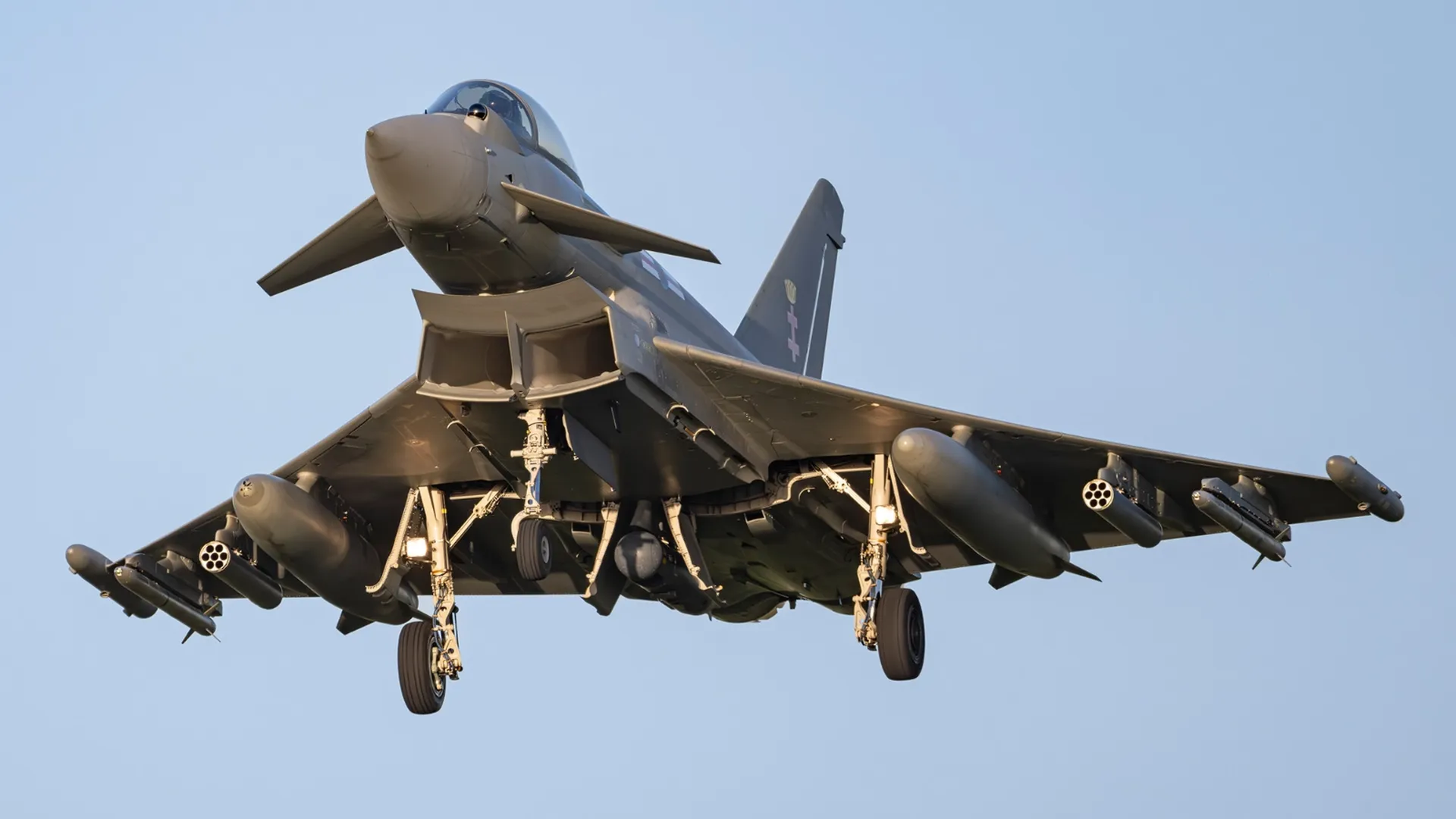
🚀 BAE Systems tested the drone-killing Advanced Precision Kill Weapon System aboard a Royal Air Force Typhoon fighter.
- Why it matters: The APKWS is increasingly popular — and relatively cheap. BAE's Richard Hamilton in a statement described it as "a game-changing capability."
- 💭 My thought bubble: Tim Martin at Breaking Defense has a solid rundown, here.
🏭 Lockheed Martin secured a $4.7 billion contract to kickstart accelerated production of PAC-3 Missile Segment Enhancements. Boeing makes the PAC-3 seeker and this month announced a separate pact to expand output.
- Why it matters: "Our investments in our facilities, workforce and supply chain ensure we can deliver at scale and with speed," Tim Cahill, president of Lockheed's missiles and fire control division, said in a statement.
- 💭 My thought bubble: What do you think is more in-demand? Drones or interceptors?
🗳️ Viktor Orbán was defeated in Hungary's latest election, elevating Péter Magyar and the Tisza party.
- Why it matters: Orbán was Russian President Vladimir Putin's closest partner inside the European Union. Orbán also accused Ukraine of trying to drag his country into the yearslong war.
- 💭 My thought bubble: My colleague Zach Basu laid out some great context and color, here.
🐝 Beehive Industries nabbed nearly $30 million for vehicle integration, flight testing and qualification of its Frenzy 8 engine. The money will also help mature its lighter Frenzy 6 engine.
- Why it matters: The award is related to the U.S. Air Force's Family of Affordable Mass Munitions effort.
- 💭 My thought bubble: Propulsion is having a moment. A cluster of startups, investments and contract wins is shaping up.
7. Check this out
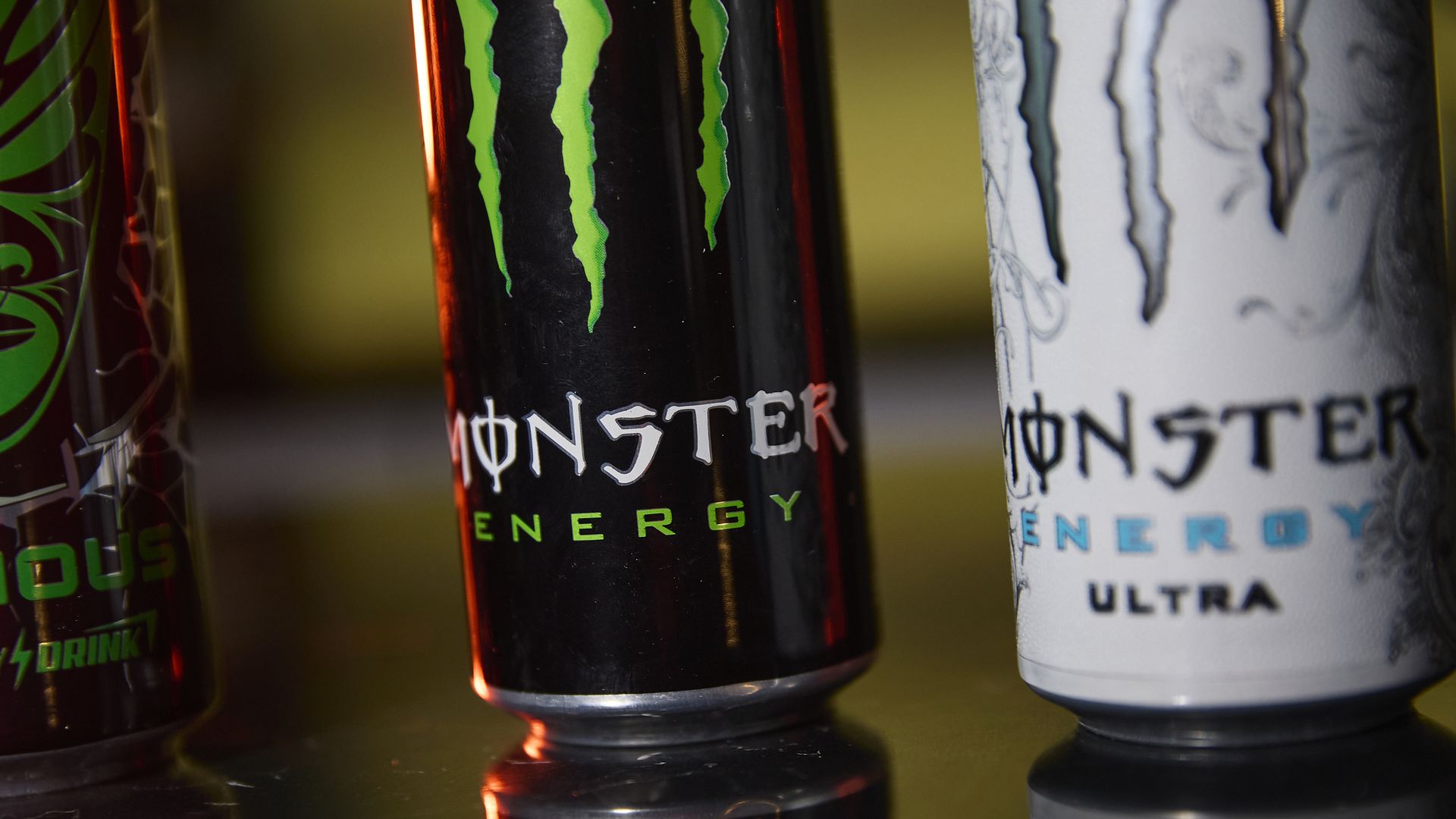
U.S. troops chugged 950,000 gallons of coffee and 2 million energy drinks during Operation Epic Fury, Joint Chiefs Chairman Gen. Dan Caine said at a Pentagon briefing last week.
Why it matters: You gotta stay caffeinated.
By the numbers: A 12-pack of 24-ounce white Monster (the best flavor of the best energy drink) at Costco costs just shy of $40.
- At that price, the military's level of consumption would cost around $6.5 million.
My thought bubble: Yes, I know about Rip Its. No, my local Costco does not stock them.
The bottom line: "I am not saying that we have a problem," Caine said.
Go deeper: Iran war costs grow as key U.S. systems are knocked out
Shoutout to Dave Lawler for editing and Matt Piper for copy editing.
👋🏼 Thanks, as always, for reading and sharing. Tell your friends to subscribe here.
Sign up for Axios Future of Defense