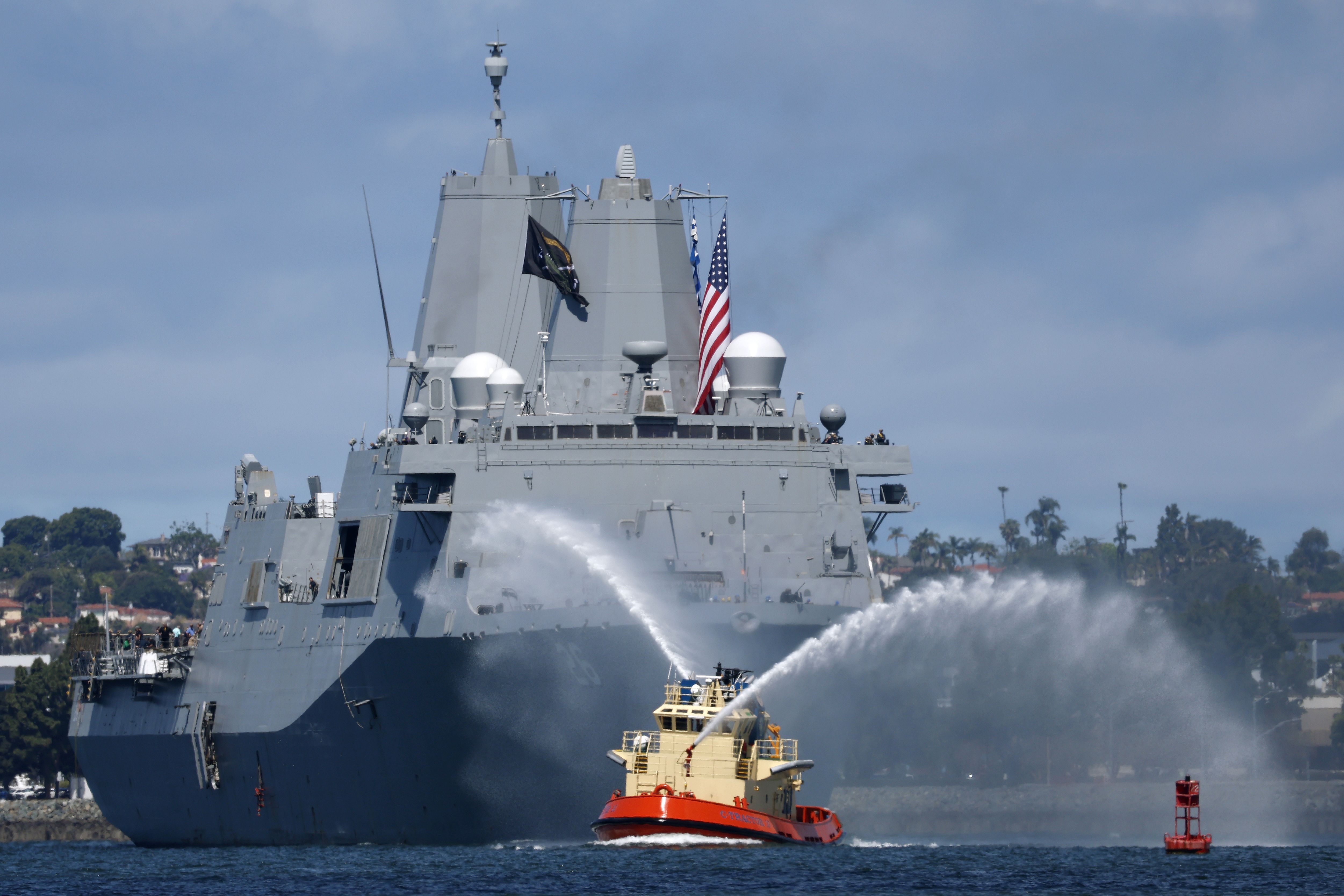
How San Diego's Navy team rescued NASA Artemis II crew and Orion spacecraft

Add Axios as your preferred source to
see more of our stories on Google.
San Diego welcomed NASA's Artemis II crew home from their historic spaceflight around the moon late last week, and local sailors played a key role in the recovery mission.
Why it matters: The astronauts splashed down off the coast Friday, completing a nearly 10-day lunar flyby that took them more than 250,000 miles from Earth — the farthest humans have ever traveled.
- The mission was a test flight before NASA attempts to land on the moon in 2028.
San Diego-based Navy sailors made first contact with the four astronauts and the Orion spacecraft that re-entered Earth's atmosphere and parachuted down into the Pacific Ocean about 50 miles offshore.
- The Navy team has been training for this rescue mission for over a year, and its success relied on detailed teamwork, planning and rocket science, Marine Corps Lt. Col. Christopher Winn told Axios.
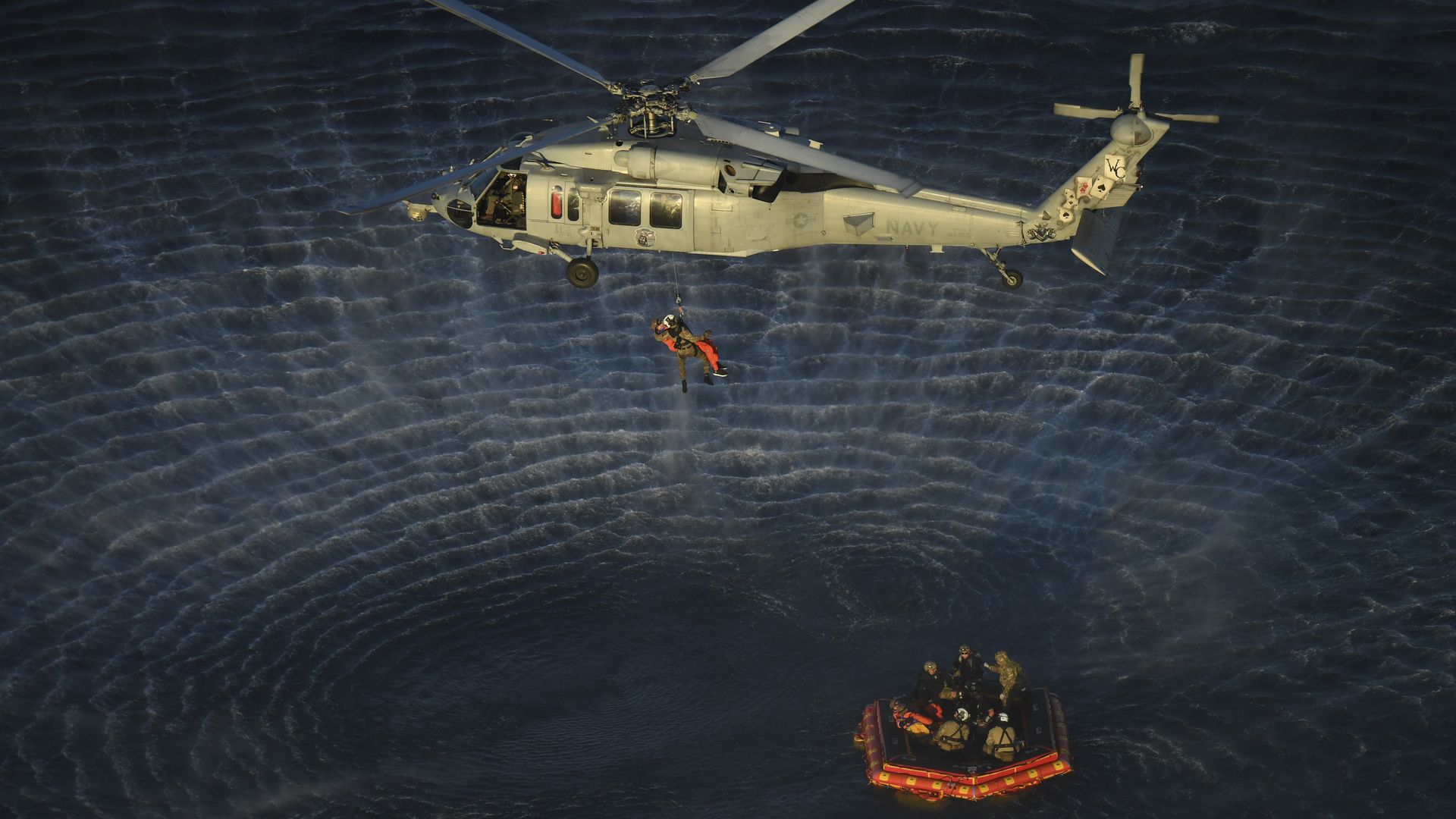
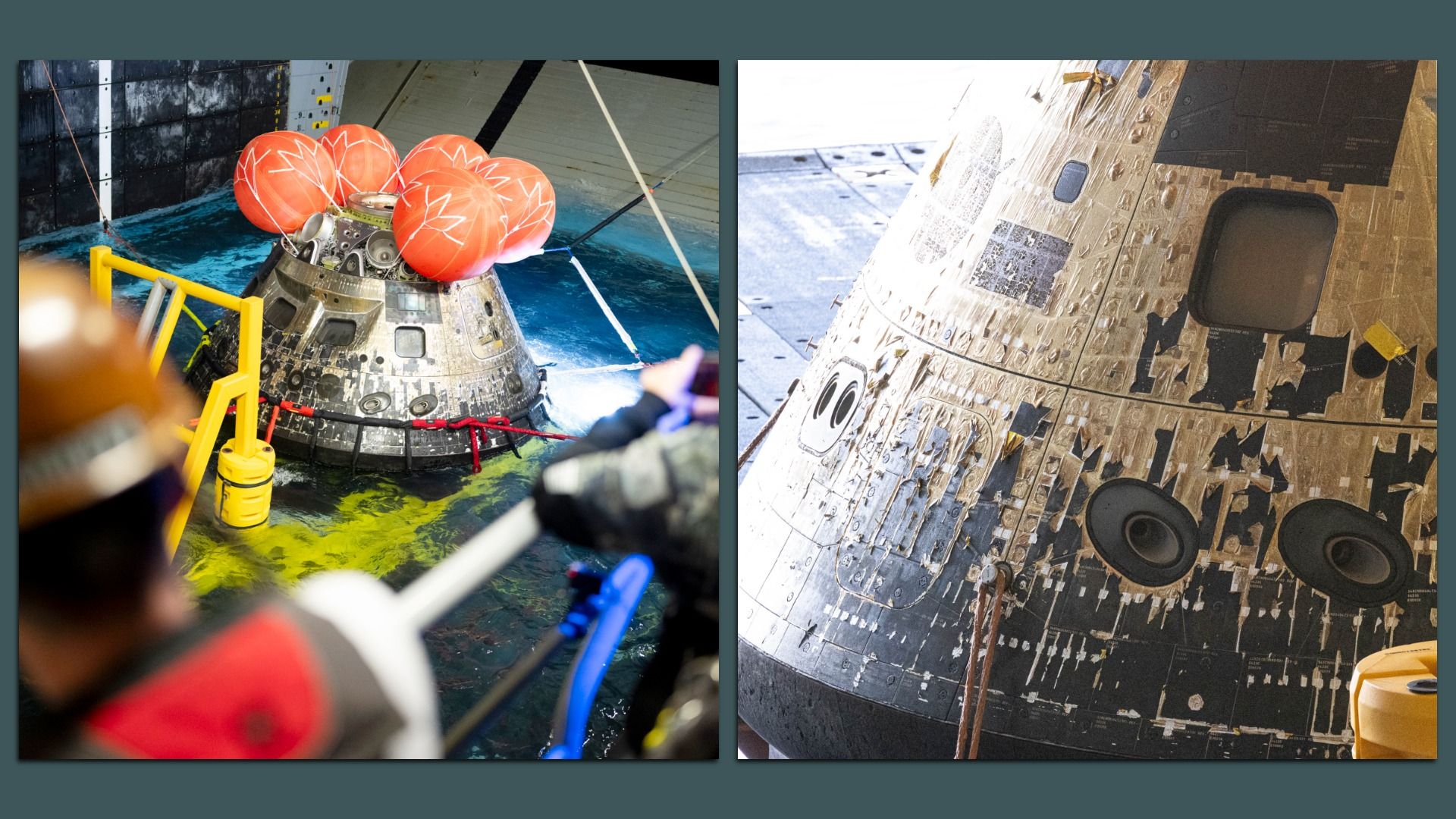
How it happened: Once the spacecraft landed, the divers faced unexpectedly strong ocean currents and communication challenges, but secured the craft and did their initial medical assessments of the astronauts inside.
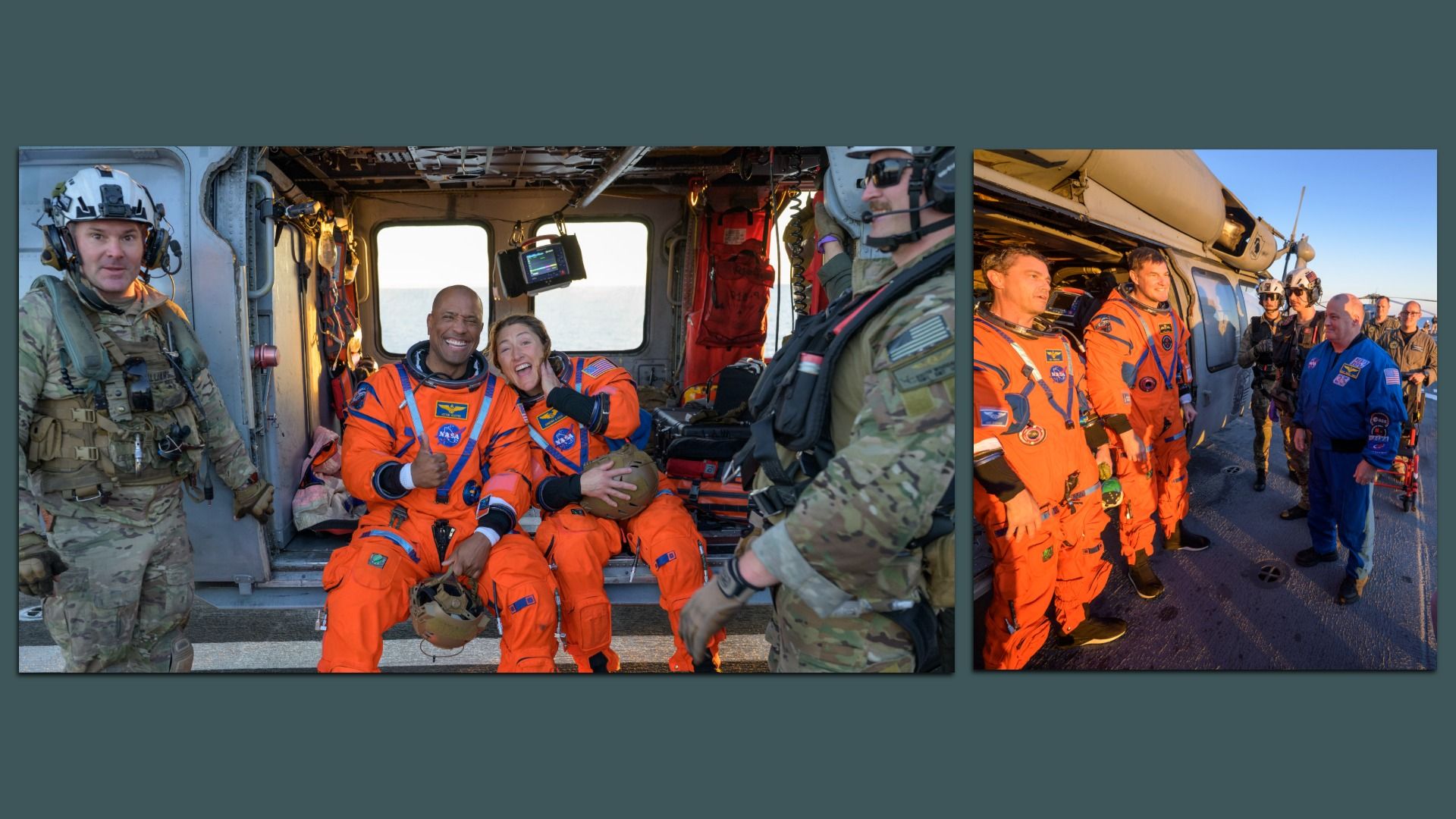
- The intrepid explorers were hoisted out of an inflatable raft via helicopter and dropped off on the USS John P. Murtha, which was waiting at sea about a mile away. There, the astronauts were evaluated further by Navy and NASA medical teams in the ship's hospital before being flown via helicopter to Naval Air Station North Island.
- Meanwhile, the team of divers secured the capsule and towed it to the ship, which was chosen by NASA because it can essentially swallow the capsule by lowering itself into the water and reeling the spacecraft in to dock it on a cradle. The Navy will hold onto Orion until NASA picks it up for a post-mission analysis.
- The astronauts flew home to Houston Saturday to a jubilant welcome from the hundreds who took part in NASA's lunar comeback.
Between the lines: The return flight's trajectory, which is based on the moon's gravity, meant the capsule would land somewhere in the Pacific Ocean and the splashdown area was sharpened to San Diego's coast, according to UC San Diego mechanical and aerospace engineering professor Aaron Rosengren.
- In addition to the "space math," San Diego was tapped by NASA because it's an effective and efficient place for the recovery, according to Winn.
- The local military assets, access to medical services and a large ocean that offers room to pivot helped make it a safe choice, he said.
The bottom line: "A lot of the stuff we do kind of just keeps the trains running. It's repetitive. It's routine, which is what the Navy and Marines Corps has to do, be ready," Winn said.
- "And then when you get to do something totally strategic and nonstandard like this, it's a real honor."