Axios Future of Defense
June 04, 2025

I'm back on the East Coast — but not for long. Two reminders:
- Headed to the AI+ Expo in Washington today? Catch me moderating a chat about agentic AI at 1:10pm.
- Headed to Paris later? We're hosting an invite-only event on the air show sidelines. Let us know if you're interested, here!
🗳️ Situational awareness: The U.S. Senate confirmed Michael Duffey as the Pentagon's next chief weapons buyer. The vote was tight: 51-46.
- My thought bubble: Duffey arrives at a frenetic time. Golden Dome. American reindustrialization. Acquisition reform. He'll have his hands full.
Over the horizon: A first look at the Maxar-Saab collaboration, Sustainment's matchmaking services and a St. Thomas restaurant recommendation.
Today's newsletter is 1,500 words, a 5.5-minute read.
1 big thing: A Ukrainian haymaker
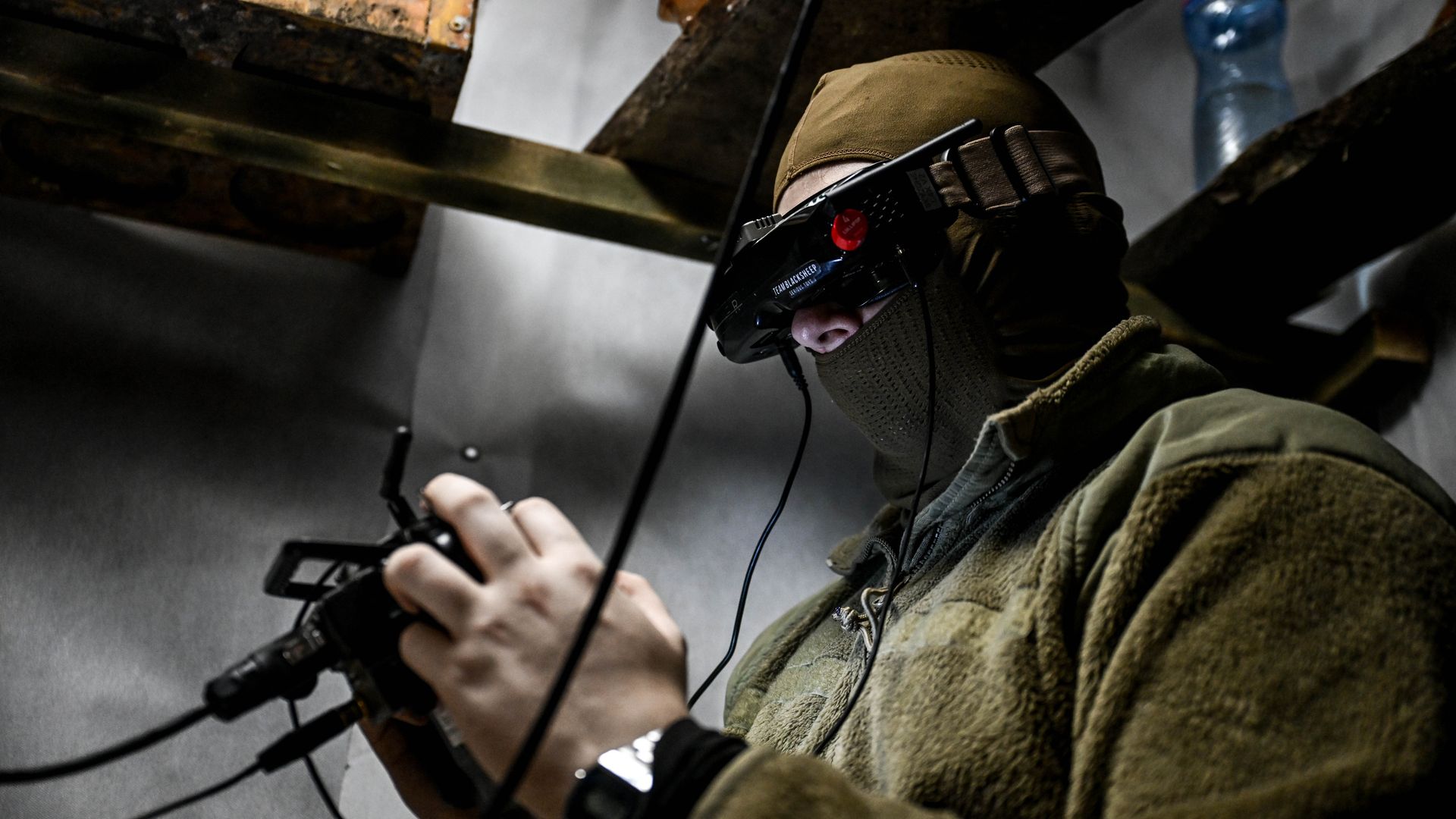
The world just witnessed a modern Minié ball moment.
The big picture: Ukraine on Sunday targeted Russian air bases as far from the front lines as Siberia using cheap, explosive drones sprung from semi-trucks.
- If you didn't already appreciate the utility and consequence of small unmanned aerial vehicles, you should now.
- Adoption of the Minié ball made the Civil War far deadlier. The proliferation of inexpensive drones is making military assets everywhere, including in the U.S., more vulnerable.
Threat level: The coordinated "Spiderweb" attack — about a year and a half in the making, employing 117 drones across multiple time zones — has global implications. Among them:
- The cost curve cannot be ignored. Prized, nuclear-capable bombers doomed by tools that can be slapped together in a trench or garage? Do the math.
- A lack of air defenses and hardened shelters is foolish at best, negligent at worst. Tom Karako, an expert at the Center for Strategic and International Studies think tank, described the moment as "a new missile age" in which "everybody has to look up."
- Almost everything is in range. If Ukrainian operatives can go undetected for months and sneak so close to Russian perimeters while locked and loaded, so too can China. Panic a few years ago over land grabs near American installations now feels prescient.
- Shipping container subterfuge is the real deal. The Gravehawk, developed by the U.K. and Denmark, amounts to overhead protections in a box. Meanwhile, the 2024 China Military Power Report warned Beijing may be a building a "launcher that can fit inside a standard commercial shipping container for covert employment of" YJ-18 missiles aboard merchant ships.
What they're saying: "The paradigm shift we're witnessing isn't just about drones, it's about the fundamental collapse of traditional defense and security thinking," Aaditya Devarakonda, the CEO of Dedrone by Axon, told me.
- "The real challenge isn't just detecting these threats; it's accepting that we're now operating in an environment where attackers can spend hundreds to destroy billions of dollars of equipment," he added.
- "Our security and response systems need to match that speed and asymmetry."
My thought bubble: You can bet the farm the next time a reporter asks about lessons learned from the Russia-Ukraine war, some military official name-drops Spiderweb.
Zoom out: Ukraine's security service, the SBU, said Russian wreckage totaled $7 billion. Western analysts are poring over satellite imagery to confirm the degree of destruction.
- Forty-one aircraft were hit, according to the service's initial public tally. Targets included A-50, Tu-95, Tu-22M3 and Tu-160 warplanes.
- Russia has very few A-50 surveillance aircraft still in use; losing even one would be a major blow. Disabling strategic bombers also hampers the country's nuclear capabilities.
- "This puts to bed the 'well Ukraine is a very specific use case' argument," Dan Magy, CEO of California-based Firestorm Labs, told me. "Because of the size and cost of drones, creativity can be unconstrained when it comes to disruptive missions."
Yes, but: Russia can still very much reach out and punch Ukraine in the mouth.
- Moscow has plenty of ballistic missiles and variants of the Iranian Shahed UAV at its disposal.
The bottom line: Ukraine's operation was "very impressive from a military-science perspective," George Barros, the Russia team lead at the Institute for the Study of War, told me.
- "This is really pushing the boundaries on what we think is possible," he added. "No one thought that FPV drones made from 3D-printed carbon fiber and Chinese components could be used to take out, reportedly, one-third of Russia's Tupolev 95 fleet."
Go deeper: Trump silent on Ukraine drone attacks as MAGA blames "Deep State"
2. Exclusive: Maxar and Saab engage Europe

Maxar Intelligence and Saab are expanding their partnership, this time focused on geospatial intelligence, drone autonomy and improved targeting.
Why it matters: The collaboration could bolster European security at a time when Russia's war machine looms large and a rearmed continent remains a hot topic.
- "We can transfer that knowledge, their capabilities, into European defense in several different ways," Per Järbur, director of strategy and future capabilities at Saab's Dynamics business area, told me.
Zoom in: The deal gives Saab access to Maxar's satellite imagery and terrain data, as well as software like Raptor, which lets drones navigate in the absence of GPS with no additional, bolted-on equipment.
- The two companies tested Raptor in multiple countries, but did not specify which.
- "If you think about the geo-accuracy of what we're doing, we're within a couple of meters … for things like targeting and so forth," Dan Smoot, Maxar Intelligence's chief executive, told me. "That's the power of having this rapid and precise 3D capability built into Raptor."
Zoom out: The goal is to have an immediate effect. Both companies mentioned strengthening C5ISR, or command, control, communications, computers, cyber, intelligence, surveillance and reconnaissance.
Context: Widespread jamming in the Russia-Ukraine war has dizzied drones and more traditional munitions.
- Meanwhile, governments and private citizens have expressed a growing interest in overhead imagery, which lets them keep tabs on neighbors and far-flung regions.
Go deeper: Saab's Erik Smith: Global security has "seen and unseen connections"
3. India's airpower losses
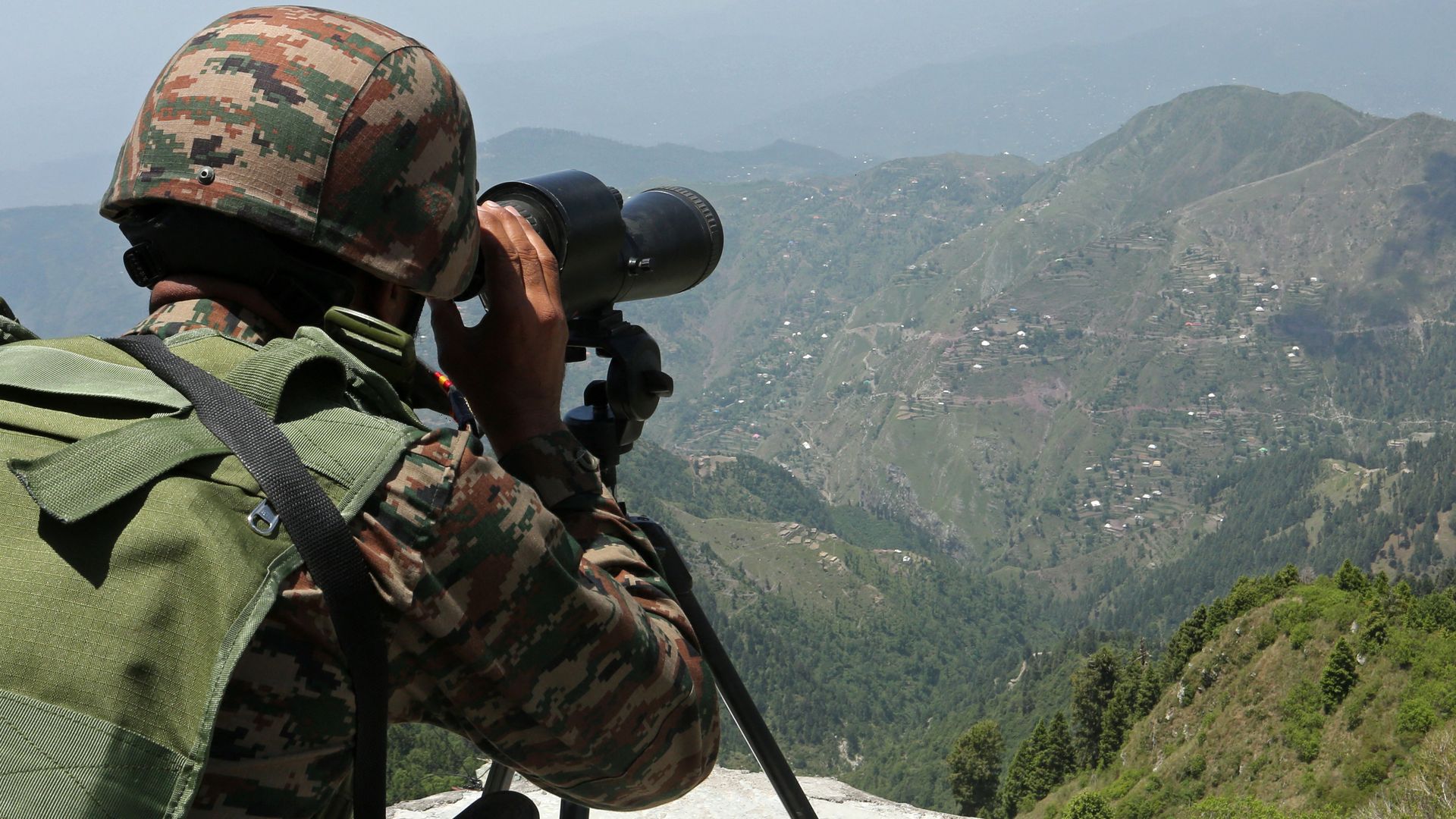
The Indian military in recent days confirmed some of its fighter jets were shot down during clashes with Pakistan last month.
Why it matters: It's the first time the country acknowledged the losses, purportedly French-made Rafale warplanes.
The latest: Chief of Defense Staff Gen. Anil Chauhan told Bloomberg on the sidelines of the Shangri-La Dialogue that what really matters is how fast troops identified the "tactical mistake, which we made," and its solution, allowing for renewed "targeting at long range."
- Chauhan said claims that Pakistan downed six jets are "absolutely incorrect."
- Social media was flooded with misinformation — flowing from both sides — during the May 7-10 skirmishes.
Catch up quick: The fighting killed dozens of people. It was the most recent flashpoint between the nuclear-armed neighbors.
- The two have been feuding for decades.
- Border skirmishes between 2016 and 2018 displaced thousands of people on both sides of the Line of Control.
What we're watching: What the blows between New Delhi and Islamabad mean for larger tech-supremacy debates between the West and China.
- Commentary published Monday by the Royal United Services Institute argues there is a risk of drawing the wrong conclusions "if Indian fighter losses are looked at without close examination of the wider operational picture."
Go deeper: Timeline: The India-Pakistan conflict over Kashmir
4. Quick hits

🪢 Sustainment is at this week's AI+ Expo showing off software it developed to intelligently connect government and defense teams to U.S. manufacturers that might otherwise go unnoticed or underworked.
- Why it matters: Winning wars requires industrial heft. That's tricky in today's fragmented business landscape, where, for example, mom-and-pop shops still supply key parts for the Navy.
- 💭 My thought bubble: CEO Bret Boyd told me he wants to "drive economic growth into Middle America." That stuck.
💻 Roughly 1,000 people have left the Cybersecurity and Infrastructure Security Agency during the second Trump administration.
- Why it matters: The White House suggested slashing CISA's workforce by 1,083 positions — from 3,732 to 2,649 — during the 2026 fiscal year. But the agency has already reached those numbers, sources told my colleague Sam Sabin.
- 💭 My thought bubble: Sign up for Sam's newsletter, Future of Cybersecurity! That's all.
🔁 Anduril Industries and Meta are buddying up to build extended-reality devices for the U.S. military.
- Why it matters: This full-circle moment comes just months after Anduril commandeered the $22 billion Integrated Visual Augmentation System project.
- 💭 My thought bubble: Did you ever expect to see Palmer Luckey and Mark Zuckerberg posted up together, post-beef?
🔥 Firehawk Aerospace will break ground on a manufacturing facility in Oklahoma this summer, after securing a $22 million state and federal funding package.
- Why it matters: "This new facility, located near Fort Sill, the home of Army artillery, will leverage the most advanced additive manufacturing technology to propel the industry base into a new era," Oklahoma Gov. Kevin Stitt said in a statement.
- 💭 My thought bubble: I said it last week and I'll say it again: Solid-rocket motor and energetics expansion in the U.S. is a big win.
5. Check this out
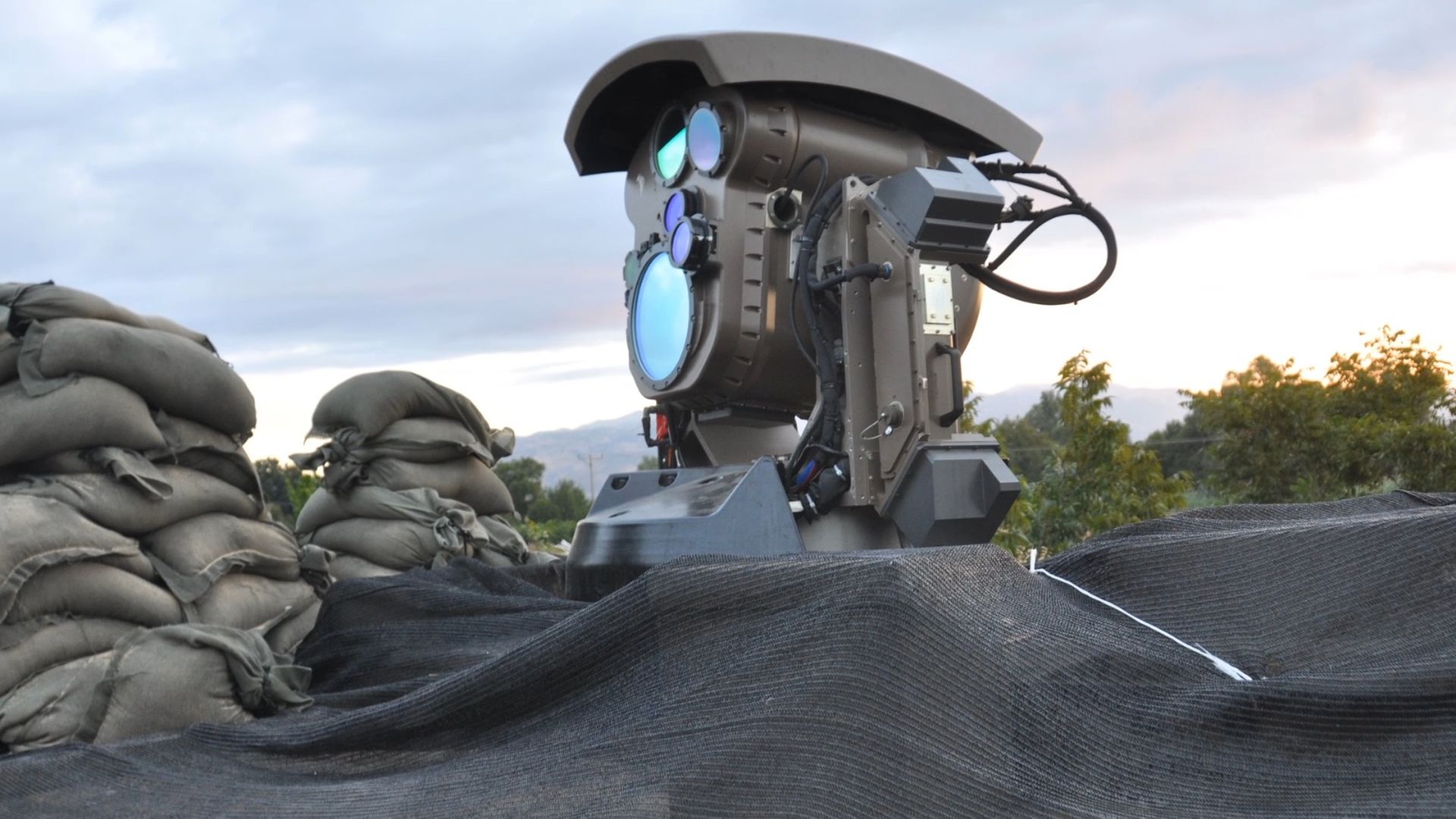
Israel's defense ministry said troops intercepted "scores of enemy threats" using prototype laser weapons developed in part by Rafael Advanced Defense Systems.
Why it matters: Militaries around the world have chased the directed-energy dream for decades. Israel now has pole position.
- "This is not theory. This is real. Combat-proven. Operational. Historic," Rafael said in a post on X. Shoot-down footage was appended.
What's next: A beefier Iron Beam laser will be delivered to the Israel Defense Forces later this year.
- Hundreds of millions of dollars were pledged in October to speed its production.
6. Bonus round

Here's a glimpse at Magens Bay in St. Thomas, where I spent most of last week and finalized the previous newsletter.
Why it matters: Just look.
Inside the room: May I recommend the buffalo chicken pizza (add bacon) from Island Time Pub?
- Wash it down with a Painkiller (add a floater). Or four.
Shoutout to Dave Lawler for editing and Matt Piper for copy editing.
👋🏼 Thanks, as always, for reading and sharing. Tell your friends to subscribe, here.
Sign up for Axios Future of Defense