Axios Future of Defense
March 18, 2026
Morning! Washington has endured a heat wave, a blizzard and a monsoon in the span of a week. Fun.
- Former Defense Secretary Mark Esper and former Deputy Defense Secretary Kathleen Hicks have joined the lineup for our New Defense Landscape reception Monday. Request an invite.
📈 Situational awareness: Swarmer, a drone autonomy company with Ukrainian roots, IPO'd. "The West needs to really figure out how to deliver precision fires for a very low cost," non-executive chairman Erik Prince told me.
Batter up: Chinese nuclear tests, venture capital defense dealings and the U.S. Army's new grenade.
Today's newsletter is 1,562 words, a 6-minute read.
1 big thing: Exclusive ... Palmer Luckey
The first production lines at Arsenal-1, the weapons mega-factory Anduril Industries is erecting in Ohio, will go hot "in a matter of weeks," founder Palmer Luckey told me.
- "We're ahead of schedule," he said. The company previously teased July.
The big picture: The decade-long project is make or break for Anduril, which is now reportedly valued at $60 billion. It's also a major bet on American reindustrialization, a trend with its fair share of factory floor photoshoots.
- Executives are billing Arsenal as the future of defense manufacturing. Getting there requires a chunk of the money it's raised thus far.
- Luckey said Anduril had to move now rather than waiting "for the government to come, give me an order, give me money, then start building."
- "How stupid would I feel if I won a bunch of contracts to build the things that would deter China from invading Taiwan, and then, because it takes three years to get them out the door, the war happens?"
Driving the news: I chatted with Luckey for nearly an hour at Anduril HQ in Southern California for the first episode of the second season of "The Axios Show."
Zoom in: Luckey said the final site survey is underway, the "first main building's done, about 1 million square feet," and "exterior work" on a second building is complete.
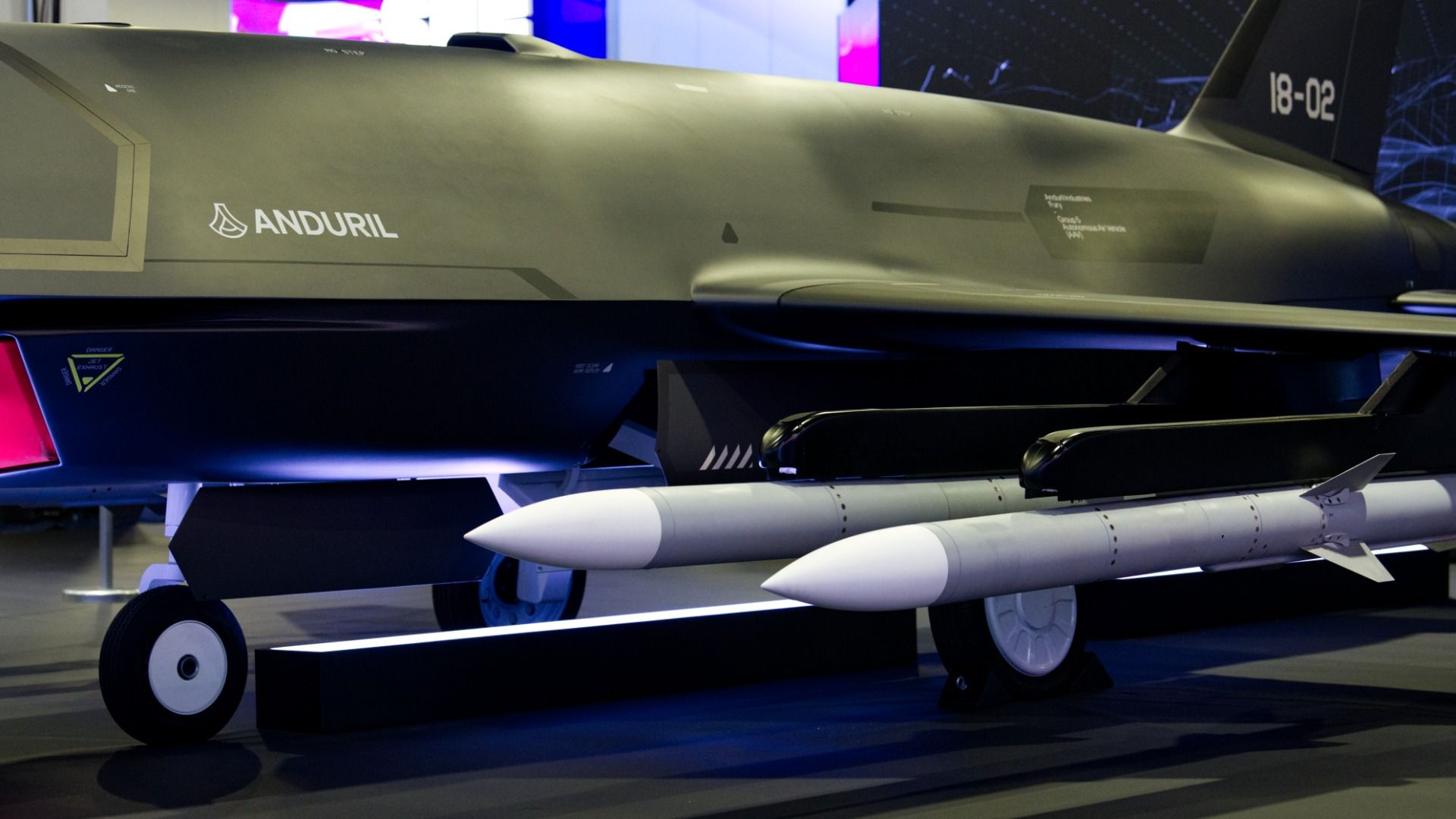
- He also reaffirmed that Fury, the company's candidate for the U.S. Air Force's collaborative combat aircraft effort, will be the first product pumped out.
- "We were competing with a lot of the big guys," he said. "To go toe-to-toe with them, and then get selected by the Air Force to deliver these prototypes ... was just the coolest thing ever."
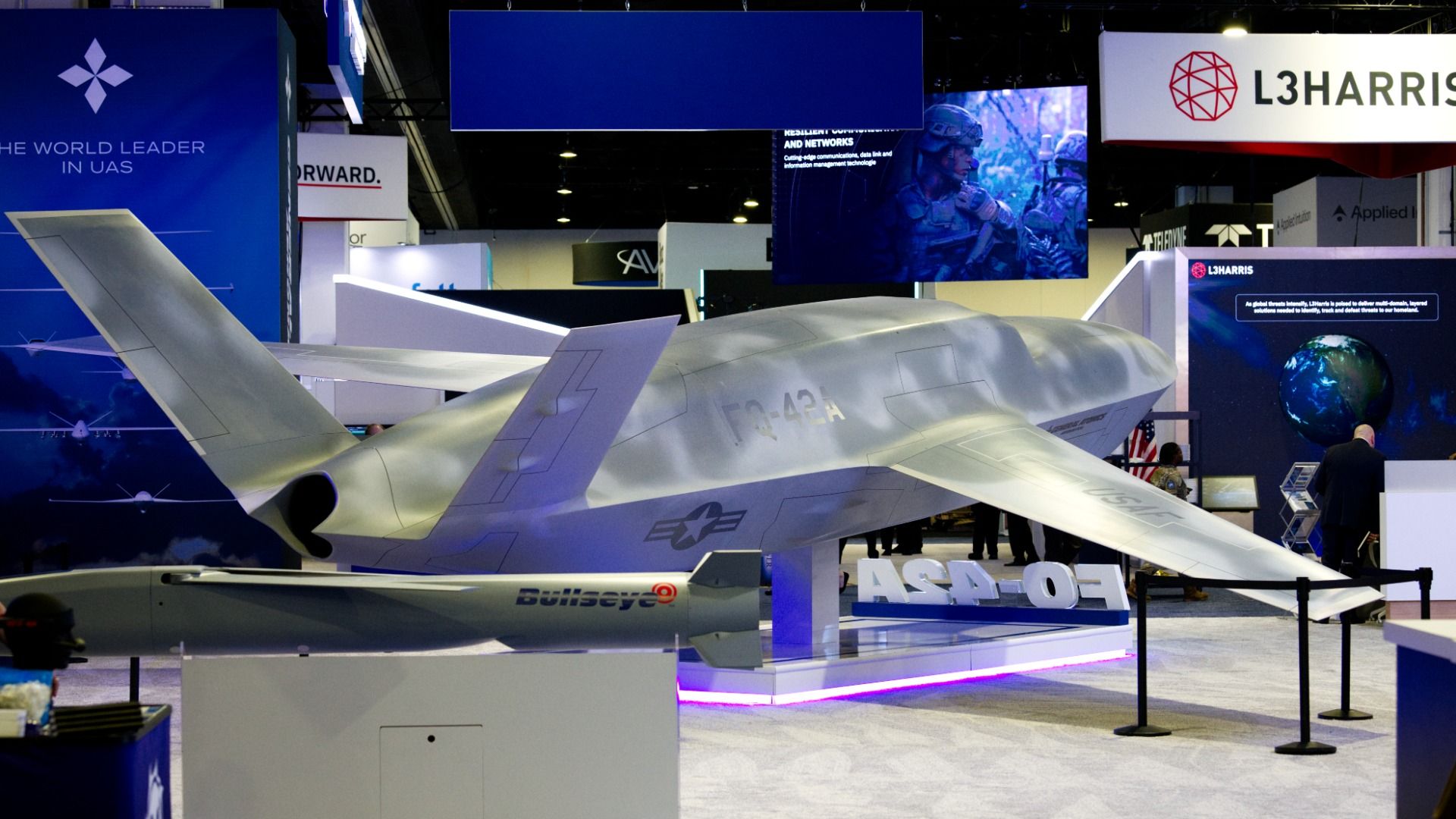
Reality check: The service's competition is ongoing — and there are multiple waves. Anduril's entry, dubbed YFQ-44A, flew for the first time in the fall. The General Atomics entry, YFQ-42A, flew in the summer.
- Should the robo-wingman face-off not favor Anduril, the company will "be fine," according to Luckey.
- "When you run a company like this, the way to think of it is like flipping coins," he said. "In the early days we were flipping a couple of coins. We now have a lot of coins."
- Anduril is the 93rd-largest defense contractor in the world by revenue, according to the Defense News Top 100. It is collaborating and butting heads with primes much higher up the list.
Zoom out: Defense production, stockpiles, factory square footage and contractor margins are White House topics du jour. President Trump's posts about any and all of the above make headlines; Luckey said top officials are equally blunt in private.
- "There's also a lot of: 'Hey, you need to fix your shit on X, Y and Z,'" he said. "I think that you have a lot of this pressure from the department as well."
- "They're learning that the best way to fix these problems is to be very, very honest and open about it."
More from Axios:
U.S. lacks the "will" for Iran ground war, says Anduril's Luckey
2. "Not small tests, folks"
China is "clearly" conducting explosive nuclear testing and "trying to hide it," National Nuclear Security Administration boss Brandon Williams told me at a Govini defense conference in Washington.
Why it matters: It's a doubling down on accusations made earlier this year by top State Department arms control officials.
What they're saying: "It appears they're doing testing in the hundreds of tons of yield. These are not small tests, folks," Williams said.
- "And these are absolutely against the Comprehensive Test Ban Treaty and all of the pronouncements they've made."
- Beijing adamantly denies conducting such tests and claims it's Washington that's being irresponsible in the nuclear realm.
Context: The CTBT, as it's known, was signed years ago by nearly 200 countries.
- But it was not ratified by China, Israel, North Korea and the U.S., among others.
Zoom out: President Trump in October ordered nuclear tests to resume on an "equal basis" of those abroad. He didn't say whether that meant Defense Department flight tests or NNSA explosive tests.
- "Any decisions about our testing program are exclusively in the realm of the president," Williams said.
Friction point: Nuclear states today use supercomputers and data from previous tests for simulation and stewardship. The U.S. is richer in these insights than others.
- Some experts worry a return to full-on nuclear testing would erode the U.S. advantage.
3. VCs stake defense positions


Defense tech venture investing has taken off, well, like a rocket.
Why it matters: The venture flood is changing how defense businesses work and how the Pentagon partners with suppliers, as weapons contracting becomes more palatable to the venture community.
By the numbers: There were 290 defense tech deals globally in 2025 valued at $9.46 billion, according to PitchBook data, and through March 9 of this year, there already have been 66 deals worth $1.9 billion.
Context: The sector began accelerating in 2021, but 2025 set a new pace as its total value outstripped 2023 and 2024 combined on just 31 fewer deals.
Zoom in: U.S. venture activity, not surprisingly, accounted for a large swath of the global numbers.
- Thus far in 2026 there have been 25 deals worth $1.24 billion after 2025 saw 115 deals at $6.96 billion.
Go deeper: Paul Kwan: VCs are overlooking biodefense
4. Quick hits
⛽ Northrop Grumman's in-development B-21 Raider was spotted conducting flight tests alongside a KC-135 tanker. Refueling practice is a major milestone ahead of the bomber's debut at Ellsworth Air Force Base, South Dakota.
- Why it matters: "B-21 Raider test performance continues to impress as we move into more advanced phases of the test campaign," Tom Jones, Northrop's president of aeronautics systems, told me.
- 💭 My thought bubble: Thomas Novelly at Defense One and Ryan Finnerty at FlightGlobal have more deets.
🚧 Fortem Technologies is considering "blowing out the back wall and expanding our manufacturing footprint" as demand for drone countermeasures skyrockets, CEO Jon Gruen told me. It's also opening a second radar testing chamber.
- Why it matters: U.S. allies in Europe and the Middle East scooped up Fortem counter-drone systems late last year. Gruen said some are already fielded.
- 💭 My thought bubble: The Russia-Ukraine and Iran wars are resetting militaries and their suppliers. There's no going back.
🛠️ Gecko Robotics inked a contract worth as much as $71 million to use artificial intelligence and robots to assess the conditions of military assets. The work begins with more than a dozen U.S. Pacific Fleet ships.
- Why it matters: "Where value hasn't improved, that's where opportunity lives. Cracking the cost equation is just as important as cracking the physics equation," Justin Fanelli, the Navy's chief technology officer, said in a statement.
- 💭 My thought bubble: Navy leaders are obsessed with uptime. This should help.
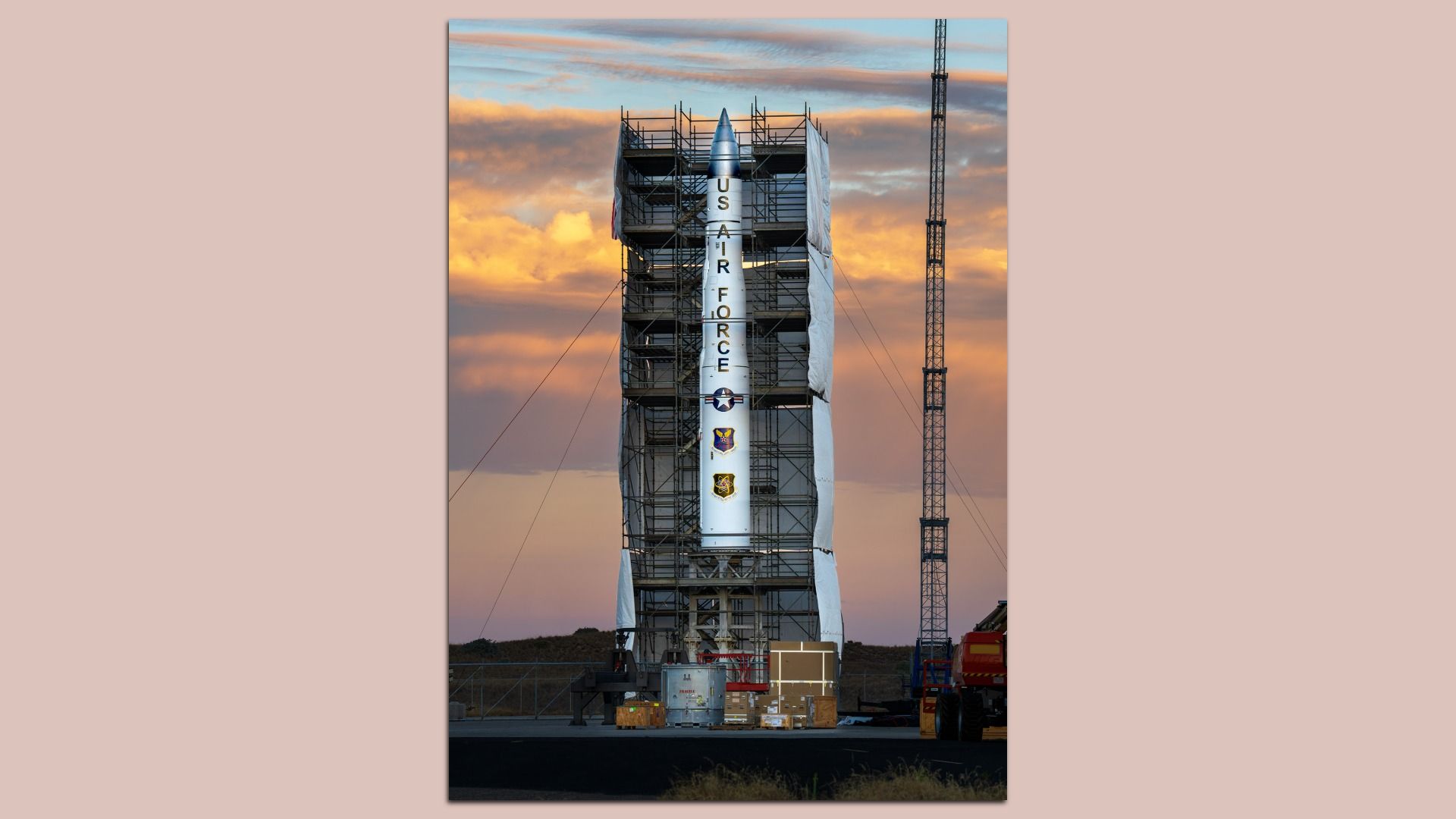
🚀 Ursa Major's Draper liquid rocket engine powered a flight of the Affordable Rapid Missile Demonstrator, the U.S. Air Force announced. Draper is an offshoot of another Ursa engine, Hadley.
- Why it matters: "We went from contract to flight-ready of an all-up-round and propulsion system in just eight months," Ursa CEO Chris Spagnoletti said in a statement.
- 💭 My thought bubble: It's worth revisiting my Draper reporting from September.
5. Check this out
Meet the U.S. Army's M111, its first new lethal hand grenade since 1968.
Why it matters: The grenade relies on blast overpressure — not fragmentation — to kill.
Zoom in: That's ideal for bunkers or caves or other tight spaces.
- "One of the key lessons learned from the door-to-door urban fighting in Iraq was the M67 grenade wasn't always the right tool for the job," Col. Vince Morris, project manager for close combat systems, said in a statement.
Yes, but: Soldiers are still expected to use the M67 grenade in "open terrain," according to the Army.
Go deeper: U.S. must overhaul military readiness and tech metrics, report urges
6. Bonus round: The Evangelion angle
If Hideaki Anno is cool with Yoko Taro rebooting Neon Genesis Evangelion, so is Anduril Industries founder Palmer Luckey.
The big picture: I asked Luckey if Taro, the Nier and Drakengard mastermind, was the right person for the job.
- "I have a lot of trust in Hideaki Anno and his judgment, when it comes to the franchise," Luckey told me.
- He is "notoriously protective of that intellectual property — all the licenses of Evangelion have to be personally approved by him."
Context: Evangelion, a psychological horror mecha epic, has a decades-long lineage. The work spans many mediums: books, dating sims, movies, slot machines.
Fun fact: Luckey's "not really" a Nier fan.
My thought bubble: Watch OG Evangelion. Then watch the new trailer.
- And bring back those cicadas.
Shoutout to Dave Lawler for editing and Matt Piper for copy editing.
👋🏼 Thanks, as always, for reading and sharing. Tell your friends to subscribe here.
Sign up for Axios Future of Defense

Colin Demarest’s essential briefing on modern warfare: drones, AI and beyond.