Exclusive: U.S. dismissed Ukraine deal for anti-Iran drone tech last year



Add Axios as your preferred source to
see more of our stories on Google.
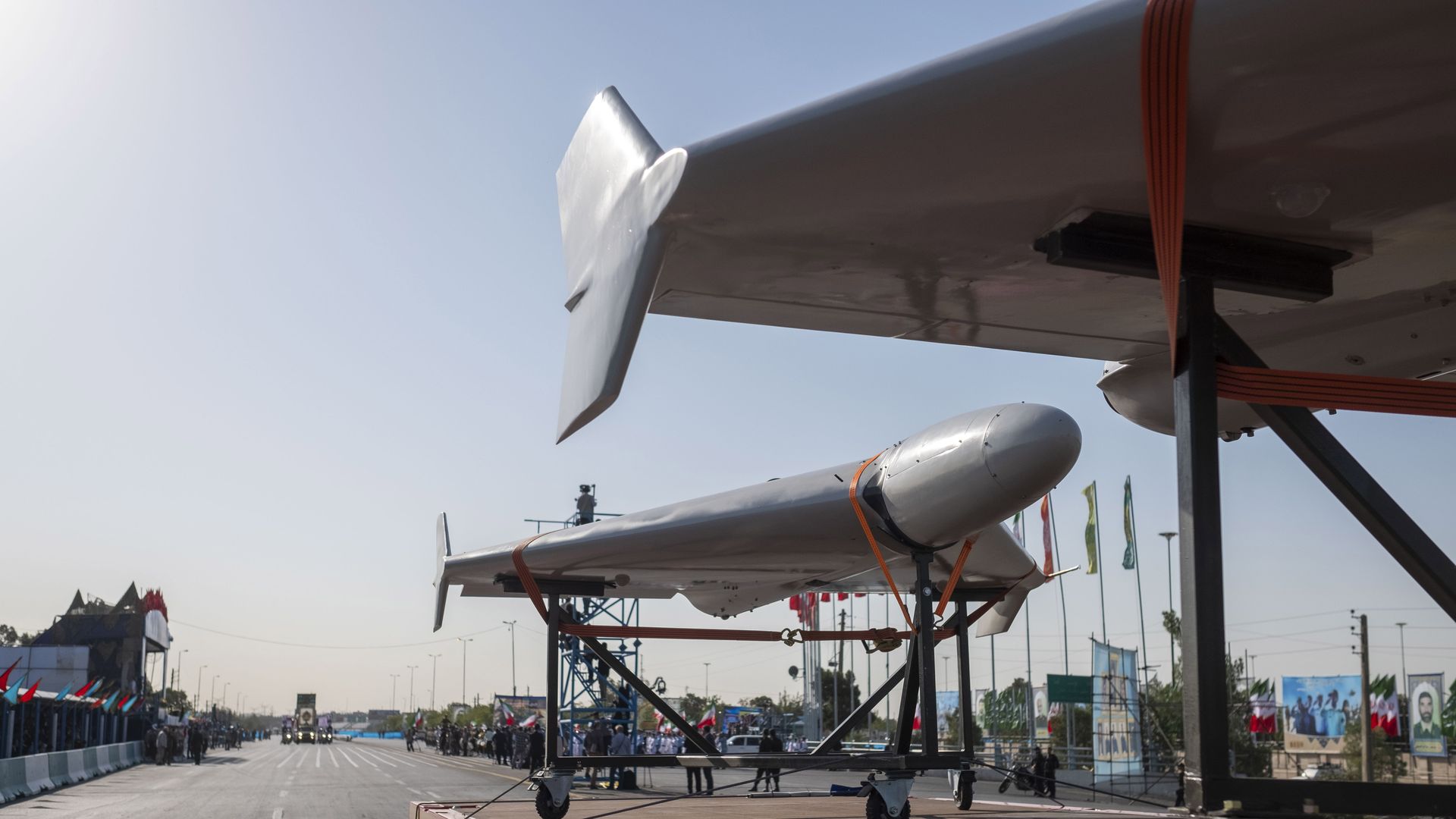
An Iranian Shahed drone is displayed near Tehran in 2024. Photo: Morteza Nikoubazl/NurPhoto via Getty Images
Nearly seven months ago, Ukrainian officials tried to sell the U.S. their battle-proven technology for downing Iranian-made attack drones. They even made a PowerPoint presentation — obtained exclusively by Axios — showing how it could protect American forces and their allies in a Middle East war.
- The Trump administration dismissed the Ukrainians, only to reverse course last week because of more-than-expected drone strikes from Iran.
Why it matters: Snubbing Ukraine's offer ranks as one of the biggest tactical miscalculations by the administration since the bombing of Iran began Feb. 28, two U.S. officials tell Axios.
- Iran's inexpensive Shahed drones have been linked to the deaths of seven U.S. service members, and have cost the U.S. and its friends in the region millions of dollars to intercept.
- "If there's a tactical error or a mistake we made leading up to this [war in Iran], this was it," a U.S. official acknowledged.
Zoom in: Ukraine is the world's most experienced country in combating Shaheds, which Russia has bought, reproduced and labeled as Geran drones by the thousands for its invasion of its western neighbor.
- Ukraine has developed a low-cost interceptor drone, among other sensors and air defenses, to shoot down Shahed-style drones.
Inside the room: At a closed-door White House meeting on Aug. 18, Ukrainian President Volodymyr Zelensky offered the interceptor drones to President Trump as a way to strengthen ties and, according to one official, show his thanks for U.S. support in the face of Russian aggression.
- The Ukrainians made a PowerPoint presentation to U.S. officials that displayed a map of the Middle East and had this prophetic warning: "Iran is improving its Shahed one-way-attack drone design."
- The presentation included the idea of creating "drone combat hubs" in Turkey, Jordan and the Persian Gulf states, where U.S. bases are located, to address the threat from Iran and its proxies.
- "We wanted to build the 'drone walls' and all the things necessary like the radar, et cetera," a Ukrainian official said.
The intrigue: "At that meeting ... in August, Trump asked his team to work on it, but they have done nothing," the Ukrainian official said.
- A U.S. official who saw the PowerPoint confirmed that Zelensky's team showed the presentation to the administration and theorized the Ukrainian leader is seen by some in the Trump administration as too much of a self-promoter of a client state that doesn't command enough respect.
- "We figured it was Zelensky being Zelensky. Somebody decided not to buy it," the official said.
- On Thursday, the U.S. formally asked Zelensky for anti-drone help, according to The New York Times.
What they're saying: "Iranian retaliatory attacks are down by 90% because their ballistic missile capabilities are being totally demolished," White House spokesperson Anna Kelly said.
- "This characterization made by these cowardly unnamed sources is not accurate and proves that they are simply outside looking in. [Defense] Secretary [Pete] Hegseth and the armed forces did an incredible job planning for all possible responses by the Iranian regime, and the undisputed success of Operation Epic Fury speaks for itself."
Reality check: U.S. officials have reported shooting down the overwhelming majority of Iranian missiles and drones. So far, they say, the seven U.S. deaths have been well below initial estimates of 40 fatalities for the opening of the conflict.
- On Friday, the U.S. announced plans to deploy its own Shahed-killing drone system, called Merops, amid complaints from regional allies about the attacks.
- One U.S. official told the Associated Press that the response to Iran's drones has so far been "disappointing."
- Another U.S. official acknowledged the Ukrainian drones would have helped if deployed sooner, but added that "our performance in theater has been remarkable."
Zoom out: The need for new technology is of acute interest to U.S. Army Secretary Dan Driscoll, nicknamed "the drone guy" in the Pentagon.
- Hegseth rolled out changes last year aimed at outpacing China and Russia in unmanned aerial combat. The Biden administration also had drone-counter-drone initiatives, dubbed Replicator.
- The need for the technology is so great that Trump's sons announced a new business venture Monday to supply the Pentagon with Ukrainian drone technology.
By the numbers: An Iranian Shahed is said to cost $20,000 to $50,000, depending on the model. The Ukrainian interceptors are even cheaper.
- Concerns about intercepting such a cheap, simple target with a multimillion-dollar munition spiked during U.S. fights against Houthi rebels in Yemen, and have remained high since.
- Other countermeasures exist: Footage has emerged of AH-64 Apaches blasting Iranian drones. And the U.K. has promised to send Wildcat helicopters strapped with counter-drone Martlet missiles.
Between the lines: Knowing Trump's "Art of the Deal" mindset, the Ukrainians structured the drone defense offer like a business partnership, promising to help create manufacturing jobs in the U.S.
- In return for giving the U.S. access to its drone and anti-drone system production and know-how, Ukraine proposed to buy American weapons.
- "Our problem was money. Our resources allowed us to produce only 50% of what we can produce. So we wanted the U.S. to invest the other 50% and have a share of the production," the Ukrainian official said.
- Ukraine estimated it could help build as many as 20 million of the weapons to "unleash American drone dominance," the PowerPoint said.
Months later, in November, another U.S. official told Axios that military personnel have "been wanting to go to Ukraine and pull the tech and the tactics from the Ukrainian military ... so that we're innovating and learning."
- "The Ukrainians are in a life-and-death, existential crisis, 100%."
