Pentagon calls timeout on War Powers

Add Axios as your preferred source to
see more of our stories on Google.
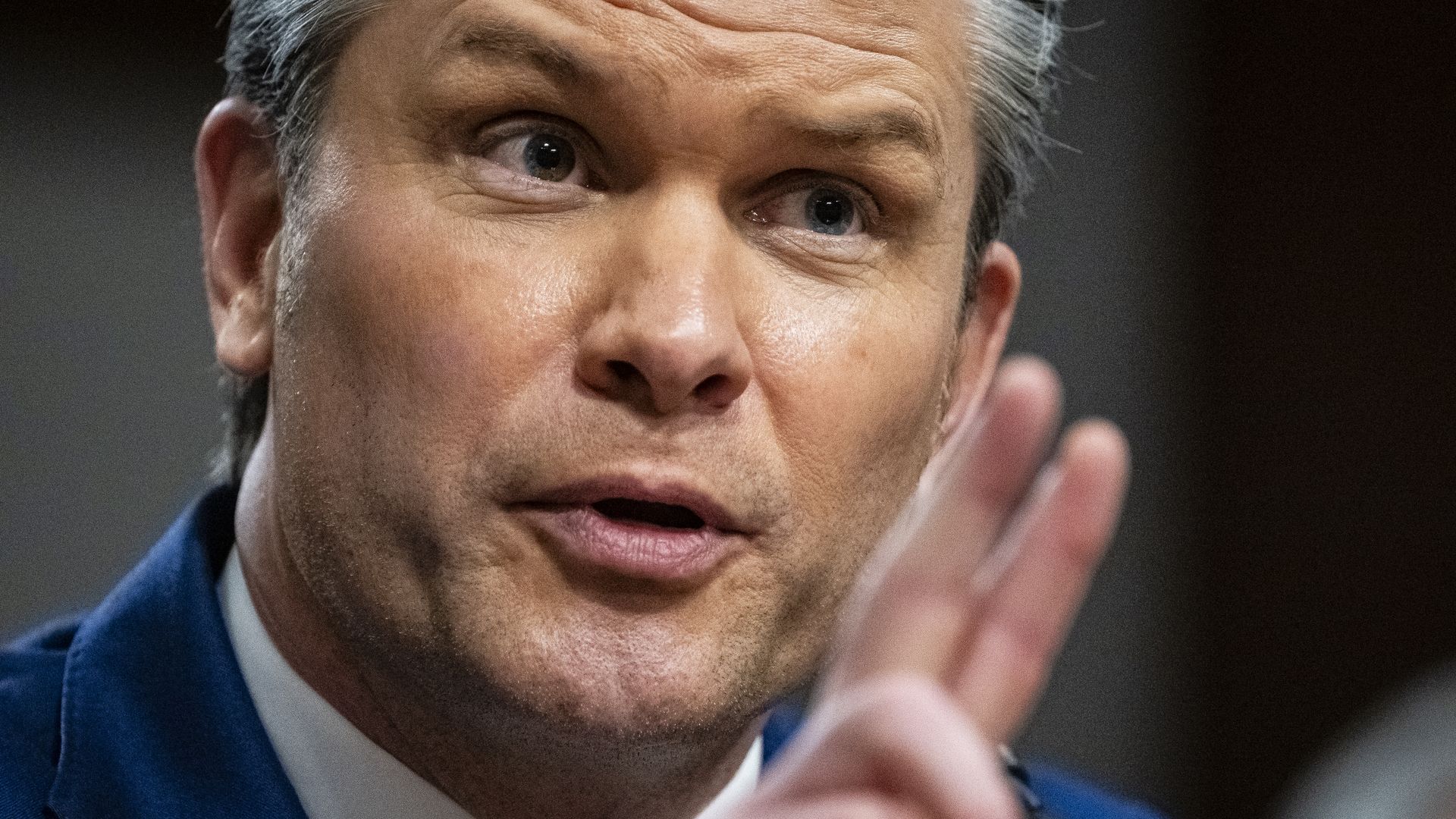
Secretary of Defense Pete Hegseth testifies during a Senate Armed Services Committee hearing on April 30. Photo: Graeme Sloan/Getty Images
Senate Republicans are calling on the Trump administration to clarify how it is interpreting the 60-day clock under the War Powers Act in its military campaign against Iran.
Why it matters: The 60-day deadline, depending on who's counting, is arriving on requiring the president to seek authorization or wind down operations. The first strikes against Iran were on Feb. 28.
- But Defense Secretary Pete Hegseth offered a different view during testimony before the Senate Armed Services Committee, suggesting the clock can "pause or stop" during a ceasefire.
Zoom in: Republicans, including some who have flirted with supporting a war powers resolution, appeared open to Hegseth's interpretation.
- "It sounds like there's some wiggle room he provided there for himself," Sen. Todd Young (R-Ind.) told reporters. "We'll take a look at whatever they send over."
- "Presumably, they will communicate that in a formal way," Young added. "They have, in a very careful way, followed the War Powers Act so far."
- "I imagine the administration will send us some sort of formal notification saying, 'Here's where we think we are under the War Powers,'" Sen. Josh Hawley (R-Mo.) said. "Either we want 30 more days, or we don't think we need additional time because of X, Y, Z."
The other side: Democrats sharply rejected Hegseth's argument.
- "A ceasefire means bombs aren't dropping," Sen. Tim Kaine ((D-Va.) said. "It doesn't mean there are no hostilities. If we're using the U.S. military to blockade everything going into and out of Iran, that's still hostility."
- "That answer showed they know they've got a 60-day problem, and they're trying to come up with a rationale to get around it," Kaine added.
The intrigue: The Iran 60-day debate has echoes of a clash between Congress and the White House during the Libya conflict in 2011.
- As the 60-day deadline approached, then-President Obama argued that U.S. involvement—providing intelligence, refueling allied aircraft —did not rise to the level of "hostilities" under the War Powers Act.
- Republicans howled.
- "We're part of an effort to drop bombs on Qaddafi's compounds," then-Speaker John Boehner (R-Ohio) told the New York Times. "It just doesn't pass the straight-face test, in my view, that we're not in the midst of hostilities."
The bottom line: Sen. Roger Wicker (R-Miss.), the committee chairman, said he has "not been too concerned" about the 60-day deadline.
