Axios AM

October 12, 2024

🥞 Hello, Saturday! Smart Brevity™ count: 1,497 words ... 5½ mins. Thanks to Erica Pandey for orchestrating. Edited by Lauren Floyd.
1 big thing: Trump's war on experts
A second Donald Trump presidency would usher in a new type of class warfare — empowering populists to steamroll mainstream experts on climate change, economics and public health, Axios' Zachary Basu writes.
- Why it matters: This year's devastating hurricane season has exposed the perils of Trump's war on climate experts, who have long warned that human-caused global warming is exacerbating extreme weather.
🌀 Through warming ocean and air temperatures, climate change makes hurricanes like Helene and Milton more destructive — and more likely to rapidly intensify all the way through landfall.
- The catastrophic back-to-back storms tore through the Southeast just weeks after climate scientists reported Earth's hottest summer on record.
Trump, who is potentially 24 days from winning back the White House, has sought to weaponize the Biden administration's hurricane response while still downplaying the existence of climate change.
- He has called climate change a "hoax" and "scam," railed against President Biden's clean energy policies, and urged oil executives to fund his campaign in exchange for him slashing fossil fuel regulations.
- "Remember when they used to say 'global warming'?' They don't say that anymore," Trump falsely claimed at a rally last month. "They say 'climate change' because the planet's actually getting cooler."
Flashback: As president, Trump withdrew the U.S. from the Paris Agreement and publicly disavowed a landmark climate report by his own government — a preview of how he's likely to treat climate experts in a second term.
- Trump stunned his advisers by suggesting that national security officials explore the use of nuclear bombs to stop hurricanes from hitting the U.S., as Axios scooped in 2019.
🧠 The big picture: The MAGA movement's crusade against experts has become fundamental to its anti-establishment identity.
- Take Trump's populist trade policies: Mainstream economists overwhelmingly oppose his plans for massive tariffs. But the disaffected MAGA base considers that criticism a badge of honor.
Between the lines: Anti-expert sentiment exploded during the pandemic, a crisis in which many Americans felt betrayed by health authorities they once trusted.
- 29% of U.S. adults in 2021 expressed a great deal of confidence in medical scientists to act in the best interests of the public, down from 40% in November 2020, according to Pew Research Center.
- Vaccine skepticism is especially partisan: Just 52% of Republicans believe the COVID vaccine is "very" or "somewhat" safe, compared to 91% of Democrats, according to a Politico/Morning Consult poll last year.
- Trump has seized on that phenomenon, forging an unusual alliance with anti-vaccine activist Robert F. Kennedy Jr. grounded in their supporters' mutual distrust of public health experts.
2. 🔋 Milestone in future of energy

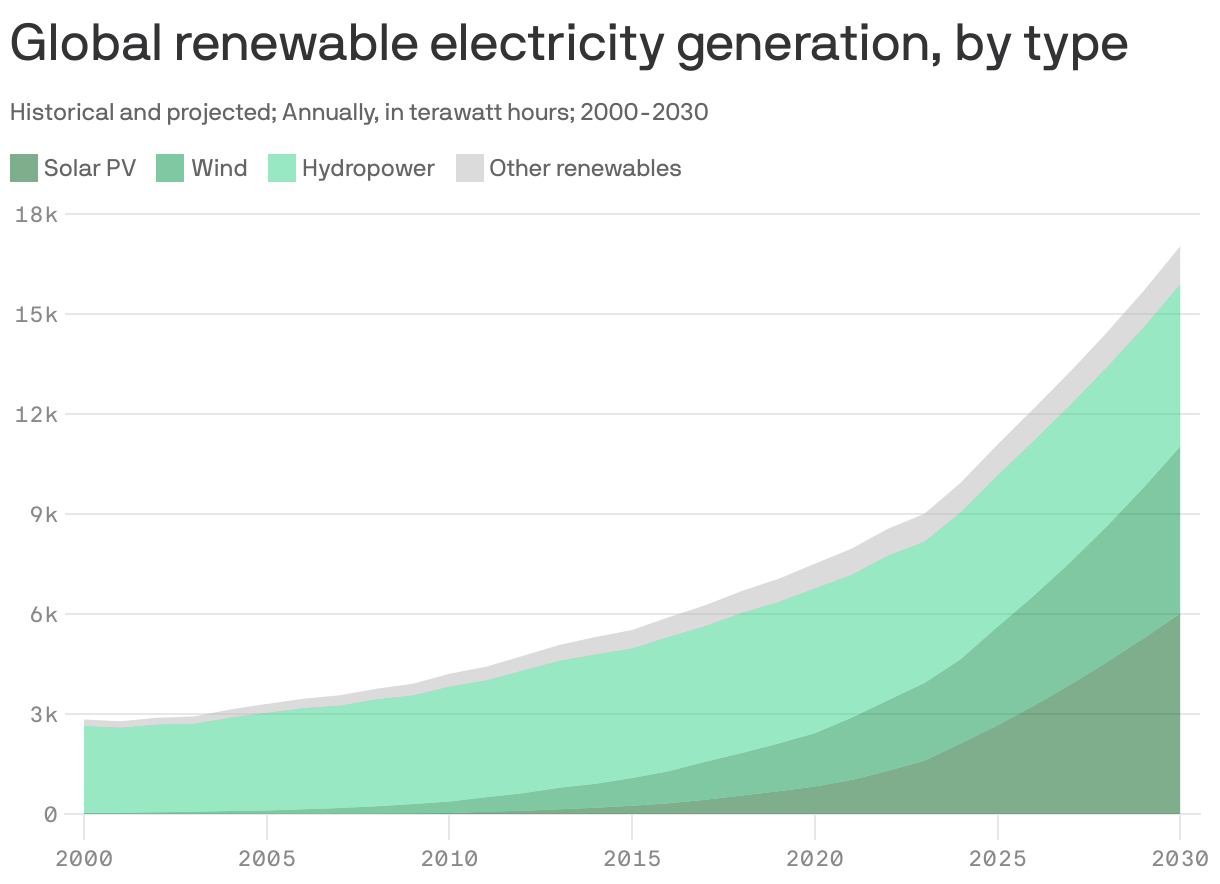
Global renewable power generation — real output, not just capacity! — should pass coal in 2025, Ben Geman wrote in Axios Generate this week from a new International Energy Agency forecast.
- Why it matters: It's testament to a rapid rise (see above), led by solar, that could see renewables provide nearly half of global power generation by 2030.
☀️ The big picture: The agency projects another 5,500 gigawatts of capacity arriving by 2030, with annual growth by then that's 70% faster than last year's record pace.
- Nearly all that rise comes from solar and wind, the agency said, citing their economic attractiveness.
💡 Reality check: Growth is uneven and largely in China, which IEA sees accounting for 60% of global capacity expansion by decade's end.
- The IEA outlook is glum on green hydrogen — once seen as having great promise. The report calls it a "negligible" driver of renewables growth through 2030.
3. 🩺 Harris releases medical info
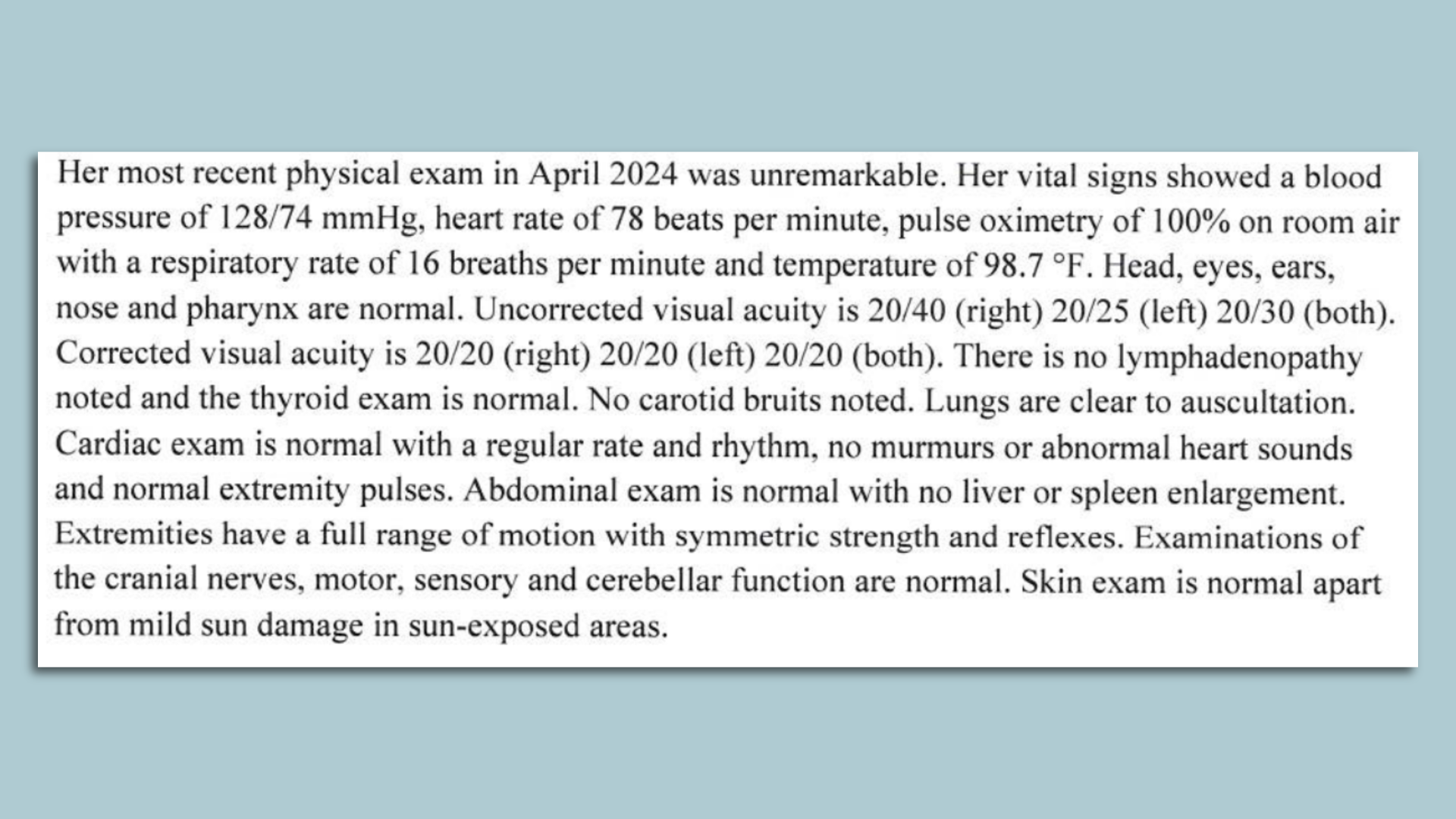
Vice President Harris today released a two-page letter saying she's in "excellent health," in an effort to spotlight former President Trump's refusal to release detailed health information.
- Why it matters: If he won in November, Trump would be the oldest president in U.S. history by the end of his term. He hasn't released medical information beyond a doctor's note saying his "overall health is excellent."
Harris' report, from Col. Joshua Simmons of the White House Military Office, physician to the vice president, says she "possesses the physical and mental resiliency required to successfully execute the duties of the Presidency, to include those as Chief Executive, Head of State and Commander in Chief."
- The letter says Harris is a "healthy 59-year-old female who has a medical history notable for seasonal allergies ... Vice President Harris has mild myopia (nearsightedness). She wears corrective contact lenses with resultant 20/20 vision. She is able to read comfortably without contacts or glasses."
Her family history "is notable for a maternal history of colon cancer," the letter adds. "She has no personal history of diabetes, high blood pressure, high cholesterol, cardiac disease, pulmonary disease, neurological disorders, cancer or osteoporosis."
4. 💍 Diamond math


If you bought a diamond this year, there's a roughly 50% chance it was manufactured in a laboratory.
- Why it matters: Lab-grown diamonds have radically transformed the jewelry market. But despite the cheaper alternative, the amount being paid for diamonds is actually rising — and the stones are larger than ever, Axios' Felix Salmon reports.
💎 The big picture: Two things are happening at once.
- Lab-grown diamonds are getting more popular as they get cheaper.
- People are spending more than ever on natural diamonds.
Lab-grown diamonds are just as real as natural diamonds. They're just not as rare or unique.
- So the market has split, with roughly half of buyers preferring something perfect from a lab, and the other half still preferring something that maybe has romantic flaws.
🧮 By the numbers: For many years pre-pandemic (and pre-lab-grown diamonds), the average engagement ring cost somewhere between $3,200 and $3,600, according to Edahn Golan, managing partner at Tenoris, a diamond industry data company.
- Today, while lab-grown diamonds are cheaper than that, natural diamonds are getting bigger and more expensive.
- So the average diamond overall sells for about $4,600 — well above the level before lab-grown diamonds appeared on the scene.
5. 💼 Women CEOs make more*


There's a gender pay gap at the top, but it's flipped. S&P 500 women CEOs are out-earning their male peers, Axios' Emily Peck reports.
- Why it matters: Typically, men make more than women.
State of play: Before you start proclaiming that yes, indeed, women can have it all. Becalm yourself.
- *This is likely a matter of sample size. There are only about 40 women chief execs of S&P 500 companies — just 7.9% of CEOs in the index.
💰 By the numbers: Median total compensation for women CEOs at S&P 500 companies was $16.5 million in 2024, compared to $15.6 million for men, according to a Conference Board analysis of publicly disclosed data.
🥊 Reality check: On the whole, men still earn more. The median woman working full-time earned 83% of what the median guy made in 2023.
6. 🍔 Hot résumé entry
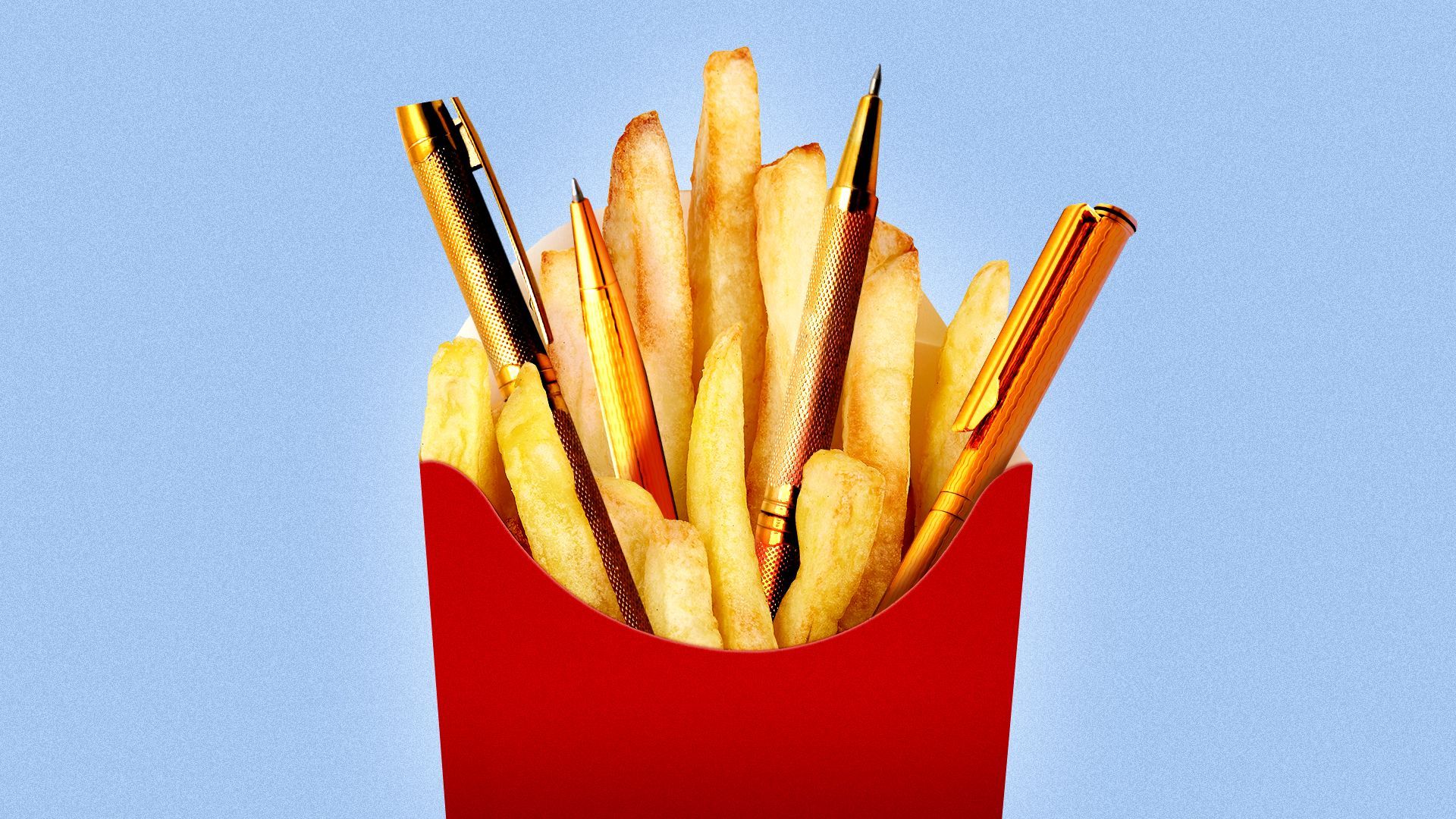
Flipping burgers at McDonald's is turning into a coveted résumé line item for CEOs and presidential candidates alike.
- Why it matters: "A stint in fast food is a badge of honor for business leaders who want to be viewed as humble and relatable — and proof that they worked to get where they are," The Wall Street Journal reports (gift link).
🍟 By the numbers: McDonald's estimates that 1 in 8 Americans will work at one of its thousands of locations at some point, Garrett Graff writes in a Washington Post op-ed.
- Alumni include Jay Leno, Jeff Bezos and Pink.
Vice President Harris has spoken about working at McDonald's when she was a student — and said her time there has helped her better understand working-class America.
7. 🏠 No-rush renters


The cost of homeownership isn't worth the squeeze, some renters say.
- Why it matters: Home shoppers' budgets don't go as far as they did a few years ago, Axios' Sami Sparber writes.
Taking the plunge could mean giving up big-city living or an amenity-packed building for 30% less house, says Sam Tenenbaum of Cushman & Wakefield, a real estate services firm.
🏙️ Case in point: Chicago renter Casey Moore and his wife inherited money for a down payment, but they're not rushing to buy a home.
- Spending an extra several hundred dollars monthly on a mortgage payment and HOA fees "just to own something" nearby "seems ludicrous," Moore tells Axios.
- Instead, the couple redecorated their two-bedroom apartment, which boasts a shared basketball court and pool.
8. ☄️ 1 for the road: Catch a comet
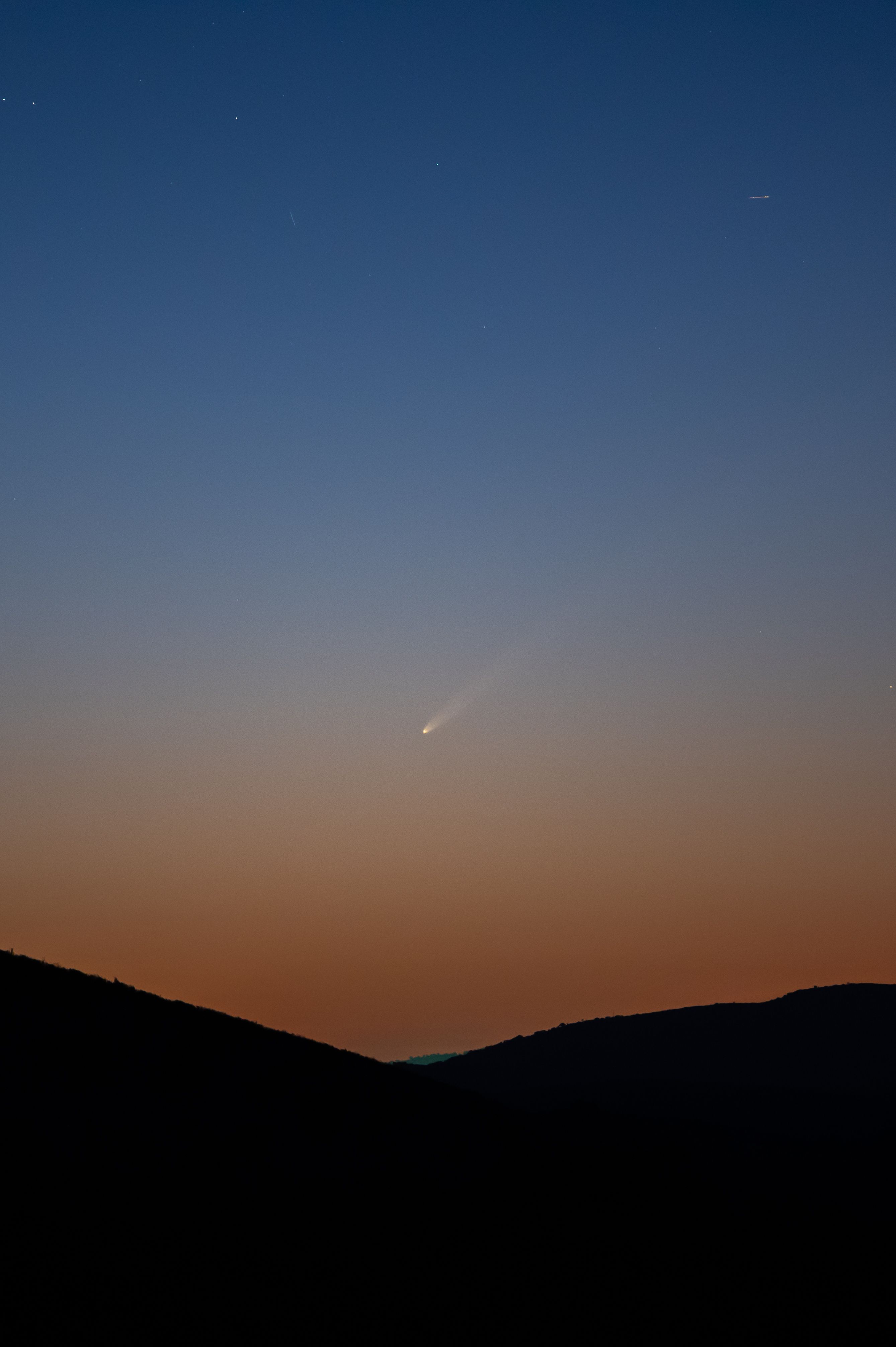
Look up tonight for the best chance to see a comet that won't be back for another 80,000 years, Axios' Kelly Tyko writes.
- The comet, C/2023 A3 Tsuchinshan-ATLAS, is expected to be closest to Earth tonight, when it's 44 million miles away. NASA says it'll be visible nightly through the end of October.
Pro tip: Break out the binoculars. "Comets look OK to the unaided eye, but with a pair of binoculars, they'll knock your socks off," Bill Cooke, lead of NASA's Meteoroid Environment Office, told NPR.
📬 Please invite your friends to join AM.
Sign up for Axios AM