Hurricanes test limits of Trump's war on experts

Add Axios as your preferred source to
see more of our stories on Google.
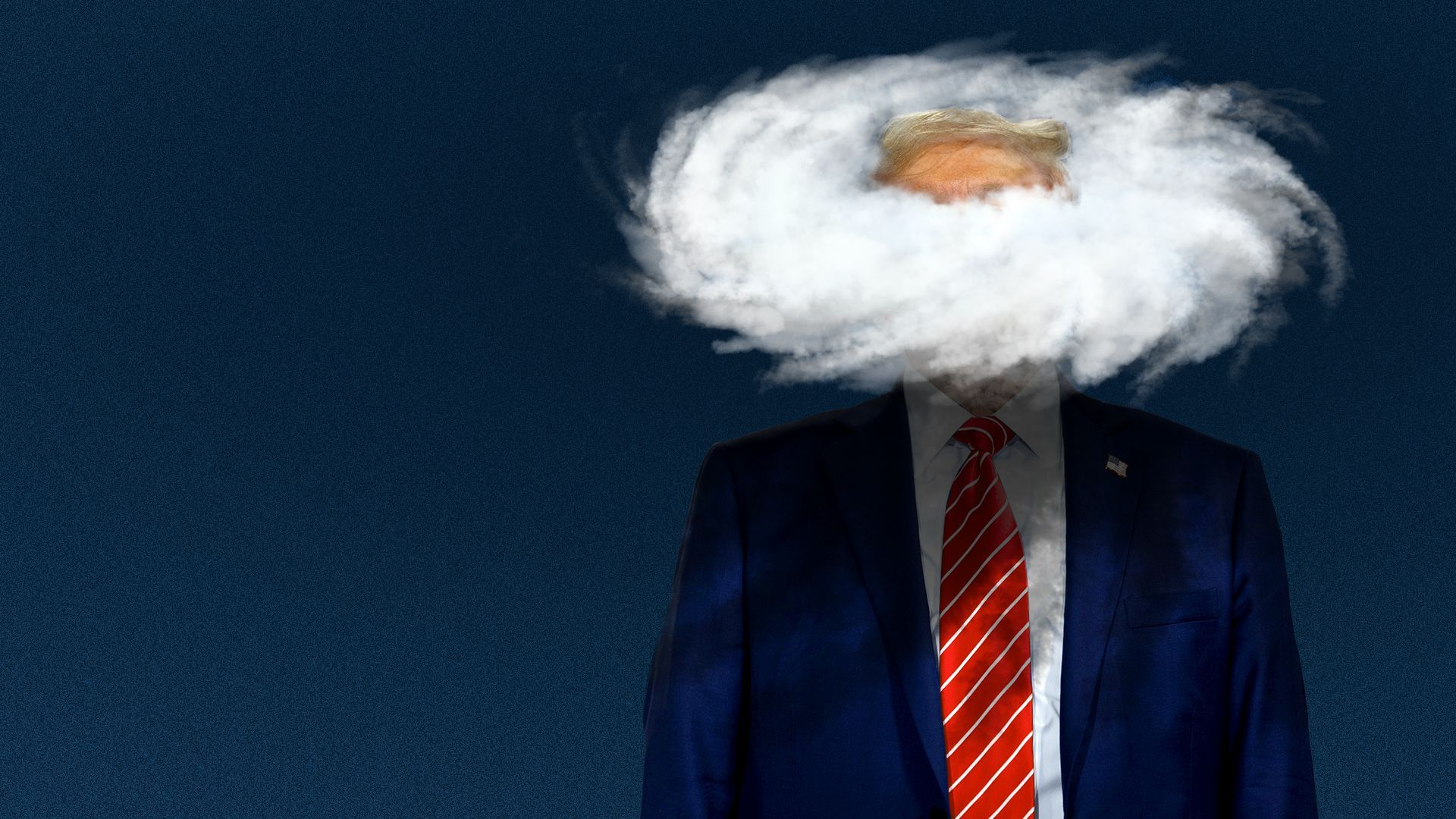
Photo illustration: Brendan Lynch/Axios. Photo: Scott Olson/Getty Images
A second Donald Trump presidency would usher in a new type of class warfare — empowering populists to steamroll mainstream experts on issues such as climate change, economics and public health.
Why it matters: This year's devastating hurricane season has exposed the perils of Trump's war on climate experts, who have long warned that human-caused global warming is exacerbating extreme weather.
- Through warming ocean and air temperatures, climate change makes hurricanes like Helene and Milton more destructive — and more likely to rapidly intensify all the way through landfall.
- The catastrophic back-to-back storms tore through the Southeast just weeks after climate scientists reported Earth's hottest summer on record.
Zoom in: Trump, who is potentially 23 days from winning back the White House, has sought to weaponize the Biden administration's hurricane response while still downplaying the existence of climate change.
- He's called climate change a "hoax" and a "scam," railed against President Biden's clean energy policies, and urged Big Oil executives to fund his campaign in exchange for him slashing fossil fuel regulations.
- "Remember when they used to say 'global warming?' They don't say that anymore. They say 'climate change' because the planet's actually getting cooler," Trump falsely claimed at a rally last month.
Flashback: As president, Trump withdrew the U.S. from the Paris Agreement and publicly disavowed a landmark climate report by his own government — a preview of how he's likely to treat climate experts in a second term.
- Trump also stunned his advisers by suggesting that national security officials explore the use of nuclear bombs to stop hurricanes from hitting the U.S., as Axios scooped in 2019.
The big picture: The MAGA movement's crusade against experts has become fundamental to its anti-establishment identity.
- Take Trump's populist trade policies: Mainstream economists overwhelmingly oppose his plans for massive tariffs. But the disaffected MAGA base considers that criticism a badge of honor.
- "You say trust the experts, but those same experts for 40 years said that if we shipped our manufacturing base off to China, we'd get cheaper goods," Sen. JD Vance said during last week's VP debate. "They lied about that."
Between the lines: Anti-expert sentiment exploded in the wake of the COVID-19 pandemic, a crisis in which many Americans felt betrayed by health authorities they once trusted.
- 29% of U.S. adults in 2021 expressed a great deal of confidence in medical scientists to act in the best interests of the public, down from 40% in November 2020, according to Pew Research Center.
- Vaccine skepticism is especially partisan: Just 52% of Republicans believe the COVID vaccine is "very" or "somewhat" safe, compared to 91% of Democrats, according to a Politico/Morning Consult poll last year.
- Trump has seized on that phenomenon, forging an unusual alliance with anti-vaccine activist Robert F. Kennedy Jr. grounded in their supporters' mutual distrust of public health experts.
What to watch: By reflexively rejecting expert opinions, some pro-Trump Republicans have left themselves vulnerable to conspiracy theories.
- Rep. Marjorie Taylor Greene (R-Ga.), for example, ignited a feud among House Republicans this week by claiming that the government can control the weather.
- Florida Gov. Ron DeSantis shot down that conspiracy theory at a press conference Thursday, but then drew a false equivalence to climate change.
- "This is on both sides," DeSantis claimed. "You have some people think government can do this, and others think it's all because of fossil fuels. ... It is hurricane season, you are going to have tropical weather."
