Axios AM

September 29, 2023

1 big thing: Blue cities rethink liberal drug policies

Blue cities that have taken the most progressive — and often controversial — steps to tackle the nation's drug crisis are beginning to question those strategies amid rising political backlash, Axios' Caitlin Owens writes.
- Why it matters: Public health experts emphasize policies that prioritize saving the lives of drug users — like so-called safe injection sites — but the worsening fentanyl problem is testing the patience of even the seemingly most tolerant cities.
The Philadelphia City Council appears ready to override the mayor's veto of its ban on supervised consumption sites where people can take drugs under the watch of health workers.
- San Francisco Mayor London Breed proposed drug testing for welfare recipients this week.
- New York City is reeling from the suspected fatal fentanyl poisoning of a 1-year-old in day care.
These cities are among those that embraced "harm reduction" measures, which attempt to thwart the harms of drug use rather than punish it.
- New York has the nation's only supervised drug consumption sites. Rhode Island is planning to open one next year and a nonprofit in Philadelphia has been trying to open one.
🖼️ The big picture: Other states, particularly those on the West Coast, have adopted measures that decriminalize drug possession and focus instead on treatment, but those efforts are also being second-guessed.
- "I get a feeling that the fever has broken," said Keith Humphreys, a drug policy expert at Stanford University. "I think the pushback in New York is really just the tip of the iceberg."
Many of the local policy changes are being driven by Democrats who are under pressure from constituents concerned about a drug crisis that's increasingly visible on their streets.
2. 🏛️ Plotting McCarthy replacement
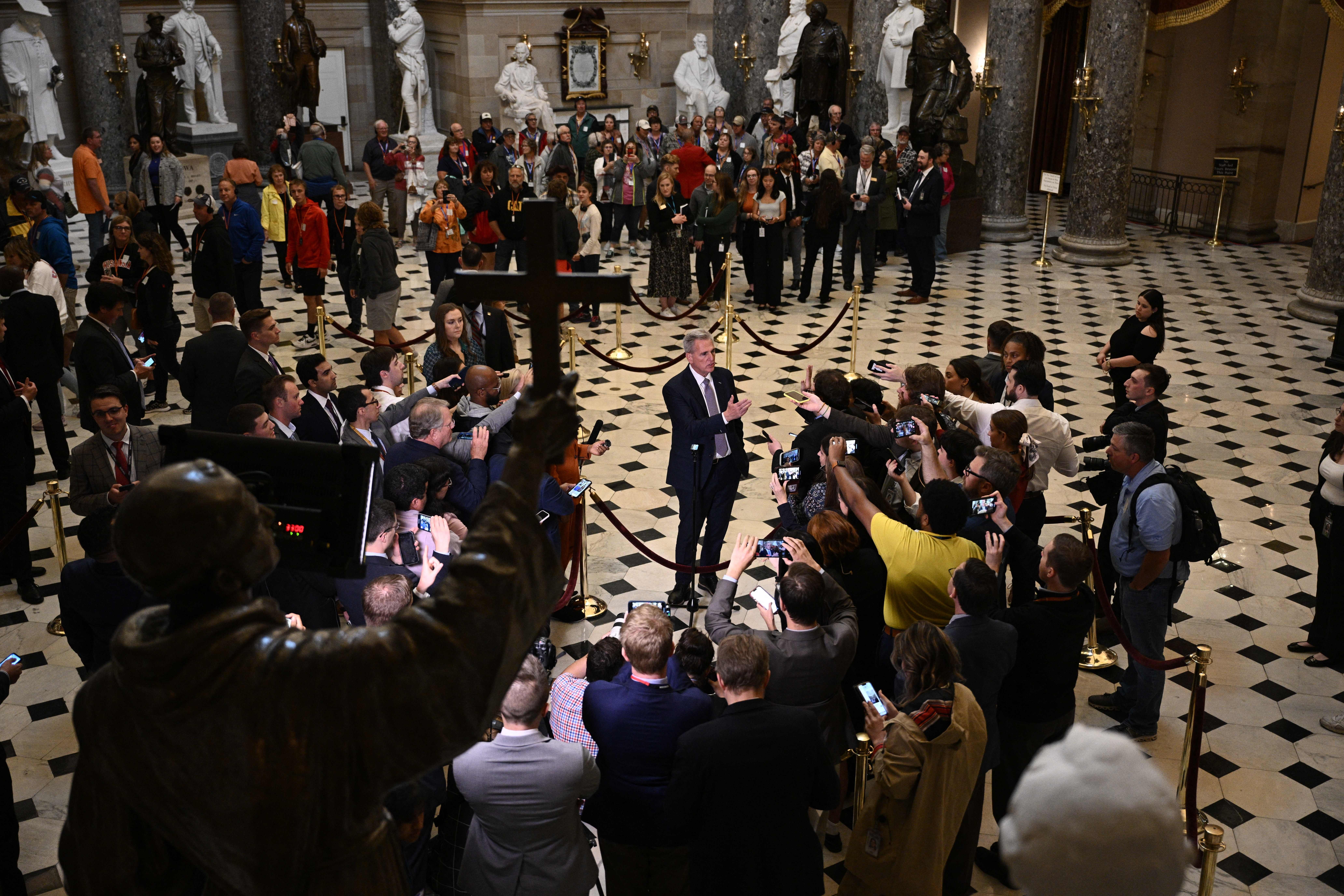
On the brink of a government shutdown at 12:01 a.m. Sunday, discussions about who could replace Speaker McCarthy are emerging:
- Multiple GOP sources question whether he'll make it until December, Axios' Juliegrace Brufke reports from the Capitol.
Why it matters: Some House GOP members — including McCarthy allies — want a contingency plan to avoid another grueling speaker vote if Rep. Matt Gaetz's (R-Fla.) threatened motion to vacate were to succeed.
Recruiting a viable "unity speaker" will be very difficult.
- Two GOP lawmakers noted that House Majority Leader Steve Scalise (R-La.) would be the natural successor. A caretaker speaker could bide time while Scalise undergoes cancer treatment ahead of the new Congress.
A slew of names have been floated, including Republican Study Committee Chair Kevin Hern (R-Okla.), House Budget Chair Jodey Arrington (R-Texas), House Rules Chair Tom Cole (R-Okla.), House Financial Services Chair Patrick McHenry (R-N.C.) and House Majority Whip Tom Emmer (R-Minn.).
- Emmer is cited as a potential favorite in a Washington Post front-pager today. Emmer denied interest. Cole also demurred.
- One lawmaker said Homeland Security Committee Chair Mark Green (R-Tenn.) was approached multiple times about being a potential replacement, but declined interest.
The other side: McCarthy allies argue that no other member can garner the support to get the gavel.
3. 🤖 How chatbots can make us dumber

Illustration: Aïda Amer/Axios
4. 🇺🇸 New question for America: "Is it going to be OK?"
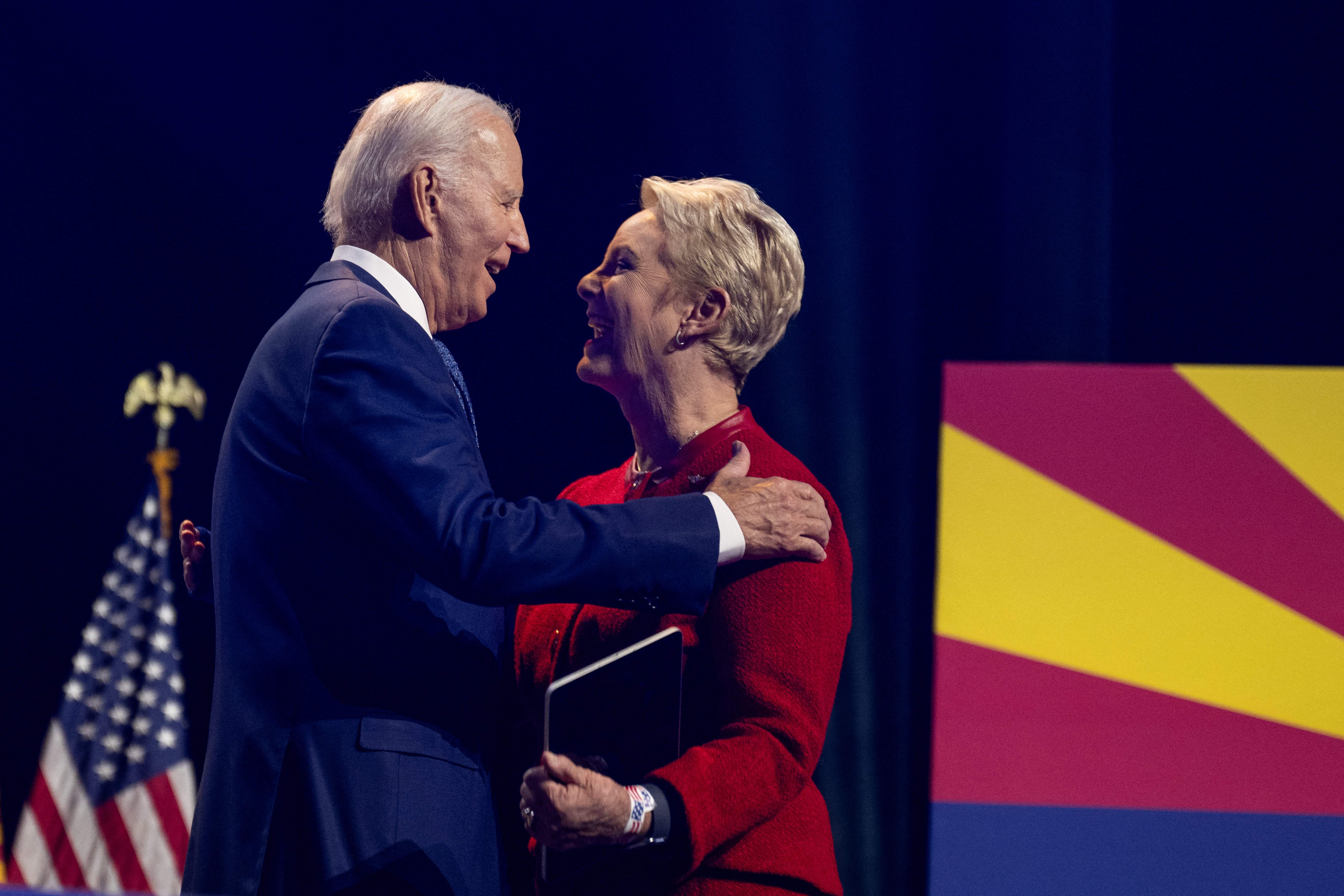
"For centuries," President Biden said yesterday in Tempe, Ariz., during a major speech on democracy, "the American Constitution has been a model for the world, with other countries adopting 'We the People' as their North Star as well."
- "I know virtually every major world leader," he continued. "Everywhere I go, they look and they ask the question: 'Is it going to be OK?'"
Why it matters: In a preview of 2024 themes, Biden used the home state of the late Sen. John McCain (R-Ariz.) as the setting to paint former President Trump's "MAGA Movement" not just as political opponents — but as a menace to the American experiment itself.
"We see the headlines: Quote: 'sweeping expansion of presidential power,'" Biden added in reference to Trump's plans if he wins next year.
- "It's not one person," Biden said. "It's the controlling element of the House Republican Party."
- On Trump suggesting that Joint Chiefs of Staff Chairman Mark Milley, whose retirement ceremony Biden will address today, should be executed for "treasonous" betrayal, the president said: "Although I don't believe even a majority of Republicans think that, the silence is deafening."
The bottom line: "I've never been more optimistic about America's future," Biden said. "We just need to remember who we are."
5. 🪖 Milley: "Rome hasn't fallen!"

Army Gen. Mark Milley, 65, retires today as chairman of the Joint Chiefs of Staff — the nation's highest-ranking military officer, and the principal military adviser to the President.
- Jeffrey Goldberg, editor-in-chief of The Atlantic, traveled extensively with Milley for "The Patriot," a profile in the magazine's November issue focused on the general's handling of the existential tumult of the Trump years.
Goldberg captures a memorable moment at Quarters Six — the chairman's home on Generals' Row at Fort Myer, across the Potomac from the Washington Monument, Lincoln Memorial and Capitol:
I visited him there on a number of occasions, and almost every time he walked me out onto the porch, he would look out theatrically on the city before us — on the Capitol that was sacked but not burned — and say, "Rome hasn't fallen!"
One time, though, he said, "Rome hasn't fallen — yet."
6. 🎢 Wall Street's September slump


After clawing to within 5% of a new record high, much of the S&P 500's gains this year have melted away over the past few months, Matt Phillips writes for Axios Markets.
- The S&P has shed 4.6% this month, in its second straight monthly decline. September has been the index's worst month of the year.
Why it matters: Touching a new record high is the traditional confirmation that stocks are officially in a new bull market.
Context: The S&P 500 soared nearly 30% between October 2022 and this July.
- That led some to declare that happy days were here again, and a new bull market had begun.
🥊 Reality check: Since the end of June, inflation — like Monty Python's proverbial plague victim — has shown it isn't quite dead yet.
- Oil prices have jumped — thanks to Saudi Arabia and Russia cutting production.
- Home prices have resumed their upward climb.
Long-term interest rates are now the highest in 16 years — and stocks don't like it.
7. 🐘 Debate dropoff

The second Republican presidential debate drew 9.5 million viewers Wednesday night — down 25% from the 12.8 million who tuned in during the first debate last month, Axios' Sara Fischer writes from Nielsen ratings.
- For context, the first two Republican primary debates for the 2016 election — with Trump as a draw — saw 23.9 million and 22.9 million viewers, respectively.
Sign up for Sara's weekly Axios Media Trends.
8. ☕ 1 fun thing: National Coffee Day

Illustration: Rebecca Zisser/Axios
Axios AM

Catch up with the most important news of the day