Axios AI+

July 25, 2023

Hi, it's Ryan.
Life without AC is no fun in New York this week. Today's AI+ is 1,116 words, a 4-minute read.
1 big thing: Follow the AI money

Illustration: Tiffany Herring/Axios
The most important question about AI right now isn't whether it will destroy humanity or become sentient, but how its creators intend to profit from it, writes Axios' Scott Rosenberg.
What's happening: Investors are pumping AI-related valuations into the stratosphere. That means companies seeking "monetization" will start getting creative and aggressive about revenue any day now.
Why it matters: Where the money comes out of the system will determine who the new technology serves — and whether it empowers or exploits us.
Driving the news: Big Tech companies start reporting their quarterly results this week, in what will be the third earnings season since the debut of ChatGPT last November — and investors, having bid up anything with an AI label for months, are starting to ask harder questions.
How it works: So far, the AI business looks like every other internet-era tech business when it comes to making money: You can charge for subscriptions, you can sell ads, or you can sell services to other businesses.
- OpenAI is giving away basic access to ChatGPT but selling $20-a-month enhanced subscriptions.
- Google and Microsoft are both making their AI-enhanced chat-based search products free, so expect advertisements — and the data mining that makes them more valuable — to kick in at some point.
- Image-based AI startups are going the freemium route, while giants like Adobe try to build new capabilities into their existing subscription models.
Between the lines: Running these services burns through computing cycles (and the energy that powers them) at a staggering rate, so the "free" AI tier is likely to get less attractive over time.
Microsoft, Google, and many other firms also have big plans to crank up subscription and consulting fees for customers that want AI enhancements to their software.
- Microsoft recently announced it would charge $30 per user per month for its AI "copilots." That could quickly add up to billions in new revenue.
- SAP's CEO told Axios that his B2B giant expects customers will pay a hefty premium for AI add-ons, too.
What to watch: Startup founders like to say things like "just find product-market fit and the revenue will come," but dollars don't just magically materialize — you still have to figure out who's going to pay, for what, and how.
- Companies' pledges of "responsibility" will last only as long as investors' cash.
- When the choice is between running out of financial runway (i.e. shutting down) or prioritizing revenue over ethics, there's never much doubt what will win out.
- One area that could get ugly fast: when AI starts collaborating with ad targeting, users can expect further privacy erosions, greater spam assaults and even less control of their online experience.
Yes, but: Some of the key companies in the AI boom are organized in a way that suggests they'll balance profit-seeking against other desirable goals.
- OpenAI was founded as a nonprofit, but in its current form it's operating a for-profit subsidiary with a cap on investor returns.
- Anthropic, another high-profile AI startup, is structured as a public benefit corporation, which means it can consider other goals besides maximizing shareholder return.
- Still, there's nothing in these firms' charters that determined leaders (and smart lawyers) can't undo whenever they want.
- The record isn't great: Etsy, which went public as a certified B corporation, ditched that status when times got hard.
Go deeper: Investing in the AI "mafias"
2. AI lawsuits spread to healthcare

Illustration: Aïda Amer/Axios
Cigna Healthcare is facing a federal class action lawsuit which alleges the company used algorithms to "deny payments in batches of hundreds or thousands at a time," as part of an almost completely automated claims decision process.
- The suit was filed in California's eastern district on Monday, alleging violations of California law, which require medical professionals to conduct "thorough, fair, and objective" reviews of insurance claims.
Why it matters: The Cigna lawsuit is part of a growing portfolio of AI claims filed by Clarkson — a public advocacy law firm — which has also gone after OpenAI and Google on behalf of creators who argue that AI system stole their data and creative output.
- At stake is whether an algorithm can provide the individual case review required by California health insurance law, or whether only human review meets the standard set out in state law.
What's happening: Cigna's PxDx system (an abbreviation of procedure-to-diagnosis) was used to refuse around 300,000 pre-approved claims over a two-month period last year — with the alleged average time taken to reject each claim being 1.2 seconds.
- The most astonishing claim is that a single Cigna medical director rejected 60,000 claims over a single month.
- Internal company documents detailing these actions led ProPublica and Clarkson to conclude that the only way to operate at that speed is for a human to provide bulk confirmation of algorithm decisions, rather than review the claims individually, as the law requires.
- The suit argues that Cigna "wrongfully delegate their obligation to evaluate and investigate claims to the PxDx system" and Cigna "fraudulently misled" its California customers "into believing their health plan would individually assess their claims."
- Of the claim denials that were appealed by Cigna customers, around 80 percent of the initial decisions were overturned.
- The California Department of Insurance is coordinating with other state regulators to investigate the claims, per ProPublica, which first reported the allegations that underpin the suit.
By the numbers: Two in three Americans say they worry about surprise medical bills.
What they're saying: "They've harnessed advancing technology not to improve people's lives, but to summarily reject thousands of valid claims in the name of efficiency," said the law firm's managing partner, Ryan Clarkson, in a statement.
- House Energy and Commerce Committee Chair Cathy McMorris Rodgers (R-Wash.) wrote to Cigna in May suggesting the high rate of successful appeals against PxDx decisions indicates "policyholders paying out-of-pocket for medical care that should be covered under their health insurance contract.”
The other side: "PXDX is a simple tool to accelerate physician payments that has been grossly mischaracterized in the press. The facts speak for themselves, and we will continue to set the record straight," a Cigna spokesperson told Axios.
3. Training data
- Microsoft, Alphabet (Google), Spotify and Snap all report earnings today.
- The Senate Judiciary subcommittee on privacy, technology and the law meets to examine AI regulation principles at 3pm ET, with testimony from Anthropic CEO Dario Amodei and computer science professor Yoshua Bengio.
- Cohere adds to the growth of custom enterprise chatbots with the rollout today of Coral, an AI assistant that delivers sector-specific responses.
- Unauthorized, AI-generated game "mods" are duplicating voice actors' work and, they say, threatening their control over their own voices. (Axios Gaming)
- AI is coming to the rescue of cash-strapped down-ballot election candidates. (Politico)
4. + This
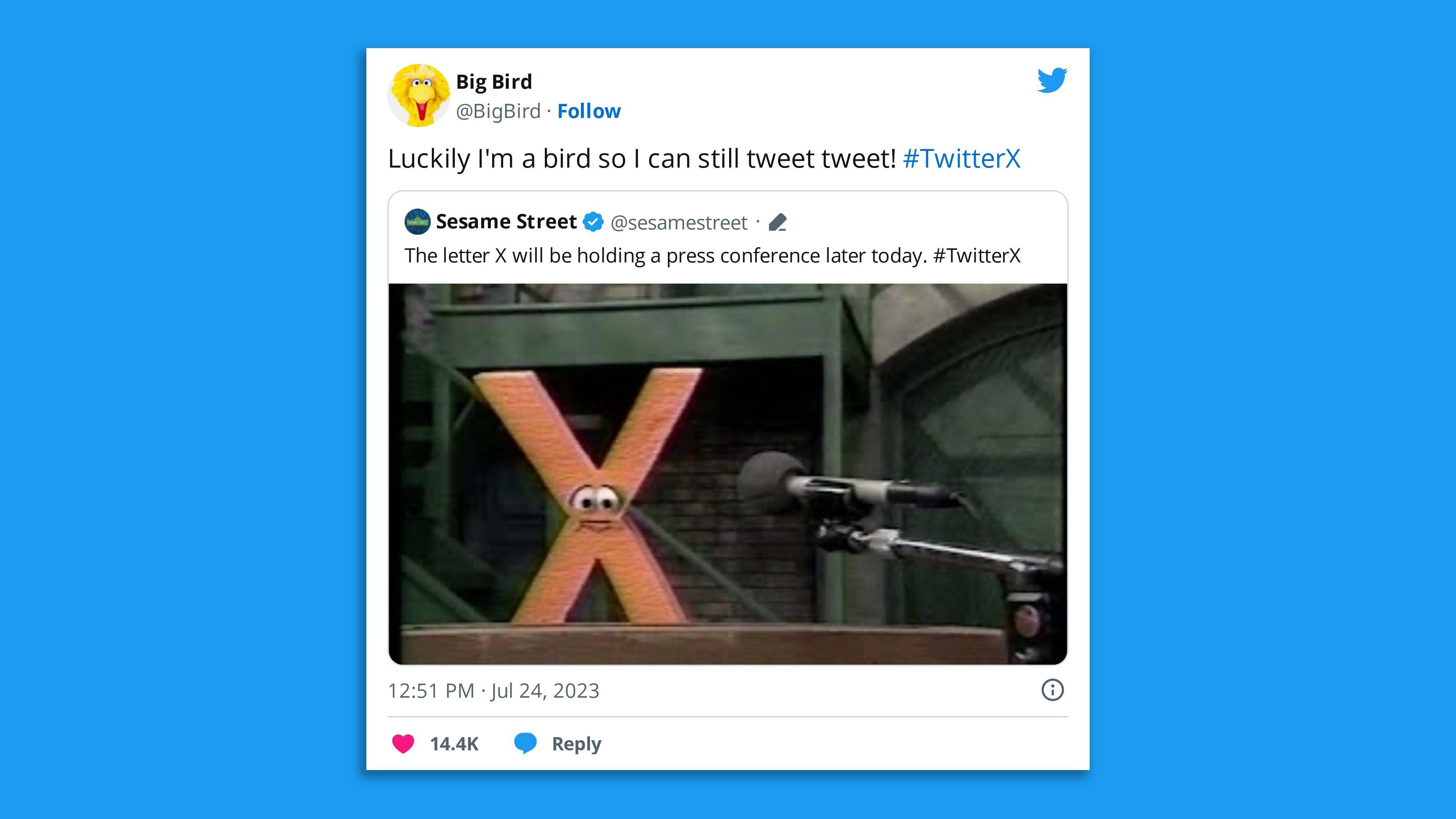
More news from the avian world!
Thanks to Scott Rosenberg for editing and Bryan McBournie for copy editing this newsletter.
Sign up for Axios AI+

Scoops on the AI revolution and transformative tech, from Ina Fried, Madison Mills, Ashley Gold and Maria Curi.