How climate change is making hurricanes worse for Tampa Bay water systems


Add Axios as your preferred source to
see more of our stories on Google.
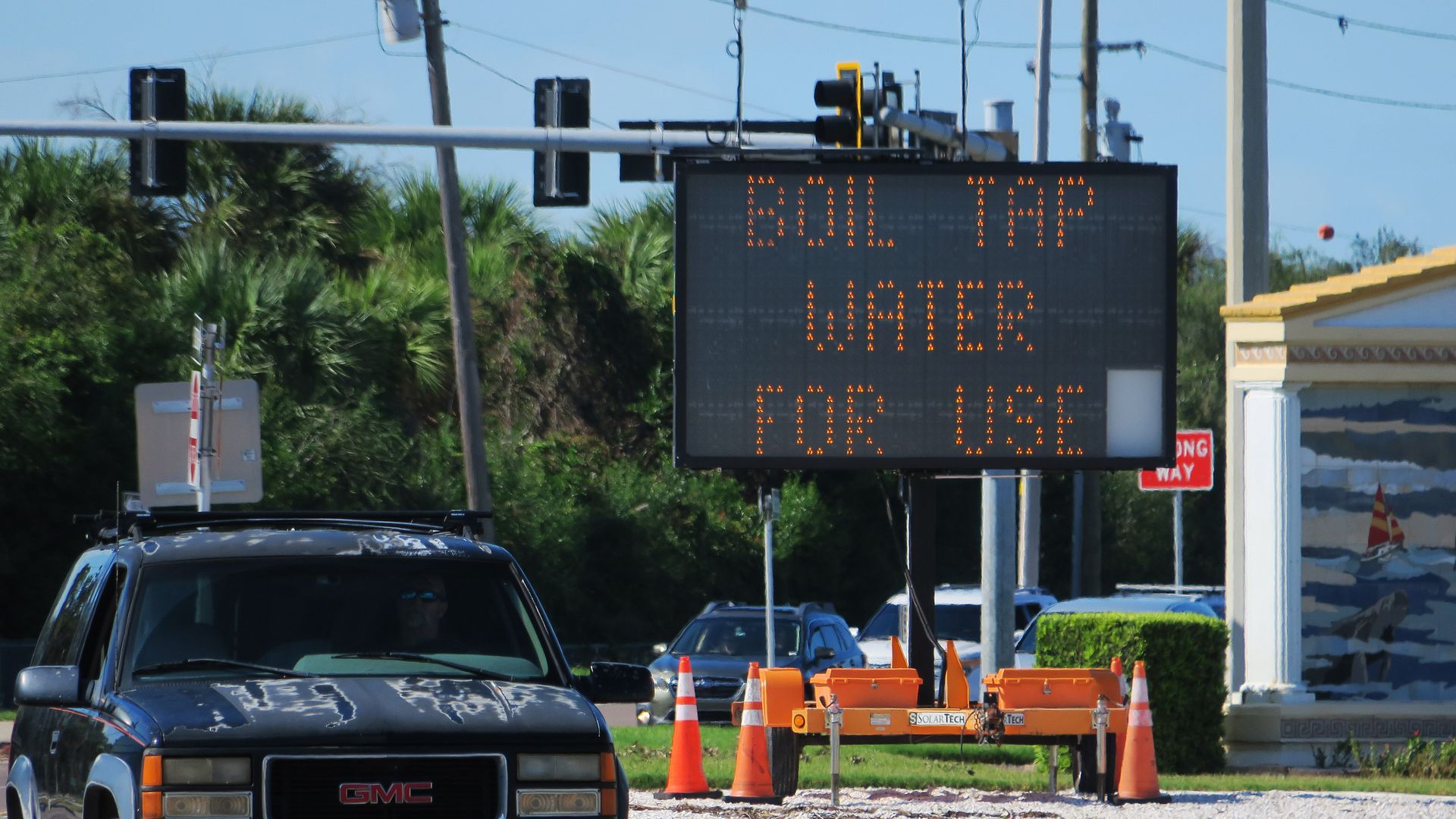
A sign warning residents to boil water after Hurricane Helene. Photo: Paul Hennessy/Anadolu via Getty Images
As Hurricanes Debby, Helene and Milton roared through the Gulf of Mexico, all three threatened Tampa Bay water systems.
Why it matters: It's another symptom of how American infrastructure isn't ready for climate change.
Catch up quick: Hurricane Debby dumped up to 14 inches of rain in some parts of the region, overwhelming drainage systems and flooding areas that had rarely, if ever, experienced those conditions.
- Both Helene and Milton sparked shutdowns of water treatment plants in St. Petersburg, forcing many residents to forego showers and toilet flushing.
- Some Pinellas County coastal communities were under a boil-water notice for several days due to damaged pipes and pump stations from Helene's record storm surge.
- Many more communities, from the southern Pinellas barrier islands to Temple Terrace, dealt with drinking water issues after Milton due to power outages and busted pipes.
- And through all the storms, overwhelmed sewage systems discharged millions of gallons of wastewater into waterways.
The big picture: Residents in hurricane-prone areas have learned to expect power outages and floods, but water insecurity during these emergencies is a fairly new phenomenon.
- "With climate change ... it is a double whammy of infrastructure continuing to age and Mother Nature throwing at it larger and more intense storm events," said Darren Olson, a water resources engineer who helps put together the American Society of Civil Engineers' Report Card for America's Infrastructure.
Water infrastructure is made up of three parts: drinking water, wastewater treatment and stormwater management.
- All parts of the system are pushed to the limit during hurricanes, due to freshwater flooding, saltwater intrusion from storm surge, power outages and more.
State of play: "We will always have these events, and the trend is for them to become more frequent, but what can we do as a nation to make ourselves better prepared?" asks Olson. "Infrastructure is, I think, a key part of that."
- But it won't be cheap.
- When much of American cities' water infrastructure was first installed through the mid-20th century, the federal government was picking up the tab, Olson says. Today, local governments are responsible for maintenance and upgrading.
- The end result is that "we've been underinvesting for decades," he says.
Zoom in: Tampa Bay governments have poured millions of dollars into water infrastructure projects in recent years, with more improvements on the way, spokespeople told Axios.
- For example, a $17 million project is underway to replace an aging drinking water booster station in St. Pete Beach. The new two-story facility is designed to withstand more than 18 feet of flooding.
Yes, but: The storms pushed St. Petersburg Mayor Ken Welch to rethink his city's resiliency strategy.
- Speaking to reporters last month after Milton, he pointed to the Northeast Water Reclamation Facility, which was shut down during both storms, as an example of past planning coming up short.
- The plant is undergoing a $70 million project to help it withstand up to 11 feet of storm surge, Welch said. Forecasters at one point projected Milton to bring up to 15 feet of surge.
What they're saying: "So even with our good planning, the reality is that we are seeing more of an impact from climate change," Welch said.
- "We're seeing more of the extreme impact rather than the moderate, and I think our resiliency plan has to reflect that."