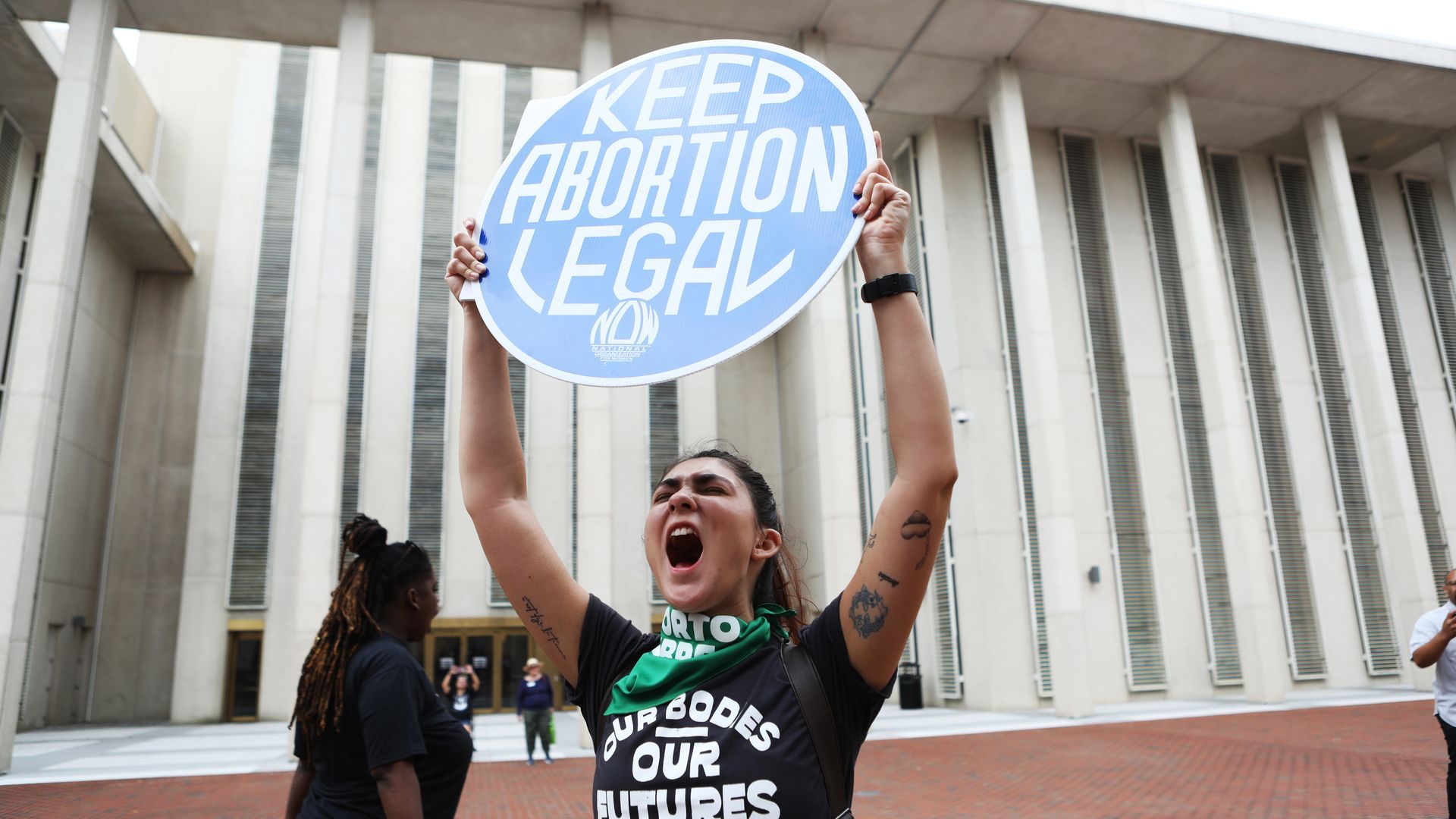
Protesters demonstrate near the Florida State Capitol in April, as the six-week abortion ban moved through the Legislature. Photo: The Washington Post via Getty Images
When a statewide ban on most abortions after six weeks of pregnancy takes effect in a month, its implications for reproductive rights will reach well beyond Florida.
Why it matters: The ban drastically reduces access to the procedure not just for Floridians but for people in neighboring states who have relied on the Sunshine State as a haven for access.
Zoom in: The new ban includes carve-outs to save a pregnant person's life, to "avert a serious risk" to the patient's health, or in limited cases in which the fetus has a fatal abnormality.
It also has exceptions up to 15 weeks for pregnancies caused by rape, incest or human trafficking — if the patient can back it up with certain documentation, such as a police report or court record.
That spike was even more dramatic from 2021 to 2022, per WUSF.
The bottom line: With the six-week ban, Florida will go from being one of the freest states for abortion access to one of the most restrictive in a span of just two years.
Yes, but: The Florida Supreme Court ruled on Monday that Florida voters will have a chance this November to enshrine abortion access until fetal viability — around 24-28 weeks of pregnancy — in the state constitution.