Where Tampa Bay homes face flood risk in next 30 years


Add Axios as your preferred source to
see more of our stories on Google.
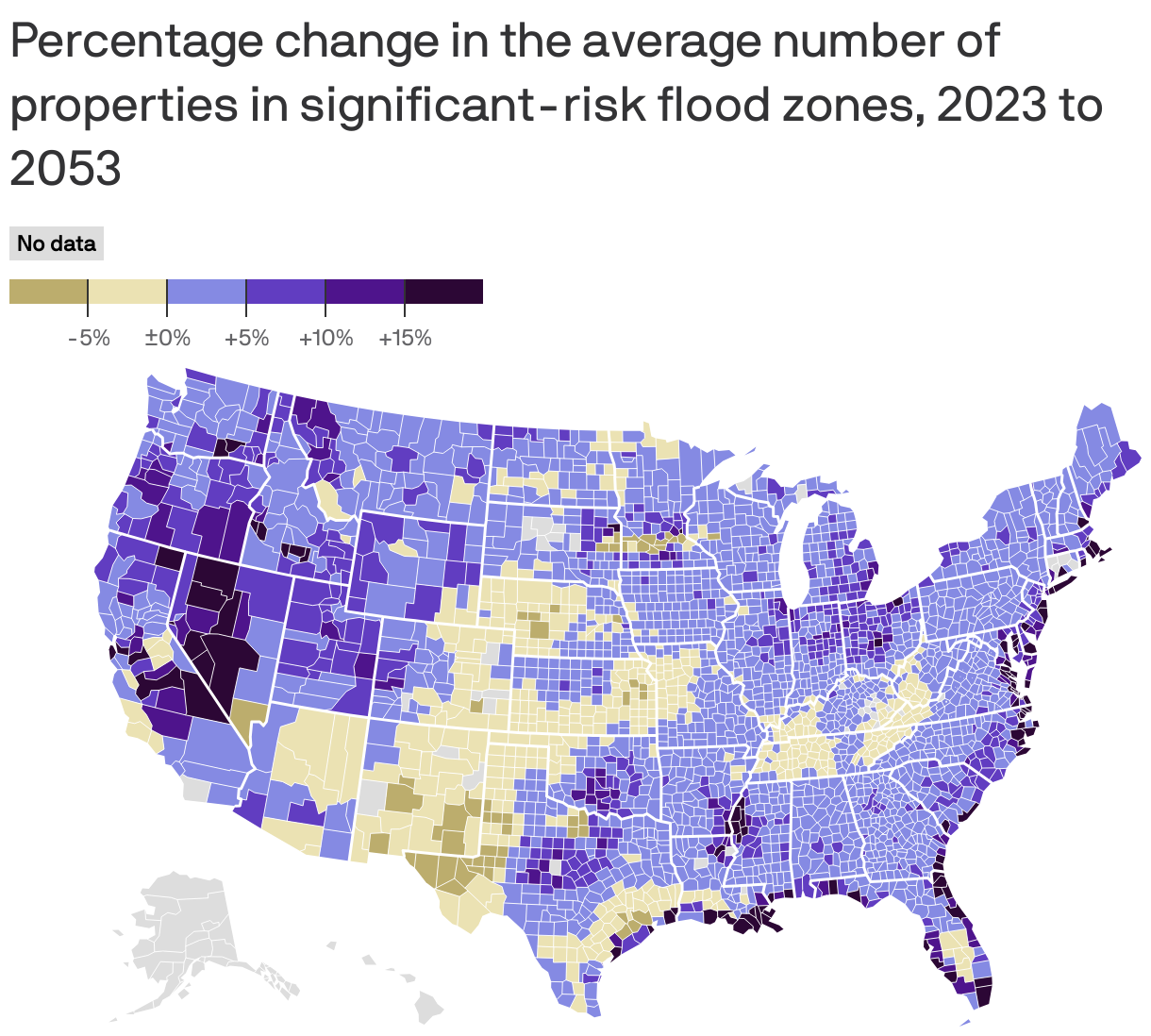
The share of Pinellas County properties with a significant risk of flooding is projected to increase by 18% in the next 30 years, according to the nonprofit First Street Foundation.
- In Hillsborough, that rise is projected at about 11%.
Why it matters: Of the roughly 4,600 prospective homebuyers Zillow surveyed nationwide last spring, over 80% said they considered at least one climate risk when looking for a home, Axios' Sami Sparber reports.
State of play: Real estate websites are sharing more climate risk information with buyers and sellers.
- Realtor.com, which was the first major site to show a home's flood risk, added heat, wind and air-quality risks to listings last month. The company added wildfire risk in 2022.
Threat level: Nearly 45% of U.S. homes face the risk of severe or extreme damage from environmental threats, according to a new report from Realtor.com.
By the numbers: All Tampa Bay area counties other than Polk face a projected increase in the number of homes at risk of flooding, per the First Street Foundation data.
- Sarasota faces the biggest jump in the region and the second-highest increase in Florida at 34%.
- Pasco's increase is projected at about 14% and Manatee at 11%. Polk has a projected decrease of about 2%.
- The highest increase — 41% — is expected in Volusia County, home to Daytona Beach.
Between the lines: Climate change threatens to make homeownership more expensive, said Matthew Eby, First Street founder and CEO, at an SXSW panel last month.
- Millions nationwide may see higher insurance rates due to the risk of extreme weather, according to recent First Street modeling.
What's next: Climate risks aren't the only consideration when buying a new home, but more shoppers might want to know about home improvements made to mitigate against extreme weather, Realtor.com chief economist Danielle Hale said at the event.
Go deeper: The climate change real estate bubble risks billions