How Seattle's Big Dark got its name

Add Axios as your preferred source to
see more of our stories on Google.
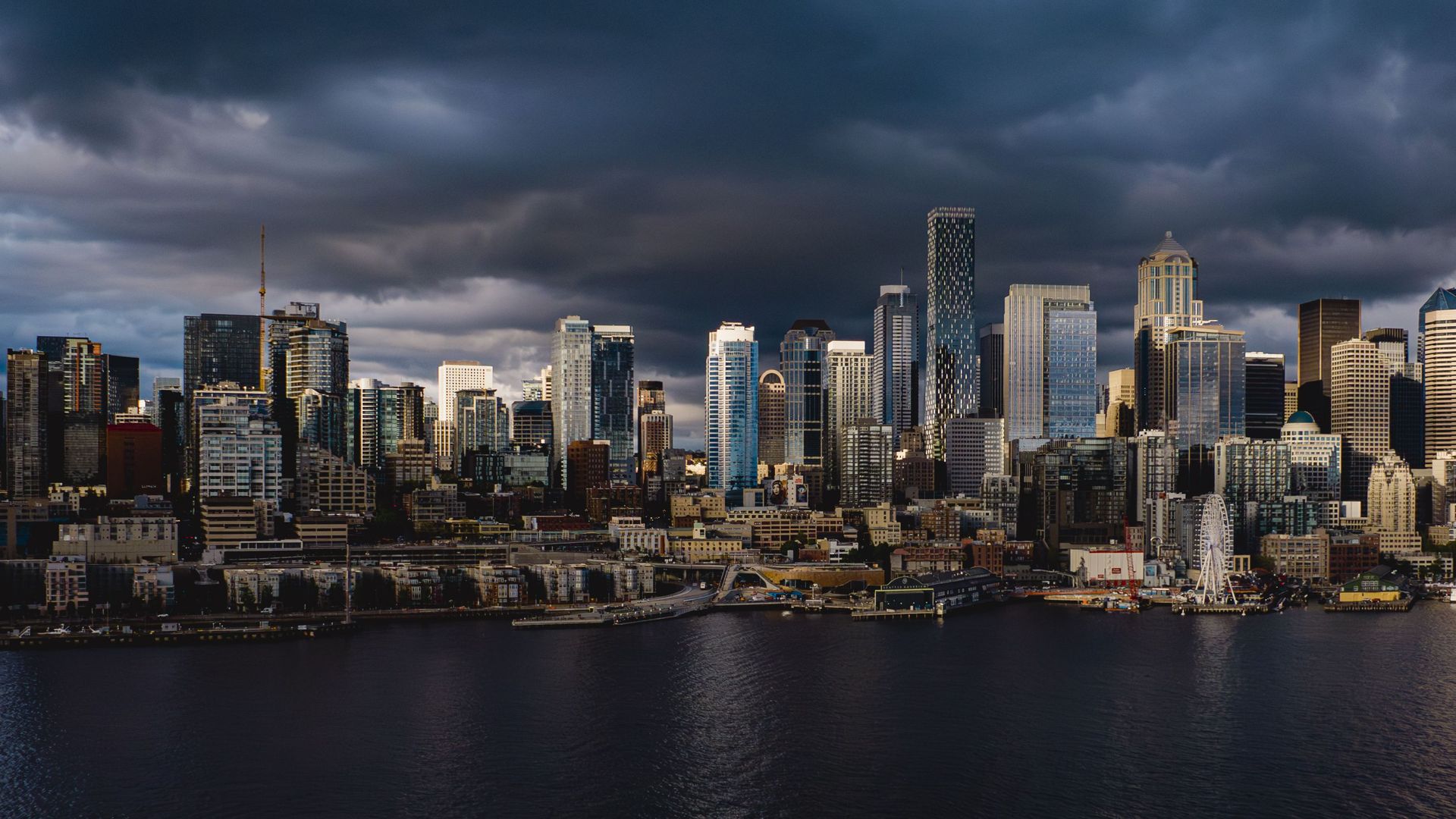
Dark and dim. Photo: Joe Sohm/Visions of America/Universal Images Group via Getty Images
The Big Dark was never supposed to be a big deal.
Why it matters: While the term started as weather-office slang for Seattle's gloomy season, it has quickly become part of our Pacific Northwest lexicon.
Driving the news: Daylight saving time ends at 2am Sunday, when clocks fall back an hour, ushering in what many consider the unofficial start of the Big Dark.
- By the time we get to winter solstice on Dec. 21, we'll have nearly 16 hours of darkness a day.
- "There's a big difference between sunset near 6 and going to and from work in the dark," Seattle weather blogger Justin Shaw told Axios.
The backstory: The phrase became shorthand for the region's long, gray season thanks in part to a meteorologist, a newspaper story and a series of powerful storms.
- In October 2017, National Weather Service meteorologist Dustin Guy used "The Big Dark" while discussing a series of approaching storms amid the arrival of Seattle's gloomy season.
- The expression appeared in a Seattle Times headline and was soon picked up by other news outlets.
- The Big Dark wasn't new to NWS Seattle, said Logan Johnson, who headed the forecast office at the time. Staff had used it informally for years to describe diminishing daylight.
The plot twist: But with a parade of storms bearing down on the region, the expression apparently got mistaken as an official name for a weather system, Johnson told Axios this week.
- The Weather Service doesn't name individual storms, he said, and the confusion caused some consternation.
- The Big Dark "was never more than just an informal term," Johnson said.
What they're saying: Guy never sought credit for popularizing the phrase and isn't particularly happy about its enduring fame.
- "It's something I just can't seem to live down," he told Axios.
- But despite his misgivings about the attention, he still considers the Big Dark an apt description of the season when daylight dwindles and gray skies settle in.
- "Once we get to the middle of October, we pretty much get two things: the dark and the dim. Dark during the night and dim at day," Guy said at the time.
The upside: Shaw says the darkness isn't all bad.
- There are some advantages, he said, including avoiding unwanted conversations at dark bus stops and having a ready excuse to skip yard work and exercise.
- "I've used that to my advantage multiple times in the winter months," he said.
Your turn: How do you survive the Big Dark? Share your favorite coping strategies, guilty pleasures or dark joys by emailing us.