Seattle voters weigh transit tax increase

Add Axios as your preferred source to
see more of our stories on Google.
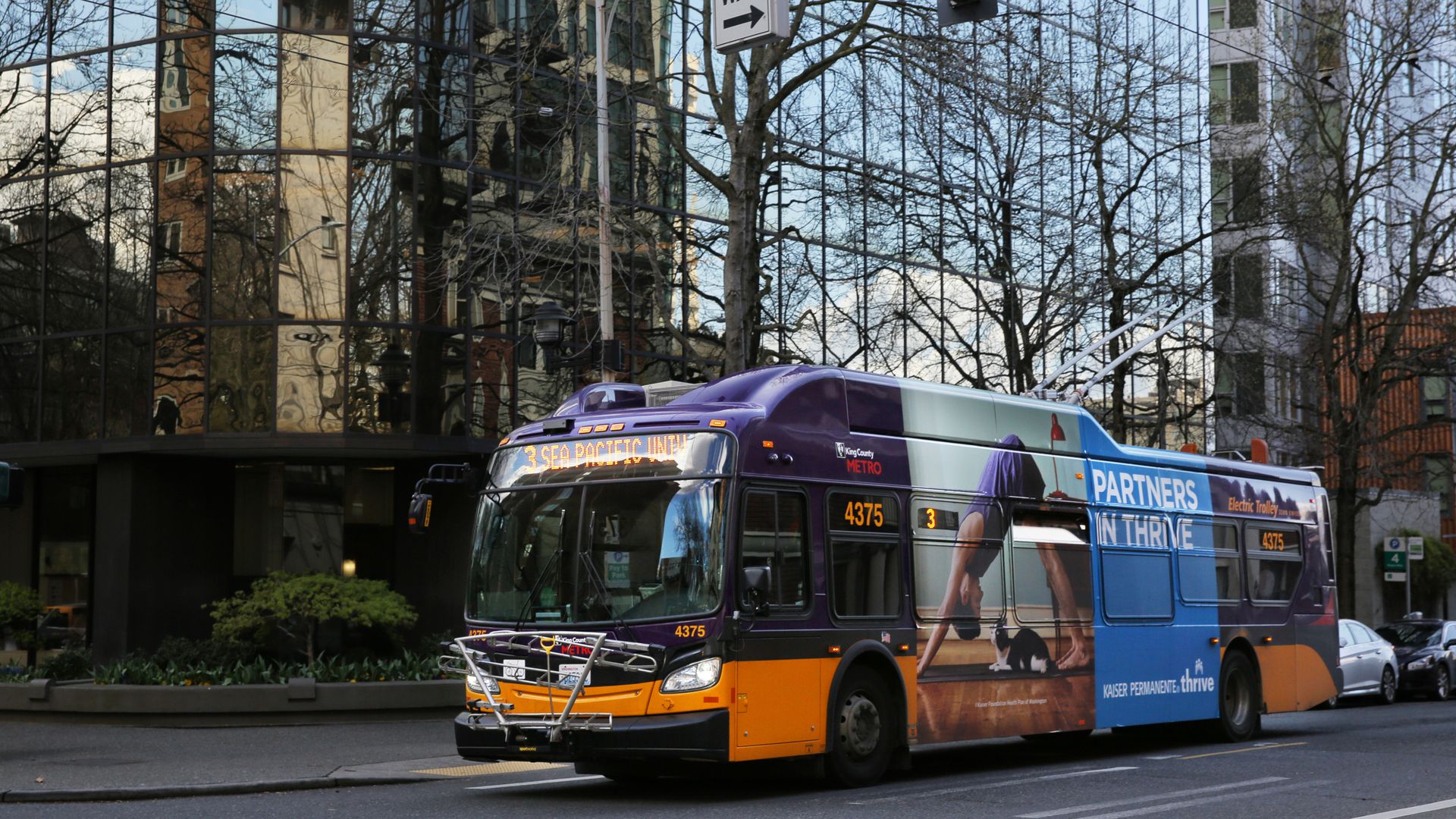
Seattle voters have a history of saying yes to transit taxes. Photo: Genna Martin/San Francisco Chronicle via Getty Images
Seattle voters will decide next week whether to double a sales tax to keep buses running and expand transit service.
Why it matters: Proposition 1 would preserve thousands of existing bus trips while adding more frequent service, particularly at night and on weekends.
- If the measure fails, roughly 180,000 annual bus trips could disappear by next fall, according to the city.
Driving the news: The measure would replace a six-year transit tax approved in 2020 but expiring in March.
- The tax would double from 0.15% to 0.3% for up to 10 years, generating an estimated $138 million annually.
- The city estimates the median two-person Seattle household would pay about $58 annually, up from $29 today.
State of play: Most of the money would pay King County Metro to provide roughly 275,000 bus trips annually — or about 95,000 more than the current city-funded program.
- Additional service would focus on neighborhoods most dependent on transit, with better east-west connections, more frequent buses during nights and weekends and expanded service in areas where housing and jobs are growing, per the city.
- The measure would also support streetcars, fund safety and accessibility improvements and increase free ORCA passes from 10,000 to 22,000.
- Some funding would also help the city prepare for future light rail extensions.
The other side: Critics question whether Metro's ridership and operating costs justify additional taxpayer support.
- Charles Prestrud of the conservative Washington Policy Center told KNKX the city should prioritize street improvements instead of sending more money to Metro.
- Opponents also argue that increasing a regressive sales tax would further burden households already struggling with high living costs.
Kirk Hovenkotter, executive director of the Transportation Choices Coalition, which supports Proposition 1, told Axios that state law currently gives cities no other way to raise significant transit funding, but his organization is pushing for more progressive alternatives.
- "What is more regressive than a sales tax is not having bus service at all," he said.
The big picture: Seattle voters have a history of saying yes to transit taxes, approving the last measure with 80% support in 2020.
Zoom out: King County officials approved a separate 0.1% sales tax increase in June without putting it to voters.
- That tax, which takes effect in January, will fund road and transportation improvements rather than Metro bus operations.
What's next: If approved, the new tax would take effect April 1, replacing the expiring measure.