Why coyotes are thriving in Seattle's urban landscape

Add Axios as your preferred source to
see more of our stories on Google.
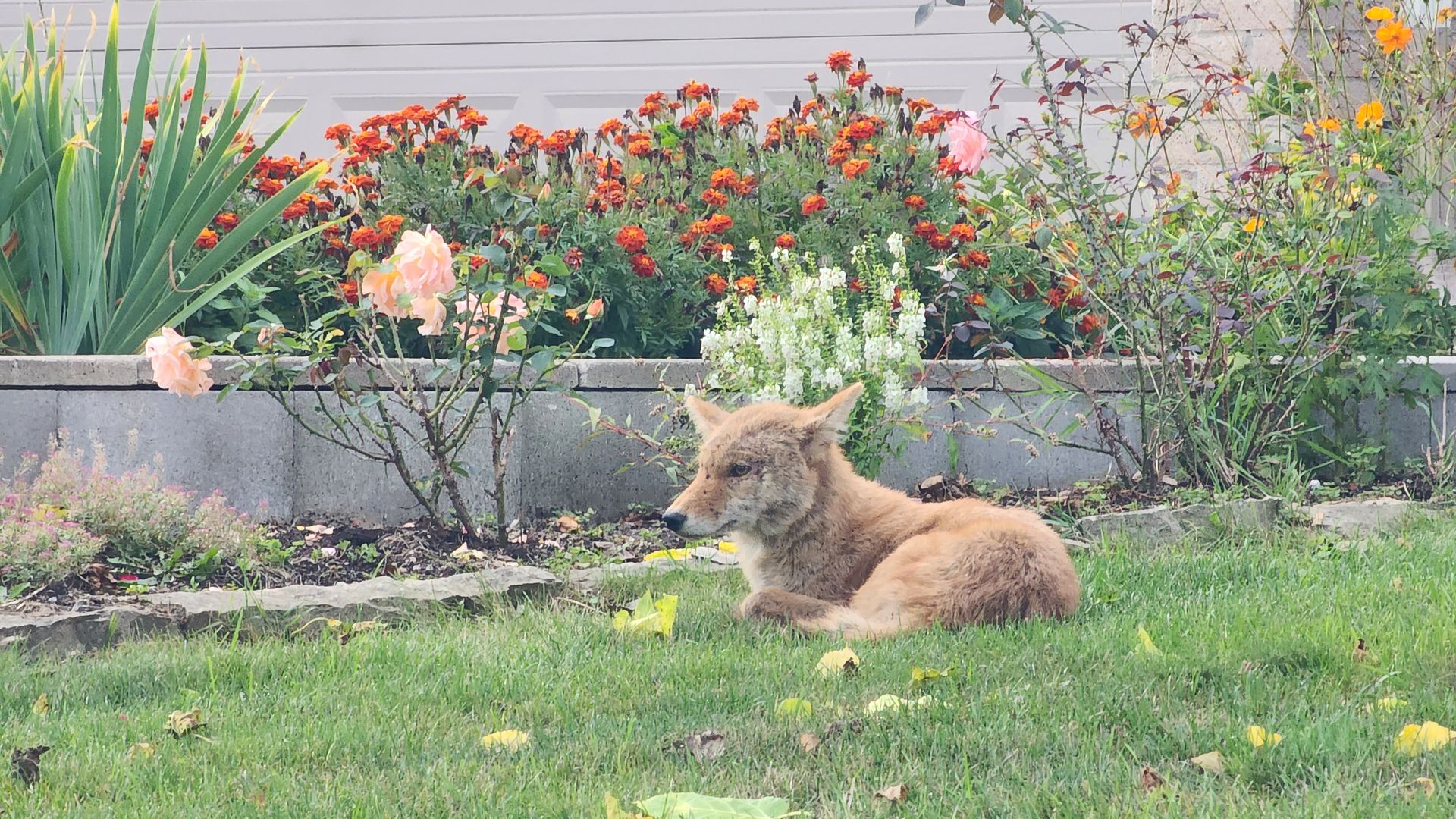
Living the lawn life. Photo: Creative Touch Imaging Ltd./NurPhoto via Getty Images
Seattle is coyote country now.
Why it matters: Coyotes have long been a familiar presence in Seattle's parks, greenbelts and neighborhoods, but researchers now have hard numbers showing just how well they're doing here.
The big picture: Coyote density in Seattle is nine times higher than in Washington's wild lands, according to new University of Washington research.
- Urban coyotes also had diets more than twice as diverse as their wild counterparts.
The researchers analyzed 842 coyote scat samples from Seattle and wild areas near Winthrop and Chewelah, identifying 261 coyotes.
What they found: Food is plentiful in the city, while the wolves and mountain lions that prey on coyotes in the wild are largely absent, researchers said.
- Instead, cars and disease are their primary urban threats.
Berries and rabbits topped the menu for urban and wild coyotes, and Seattle's abundance of rabbits may help explain why coyotes thrive here.
- UW professor and lead author Laura Prugh said rabbit density could potentially be an even stronger predictor of coyotes than human density, though researchers don't have enough data yet to test that theory.
Yes, but: There's a thing as too many people, the study found, with coyotes becoming less abundant in denser parts of the city.
Flashback: Axios reported last fall that coyote sightings were rising around Seattle, though state wildlife officials cautioned that more sightings could be part of a seasonal trend.
What they're saying: Never feed coyotes or other wild animals, Chase Gunnell of the Washington Department of Fish and Wildlife told Axios.
- You should also secure garbage, feed pets indoors, and supervise small dogs, cats and other domestic animals, Gunnell said.
- "This can make a big difference for keeping both pets and wildlife safe," Gunnell said, "and for preventing coyotes from becoming too comfortable or 'habituated' around people."
The bottom line: "Coyotes are here to stay in cities," Prugh said, "and it is up to us to learn how to live with them."