Washington wildfire acreage doubles in 1 month

Add Axios as your preferred source to
see more of our stories on Google.
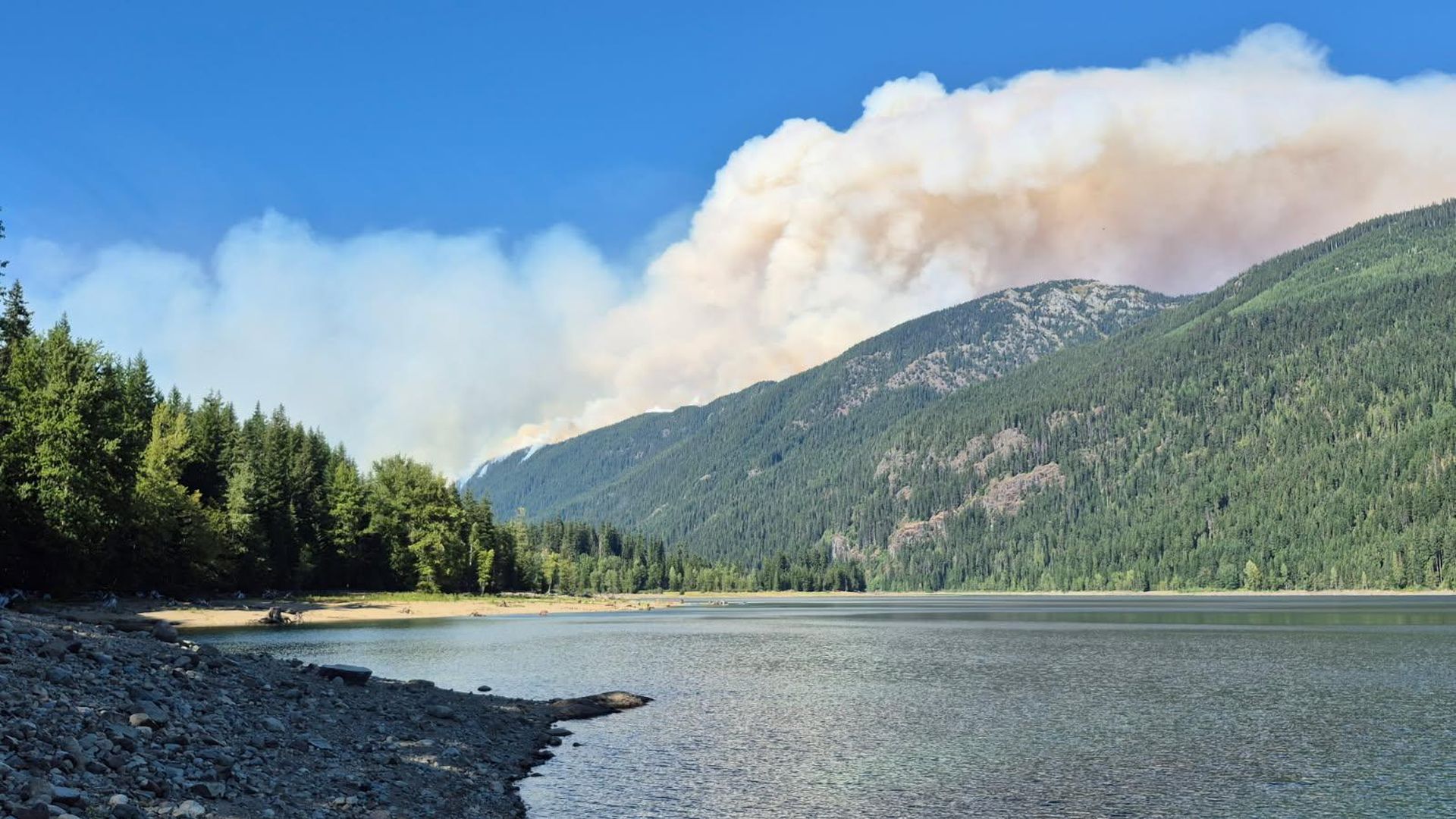
Three Queens Fire grows. Photo: Eric Dodd/Courtesy USFS
Washington's wildfire season has gone from bad to worse in a matter of weeks, with the number of acres burned doubling since the end of July.
The big picture: The destruction has been staggering, particularly around Spokane, where fires that erupted Aug. 1 destroyed more than 830 homes, per Spokane County Assessor Tom Konis.
- He told the Spokesman-Review the damage from the Spokane Complex fires is expected to exceed $1 billion, which could make them among the most expensive wildfires in Washington history.
By the numbers: As of this week, Washington has recorded 1,456 wildfires, and 851,557 scorched acres across Washington, more than doubling the 425,000 acres that had burned as of July 31, according to the latest state and regional fire data.
- 18 large fires are still burning, according to the state Department of Natural Resources' wildfire dashboard.
- Some of the largest are in north-central Washington, including the Sinlahekin and Little Giant fires, each of which has scorched more than 150,000 acres.
- Closer to Seattle, the Three Queens, King and Goat fires are burning just east of Snoqualmie Pass in Kittitas County and have scorched more than 10,600 acres combined.
What they're saying: Washington and Oregon together have already broken the historical record for acreage burned in a full wildfire season, climate scientist Daniel Swain said earlier this month.
Evacuation orders and forest closures remain in effect around several fires.
- Washington remains at Preparedness Level 5, the highest on the scale, meaning firefighting resources are heavily committed.
Yes, but: There's good news for Western Washington on the smoke front, with onshore winds expected to keep most wildfire smoke east of the Cascades through at least the middle of next week, NWS Seattle meteorologist Melissa Gonzalez-Fuentes tells Axios.
What's next: September — historically one of Washington's most dangerous months for wildfires — is still ahead with dry vegetation primed to burn and a statewide burn ban on most outdoor and agricultural burning in effect.