Seattle weighs new limits on overnight RV parking

Add Axios as your preferred source to
see more of our stories on Google.
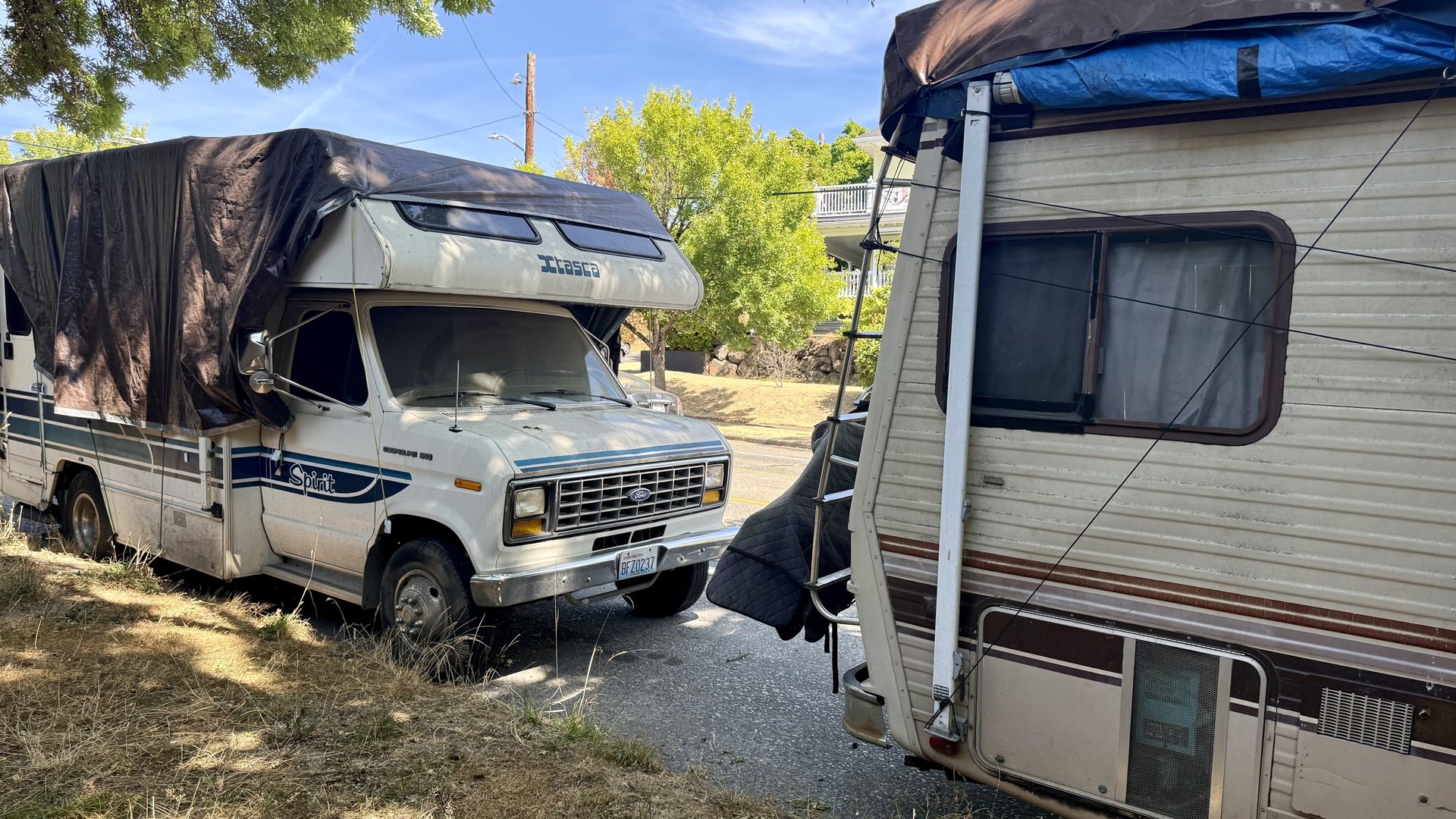
RVs parked along Martin Luther King Jr. Way South. Photo: Melissa Santos/Axios
Seattle officials are weighing a crackdown on RVs and motorhomes, which would include banning them from parking overnight on city streets without a permit.
The big picture: City officials estimate a quarter of people living unsheltered in the Seattle area live in vehicles. But the city's only safe parking lot for RVs closed last year to make way for a pickleball complex.
Zoom in: A suite of legislation before the Seattle City Council aims to expand outreach to people living in vehicles, while also clamping down on when and where they can park.
- One part of the plan would ban overnight RV parking, even in industrial areas where it's currently allowed, unless residents get a permit from the city.
- RVs, travel trailers and motorhomes without a permit would only be able to park for two-hour periods.
Another part of the package would direct $5 million this year toward addressing vehicle homelessness, which would go toward hiring more outreach staff and opening more safe parking lots.
What they're saying: The goal is to get all people who are now living in RVs into safe lots, shelter or stable housing, Councilmember Dan Strauss, the sponsor of the package, told Publicola.
- “We want to be able to say, in a year from now, ‘We are no longer allowing motor homes and fifth wheels on our streets,'" Strauss told the news website.
The other side: Some groups have expressed concerns about the proposed RV permitting process.
- Overnight parking permits would be available only to those who are counted during a one-time census of people living in trailers and RVs.
- That could leave out many people — including those who become homeless after the count takes place, Hali Willis, policy manager for the Seattle/King County Coalition on Homelessness, told a council committee last week.
- People also could lose their RV parking permits if they repeatedly reject offers of shelter, leave belongings on the street or violate the city's noise ordinance, among other reasons. That could lead to the vehicles they live in being impounded.
What's next: Strauss' legislation is expected to come up for a vote in a council committee next month. After that, it would still need to be approved by the full council to become law.