More car-free weekends hit Lake Washington Boulevard

Add Axios as your preferred source to
see more of our stories on Google.
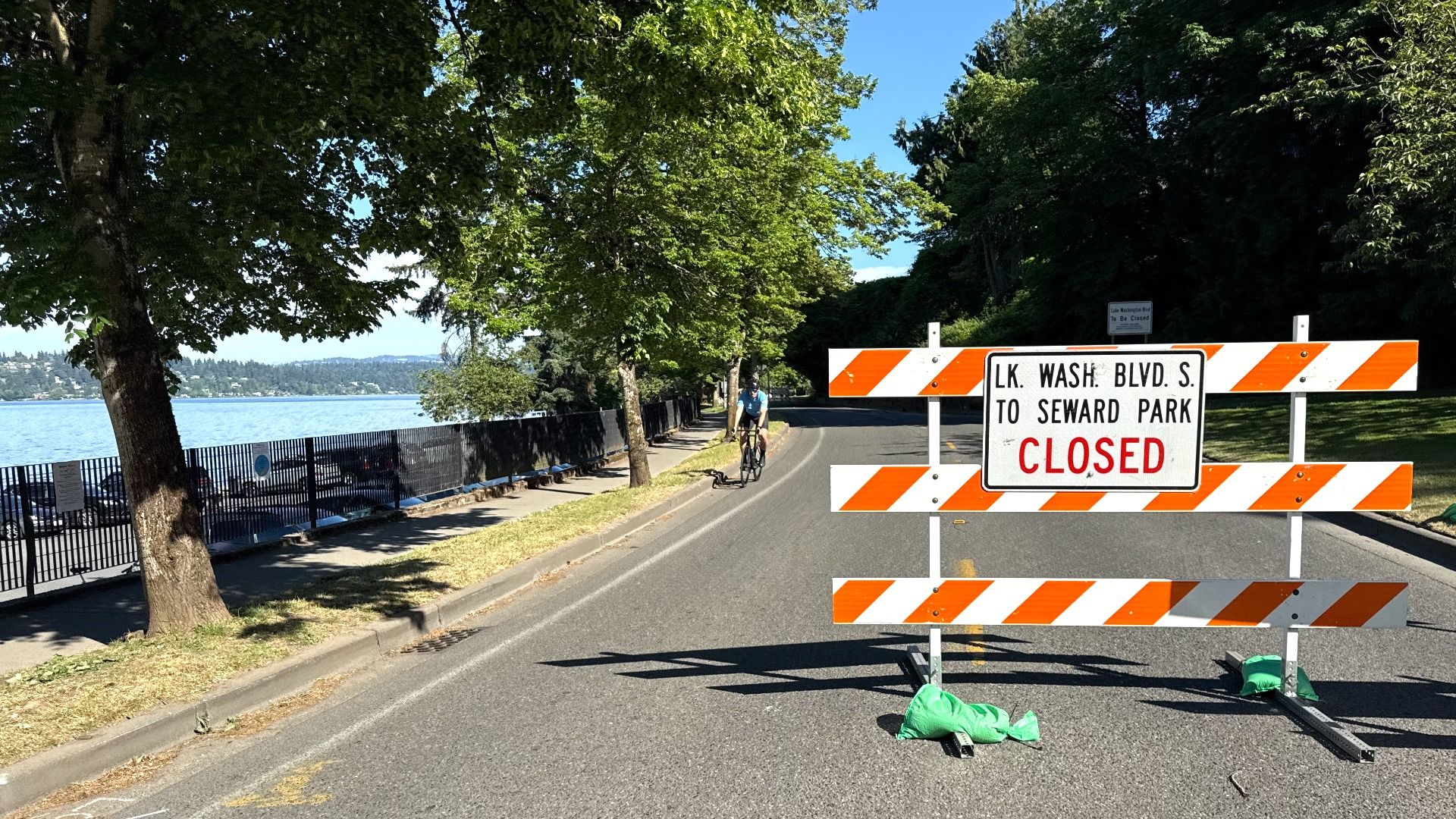
A cyclist rides along the closed Lake Washington Boulevard on Memorial Day. Photo: Melissa Santos/Axios
Walkers, runners and bicyclists will have a stretch of Lake Washington Boulevard to themselves every weekend this summer, boosting the number of days when the scenic road is closed to cars.
Why it matters: The expansion of the city's Bicycle Weekends program is part of Mayor Katie Wilson's push to prioritize pedestrians and non-vehicle traffic on the lakefront route.
How it works: On weekends through Labor Day, cars generally won't be allowed along three miles of Lake Washington Boulevard, from Mount Baker Beach to Seward Park.
- The traffic restrictions will typically start at 7pm Friday and end at 6am Monday.
- Lakeside parking lots — including for beaches and boat launches — can still be accessed from the nearest cross streets.
- People driving to homes along the boulevard can also enter the road from the nearest cross street.
By the numbers: The closures, which kicked off last weekend, will run for 15 weekends and include federal holidays such as Labor Day and July 3 (when Independence Day is officially observed this year).
- Last year's closure schedule was more limited, extending to 10 weekends and not including Monday and Friday holidays.
What they're saying: "Seattle summers are beautiful, and we should be able to enjoy them," Wilson said in a press release.
Caveat: The road will be open to vehicle traffic Aug. 1-2 for Seafair Weekend, when tens of thousands of people come to the lake to watch air shows and hydroplane races.
The other side: Not everyone has supported the boulevard closures. A group called Coexist Lake Washington has pushed for a more limited summer closure schedule, and a few opponents protested the traffic restrictions at last weekend's kickoff event with Wilson.
- Rainier Beach resident Glenn Nelson wrote in a South Seattle Emerald column that limiting vehicle access would erode "one of the very few simple pleasures enjoyed by the BIPOC and other marginalized communities that have been push-broomed into South Seattle."
Seattle transportation officials say on the city's website that a permanent closure "is not the objective" of the program.