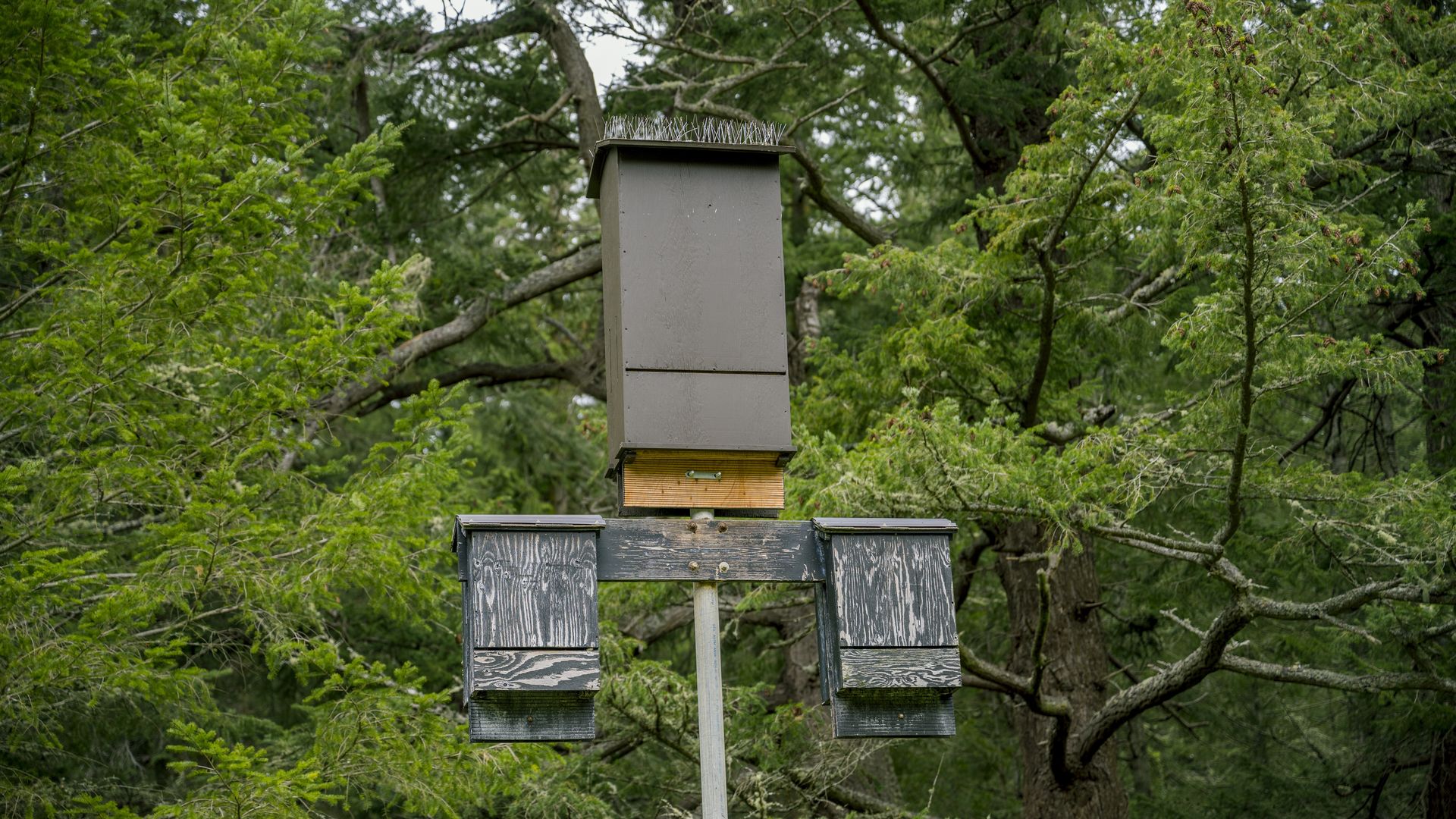
San Juan Island bat box. Photo: Wolfgang Kaehler/LightRocket via Getty Images
If you're ready to level up your outdoor game, consider adding a bat box to your space.
Why it matters: Washington is home to 15 bat species, and bat boxes can help provide safe roosting habitat as natural spaces shrink.
Bats are key pollinators that spread seeds and devour pesky insects like mosquitoes, wasps and flies.
Yes, but: "Bat houses are complicated to get right," warn experts at Bat Conservation International. "They can go unused for years, attract pests, and even harm bats when installed incorrectly."
Skip the trees: Mount on poles or buildings at least 15 feet off the ground to avoid predators like raccoons and owls.
Sun is your friend: Bats prefer warm roosts, so direct sunlight helps.
Bring patience: It can take a year or more for bats to move in.
Reality check: Bats can carry rabies, but the risk is low, per the state Department of Health — avoid handling them and contact wildlife experts if one appears sick or injured.
You'll know your box is working if bat guano starts piling up below.
Great for fertilizer — bad if it's over your grill, so plan carefully.