Seattle's most hated spring bugs


Add Axios as your preferred source to
see more of our stories on Google.
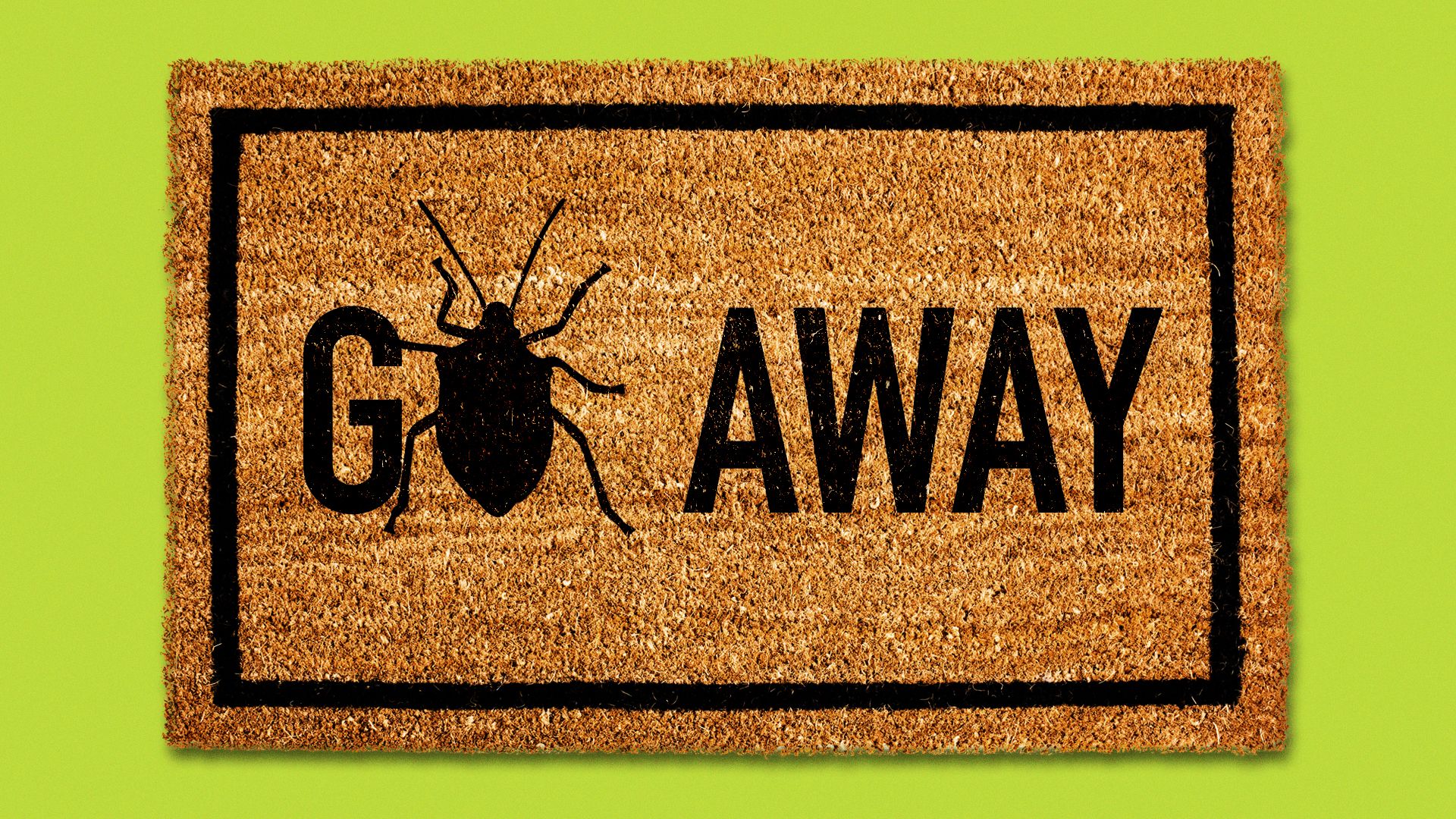
Illustration: Maura Losch/Axios
Even in the nature-loving Pacific Northwest, some bugs are public enemy No. 1.
Why it matters: As spring temperatures climb past about 55 degrees, cold-blooded insects emerge from winter hiding spots seemingly all at once, which is why it can suddenly feel like they're everywhere.
- The good news? They're not a threat to people, Levi Zahn, an entomologist with Multnomah County Vector Control, told Axios.
But they're definitely a nuisance. We asked Seattle readers which pests they hate most, and a few select villains emerged.
- Out of 194 responses, stink bugs (15%), mosquitoes (15%) and ants (12%) were the most despised.
- Flies, spiders and ticks earned honorable mentions.
- But stink bugs — flat-backed invasive brown insects that cluster on warm surfaces and slip indoors — drew the strongest reactions.
What you're saying: Peggy S. of Harstine Island told Axios she "absolutely hates" stink bugs — brown marmorated stink bugs (BMS) in particular — which have swarmed her home in recent years.
- "Yesterday morning I reached to pick up my electric toothbrush from the charger and a BMS was perched (defiantly) on the bristles of the toothbrush," she said.
- Steve A. said stink bugs kept flying into his office and landing on him — even during Zoom meetings — until he discovered an unlatched window and hundreds more on the sill.
- "The only good stink bug is a dead stink bug. Actually, that's not true: Even dead stink bugs are bad."
Perhaps the most horrifying bug experience came from Axios Portland reader B.G.: "I woke up one night with a boxelder bug strolling into my nostril, apparently having entered my CPAP machine through an intake, and making its way down the tube."
Flashback: Like many long-haired people who grew up in the Midwest, Sarah Taylor Oden recalls "the trauma of a June bug spinning and vibrating madly in their hair … like a huge ball of vibrating Velcro."
- "I welcome Seattle's bugs with less trepidation in comparison."
Yes, but: Even the most reviled bugs play an important role — from pollination to feeding other animals and breaking down organic matter.
- "Their disappearance would trigger a collapse of global agriculture and the animal ecosystems that rely on them for waste decomposition and food," Chad Ruffin, a Seattle-based physician and insect enthusiast, told Axios.
- Despite accounting for 90% of all animal biomass, flying insect populations have plummeted by 75% in less than three decades.
The bottom line: It's better to live with 'em than without 'em, Nicole Meyer, senior media officer for PETA, told Axios.
- "Bugs are just trying to make their way in the world like we are, so the least I can do is give them a little grace."