Mar 18, 2026 - Climate
Seattle sneezes earlier as pollen season stretches


Add Axios as your preferred source to
see more of our stories on Google.
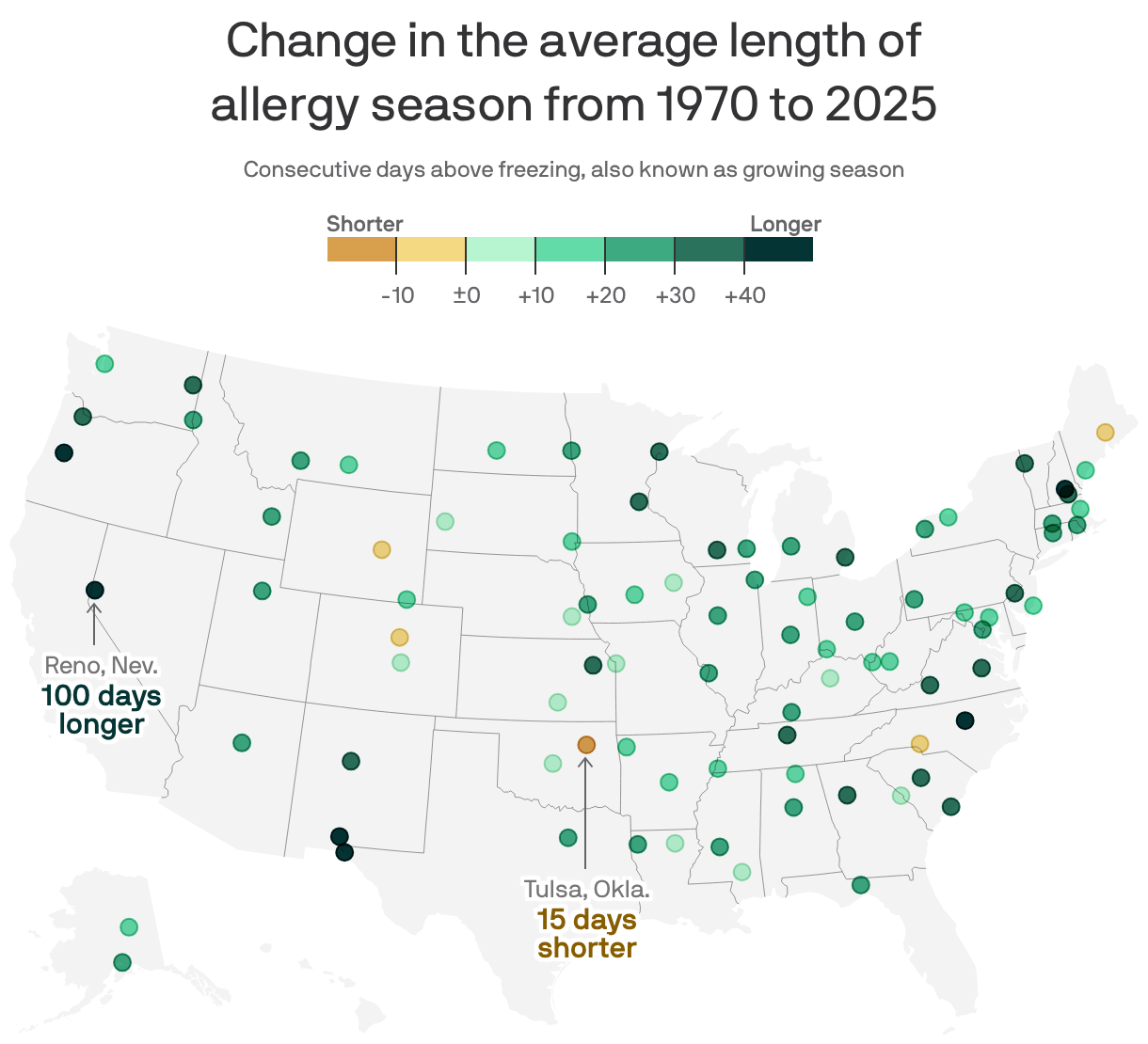
If you're breaking out the Claritin and Zyrtec early, you're not alone. Seattle's spring allergy season is getting longer and stronger.
Allergy season has lengthened more in the Northwest than in any other U.S. region in recent decades, per a Climate Central analysis.
- Compared to 1970, the freeze-free growing season for plants is now 12 days longer in Seattle and 33 days longer in Spokane, the climate research group found.
- Seattle's spring allergy season typically ramps up in March, with pollen from trees — elm, alder, cedar, juniper, cottonwood and maple — as the main offenders, according to the Northwest Asthma & Allergy Center.
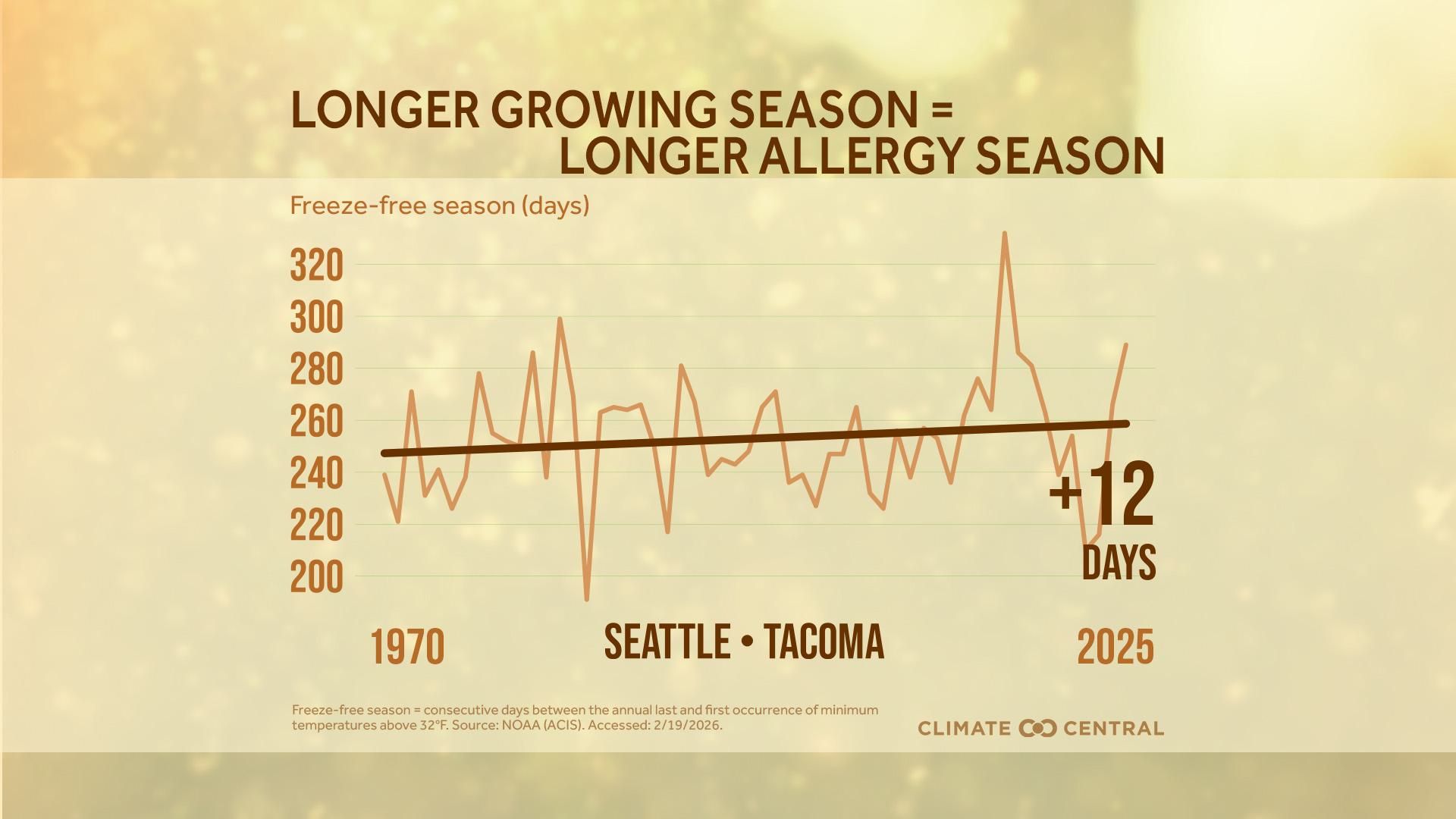
"As temperatures rise, freeze-free seasons are stretching in every region of the country, giving plants weeks of extra time to grow and release pollen," Climate Central's Kristy Dahl said in a statement.
- "For millions of Americans, that means earlier, longer, and often more intense allergy seasons that can take a real toll on health and daily life."
The bottom line: Pass the tissues, would ya?