Why adding new nuclear power in Washington will take time

Add Axios as your preferred source to
see more of our stories on Google.
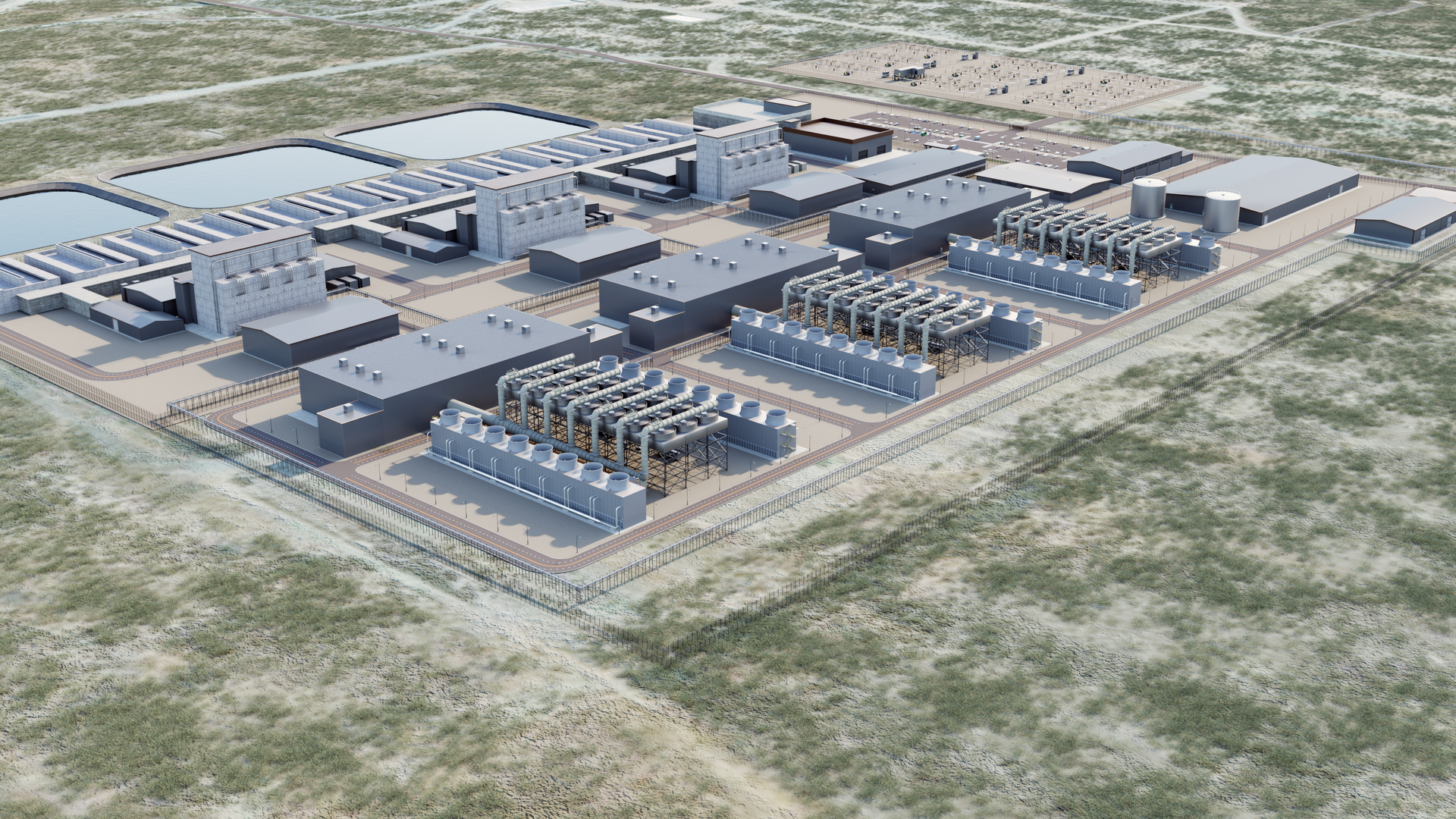
A rendering of a proposed small modular nuclear reactor site, courtesy of X-energy.
Even if Washington embraces small modular nuclear reactors to alleviate its carbon-free energy needs, it will take years to flip the switch, analysts say.
Why it matters: Energy Northwest, the public power consortium proposing a new small modular reactor project near Richland, estimates the first four units at the proposed Cascade Advanced Energy Facility would not begin operating until the early to mid-2030s because of licensing timelines.
The big picture: Building nuclear power plants in the United States requires clearing federal and state regulators, securing billions in financing and navigating a history that still shapes public perception in Washington and beyond.
State of play: Before a single watt is produced, Energy Northwest must pass through several regulatory gates, according to the consortium's Gregory Cullen.
- Federal licensing: The U.S. Nuclear Regulatory Commission (NRC) must approve a construction license. Later, the agency must issue a separate operating license before the plant can generate power commercially.
- State siting approval: Washington's Energy Facility Site Evaluation Council (EFSEC) has to approve the project at the state level.
- Financing: The utility must secure billions of dollars to build the reactors. Energy Northwest hopes to leverage federal loan programs to finance the project.
- Construction and testing: The first four modules — each expected to generate about 80 megawatts — would need to be manufactured, assembled and tested before coming online.
"The first time you do anything, it's hard, it's expensive and it takes a long time," Cullen said.
Flashback: Washington's caution around nuclear power is not theoretical given its history.
- In the 1970s, the Washington Public Power Supply System (WPPSS) set out to build five nuclear reactors. Demand forecasts at the time assumed electricity use would continue climbing rapidly.
- Cullen acknowledged several of those projects were mismanaged.
- Ultimately, most of the reactors were abandoned, and WPPSS defaulted on billions in bonds — at the time the largest municipal bond failure in U.S. history.
- The 1979 Three Mile Island accident also triggered new federal safety requirements, and regulators imposed additional design and construction changes that further stalled the project.
Only one plant — the Columbia Generating Station — was completed. It remains in operation today and has been run safely by Energy Northwest for four decades, Cullen said.
The bottom line: Washington once bet big on nuclear energy and lost. This time, the outcome may hinge on whether policy, financing and public trust come together.