Seattle doctors pioneer stroke recovery breakthrough

Add Axios as your preferred source to
see more of our stories on Google.
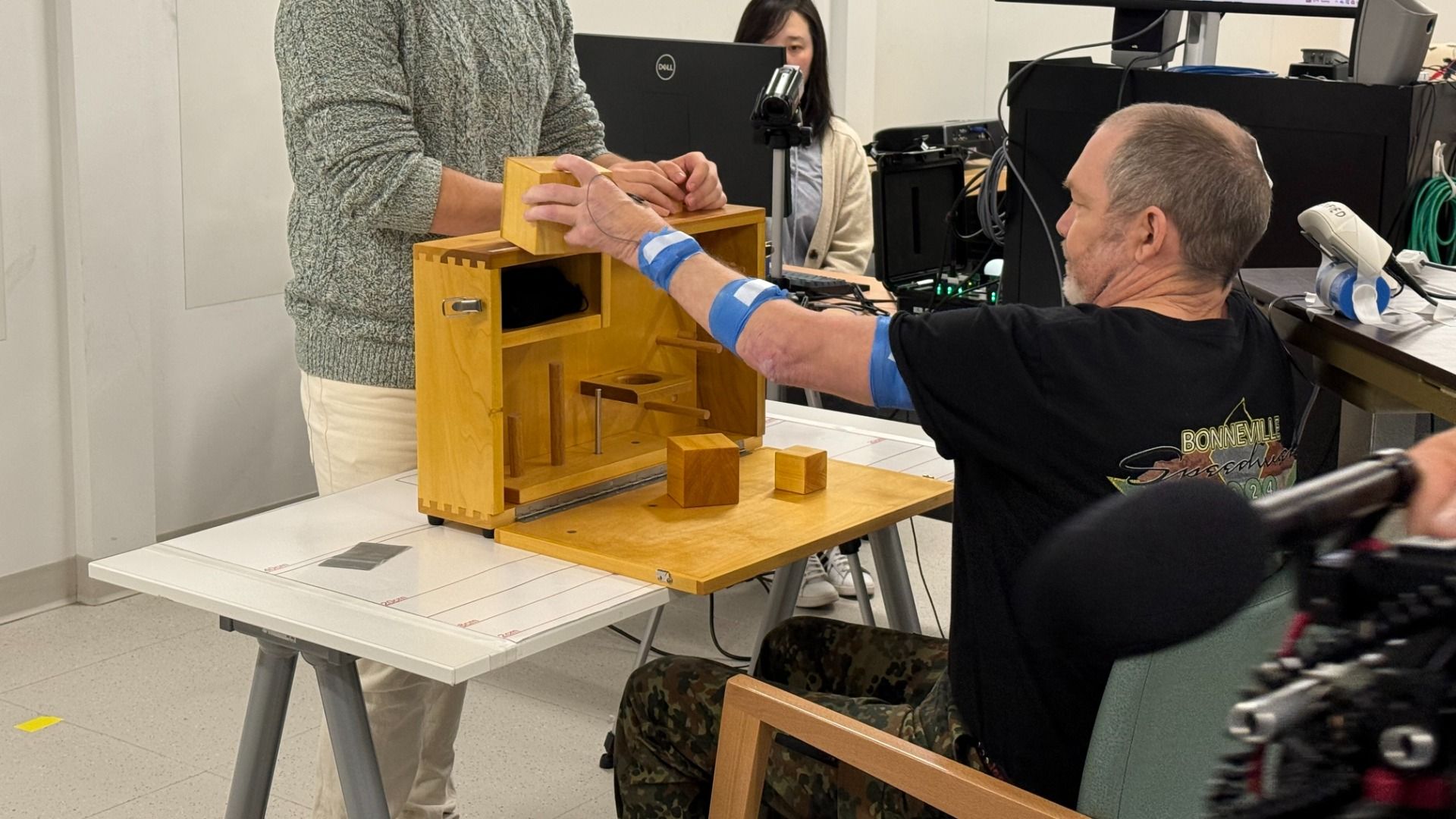
Patient Matt Kidd practices hand control movements during a rehab session. Photo: Susan Gregg/Courtesy of UW Medicine
Months after UW Medicine neurosurgeons implanted a first-of-its-kind brain stimulation device in a stroke patient, doctors are seeing something they weren't sure was possible: meaningful return of fine-motor control.
Why it matters: Loss of muscle movement can make even basic daily tasks difficult following a stroke, and recovery options are often limited — a gap this procedure could help change.
- Success with brain simulation devices could reshape rehabilitation for the 800,000 Americans who have a stroke each year — and the millions already disabled by one.
How it works: UW Medicine neurosurgeons Jeffrey Ojemann and Jeffrey Herron implanted an experimental brain device in a stroke patient to assess whether targeted electrical stimulation can help the brain rewire itself after injury.
- The CorTec device consists of thin silicone sheets embedded with tiny electrodes, placed on the surface of the brain over the stroke-damaged region.
- During rehabilitation sessions, the device stimulates the injured brain region while patients attempt specific movements — a pairing researchers believe can strengthen neural connections beyond what rehab alone typically achieves.
What they're saying: The device shows how investment in basic science and in human research can drive innovative therapies, Ojemann said.
Case in point: Matt Kidd — the first patient enrolled in a safety trial of the experimental implant — suffered his second stroke in 2021, leaving the left side of his body immobile, per UW Medicine.
- After years of stalled rehabilitation, he said he felt like he was "at a dead end."
- Following the implant in July 2025 and six weeks of therapy, Kidd can now pick up a cup, fasten a nut to a bolt and close a shower curtain — tasks he previously needed help to perform.
Yes, but: These results come from a single patient in an early-stage safety trial, and it could take years of testing to know whether the approach can be widely used.
What's next: Researchers are now enrolling additional patients to test whether the improvements can be replicated.