Plastic waste rises despite Washington bag ban

Add Axios as your preferred source to
see more of our stories on Google.
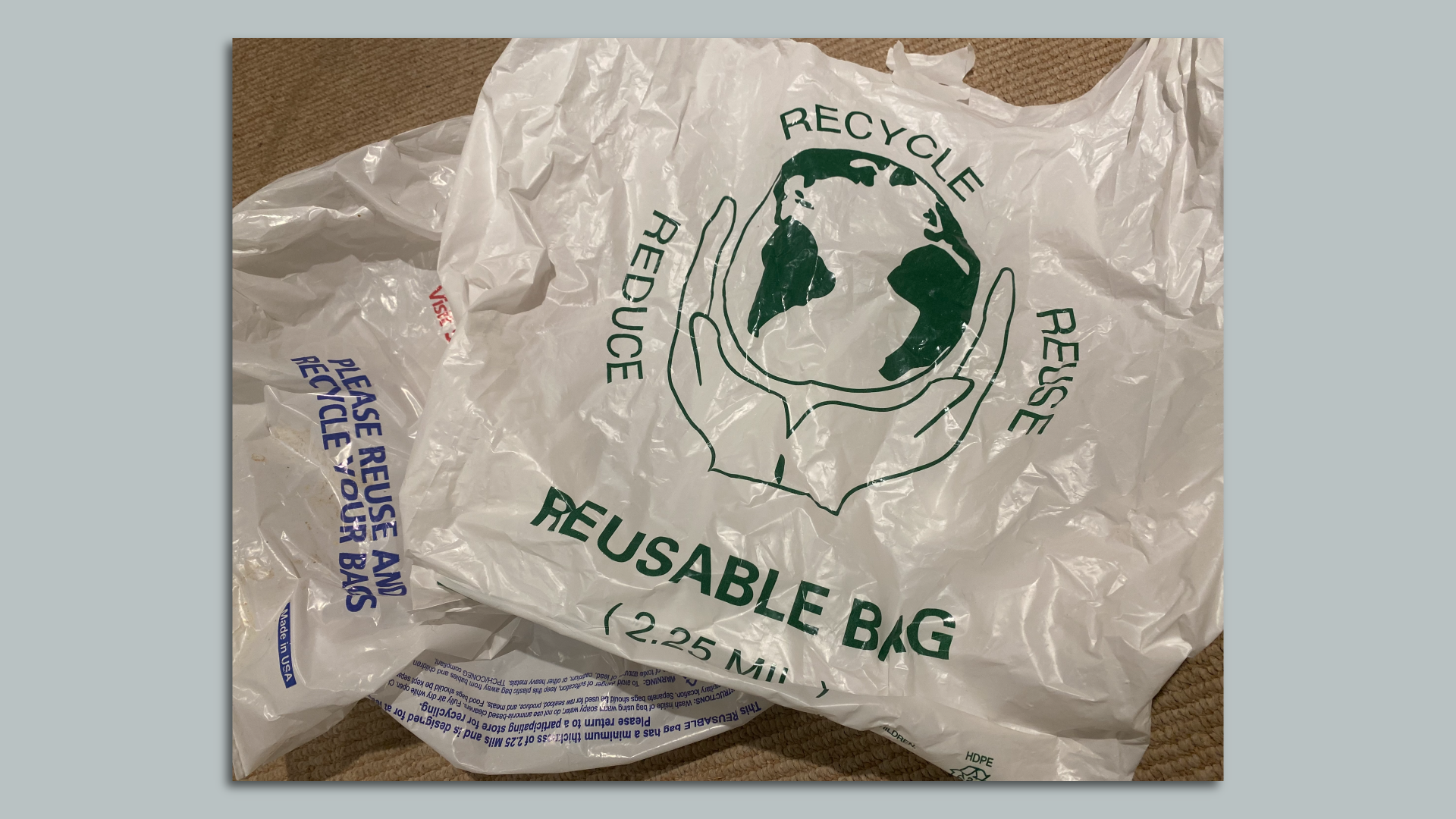
Photo: Melissa Santos/Axios
The amount of plastic from shopping bags has gone up in Washington despite a ban on single-use plastic bags, according to a study prepared for the state.
Why it matters: The 2021 ban requiring stores to sell thicker plastic and paper bags for 8 cents apiece was intended to reduce plastic pollution and single-use waste.
Driving the news: The Washington State University study found that consumers aren't reusing the 8-cent plastic bags enough to make up for how much thicker they are.
- The new bags use more than four times as much plastic as the thinner versions they replaced and shoppers would need to reuse them at least seven times to make the environmental math work, per the study.
- Bag use fell 50% after the ban, but the study says it would need to fall about 78% to actually reduce total plastic.
What they did: The study drew on surveys of retailers and recycling officials, industry data and scanner data, though the plastic weight finding relied on figures from one major bag distributor.
Between the lines: Department of Ecology spokesperson Andrew Wineke told Axios the study offers useful insight but may not represent statewide use due to its reliance on limited data.
- Wineke also emphasized that Washington's bag law has multiple goals beyond reducing total plastic by weight, including reducing litter, preventing recycling contamination and incentivizing shoppers to bring their own bags.
- "Consistently bringing your own reusable bag is the best way to reduce energy use," he said.
What we're watching: Whether next year's planned 4-cent price hike for plastic carryout bags at stores and restaurants in Washington will dampen their use.