Study: Private insurance doesn't shield patients from surgical debt

Add Axios as your preferred source to
see more of our stories on Google.
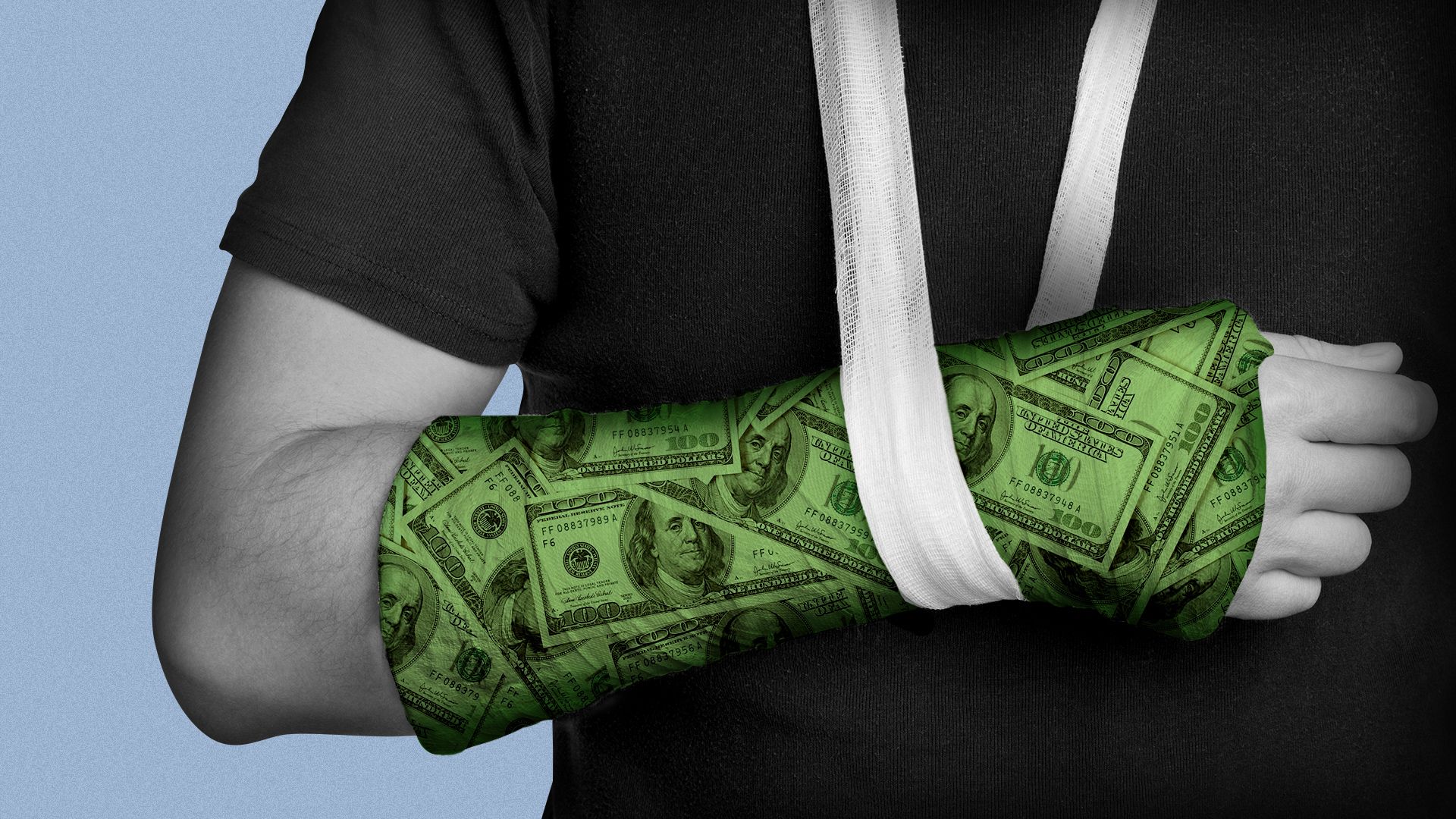
Illustration: Aïda Amer/Axios
Nearly 40% of adults who undergo surgery experience serious financial hardship in the year after, according to a new University of Washington analysis.
Why it matters: The study adds to mounting evidence that private insurance increasingly fails to shield Americans from high medical costs, as health care affordability emerges as a major federal policy flashpoint.
What they did: UW researchers analyzed national data from the Medical Expenditure Panel Survey, tracking adults ages 18 to 64 over seven years, and comparing patients who had surgery with similar adults who did not.
By the numbers: Undergoing an operation was linked to a 16% relative increase in financial hardship, with 38% of surgical patients reporting post-op sticker shock, including trouble paying medical bills or delaying needed care, per the study.
- Patients saw an eight-fold increase in annual out-of-pocket spending.
Between the lines: Emergency surgeries produced the largest financial impact, far surpassing elective procedures.
- Medicaid patients were largely shielded from such hardship while privately insured, low-income adults faced some of the steepest monetary strains.
The big picture: Americans' worries about affording insurance and health care in the coming year recently hit a record high, per a West Health–Gallup survey.
- A 2025 Kaiser Family Foundation report backs this up, with the authors noting that insured adults under 65 often report trouble affording insurance premiums or out-of-pocket costs.
What they're saying: UW School of Medicine trauma surgeon John W. Scott, who was part of the research team that did the UW analysis, told Axios the findings mirror what he sees in the trauma bay and the operating room.
- Patients with high-deductible plans come in sicker — sometimes far sicker — because they waited until they were critically ill, Scott said.
- And even in emergencies, he said, "I've had patients shouting out that they are refusing treatment because they're terrified of the costs."
- "It's gut-wrenching," he said. "They're more afraid of medical debt than their injuries."
Zoom in: Scott says three policy changes could dramatically reduce patients' financial harm after emergency surgery:
- No deductibles or copays for trauma or emergency surgery.
- Income-based deductibles: Cost-sharing capped relative to income.
- Score hospitals on patients' financial outcomes the way they're scored on infections or readmissions.
The bottom line: Policies with high out-of-pocket caps and deductibles do not provide sufficient protection for most Americans, Scott said.
- "So-called 'catastrophic coverage' plans are misleading because they fail to protect people from the exact catastrophic events that patients think they're buying the coverage for," he said.