Why spiders are suddenly everywhere in Seattle

Add Axios as your preferred source to
see more of our stories on Google.
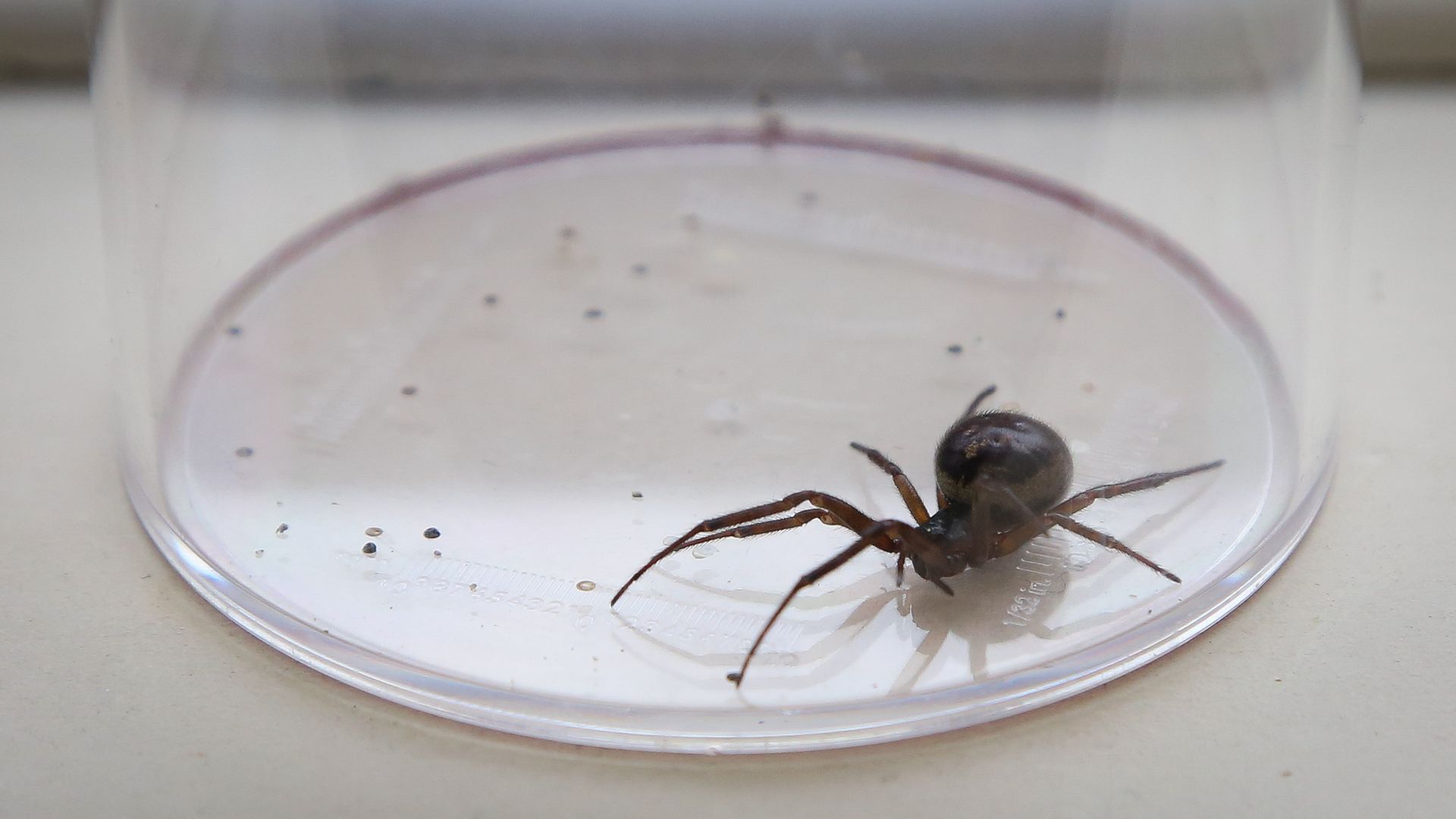
False black widows are among Seattle's most common arachnids. Photo: Gareth Fuller/PA Images via Getty Images
Spiders are stumbling out of hiding in Seattle this time of year like clumsy singles on a blind date.
The big picture: It's not because there are actually more of them, but because they're hunting for mates without the help of bars or hook-up apps.
- Still, Seattleites may feel like their homes are under siege and wonder if spiders are coming inside as winter nears.
Spiders don't intentionally move between indoors and outdoors — and if they try, only about 5% make it, Rod Crawford, arachnid curator at the Burke Museum, tells Axios.
What's happening: Our region's most visible spider, the giant house spider or Eratigena atrica, is on the move as sexual maturity compels the males to abandon the crawl spaces and basements they favor to wander aimlessly in search of a female's web.
- That surge of motion makes it seem like there are suddenly more spiders, even though the population hasn't changed, he said.
What they're saying: "They've come out of the hidden part of the buildings because they are looking everywhere for mates, and they are not attacking that problem with human intelligence," Crawford said.
Zoom in: You may also spot cellar spiders dangling from messy threads, false black widows often mistaken for black widows, and smaller cosmopolitan house spiders indoors.
- Outdoors, the European cross orbweaver dominates, spinning large spiral webs across gardens and sidewalks.
- If you want the orb web out of your path, you need to move the spider and not just the web, said Crawford, as orb spiders can rebuild in 20 minutes.
Reality check: Almost all of Washington's 978 species have venom, but only one — the Western black widow — poses a threat to humans, and it's found mainly in Eastern Washington.
- "We are surrounded by other human beings who are a million times more dangerous, so why worry about black widows?" Crawford said.
1 fun thing: October is the peak season for spider collectors. That's when dozens of tiny, overlooked native species mature, and enthusiasts head out with nets to add to the state's growing list of arachnids — most of which the rest of us never notice.
The bottom line: You'll rarely see spiders above the second floor, per Crawford, so arachnophobes can always move to a high-rise.