Planned crisis clinic in Seattle's Capitol Hill sparks debate

Add Axios as your preferred source to
see more of our stories on Google.
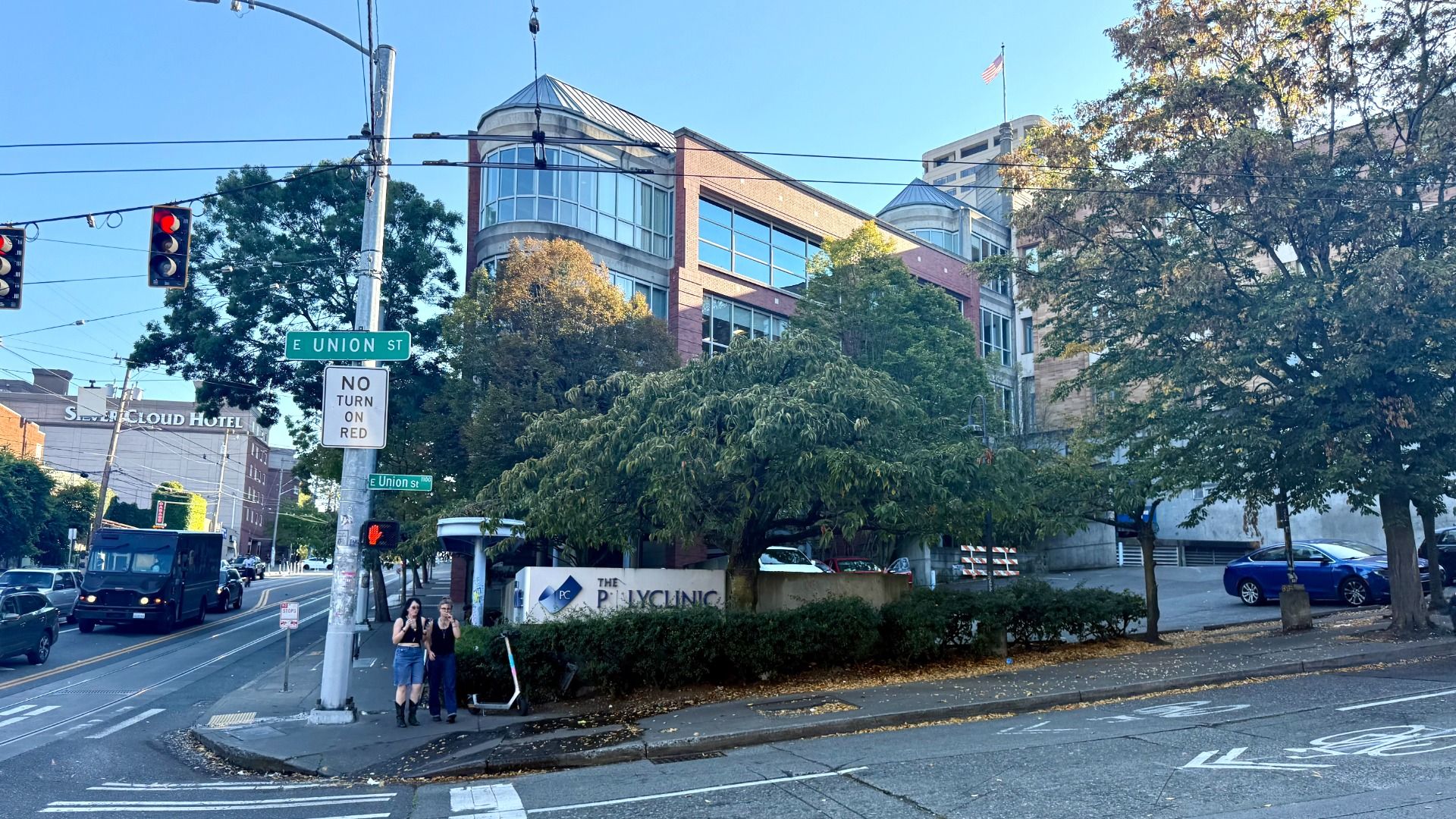
A walk-in crisis care center could open at Broadway and Union, in the former Polyclinic building. Photo: Melissa Santos/Axios
Plans are advancing for a 24/7 crisis center in Seattle's Capitol Hill neighborhood, despite objections from some locals who worry the facility could worsen existing problems with drug activity and crime.
The big picture: The debate over the proposed center — part of a package of walk-in treatment facilities King County voters approved in 2023 — underscores the difficulty of locating drug and mental health services, even in communities that supported them at the ballot box.
How it works: The walk-in centers are designed to act like urgent care clinics for behavioral health needs, connecting people with drug treatment or mental health help at any time of day — no appointment or insurance needed.
Catch up quick: King County aims to set up five of the walk-in centers by 2030.
- The site at 1145 Broadway, a former Polyclinic building, would be the second countywide and the first in Seattle. (The first opened in Kirkland in 2024.)
The latest: The King County Council did not act to block the county's purchase of the Broadway building by a Sept. 13 deadline, clearing the deal to move forward.
What they're saying: Critics, including nearby business owners, argue the area already struggles with drug use and violence.
- "You're asking a vulnerable population that requires a calm environment to enter this chaos," Jill Cronauer of Hunters Capital, which owns nearby residential and commercial properties, said during a King County Council committee meeting last week.
- Cronauer cited an armed robbery this month and other recent violent crimes in the area, which is a major hub for bars and nightlife.
Others raised concerns about the proposed center being located near day cares and schools, including the Seattle Academy of Arts and Sciences about three blocks away.
The other side: Supporters say the need for services is urgent.
- Further delay "does nothing but cost lives," David Coffey, executive director of Recovery Café, told council members last week.
- The site is ideal partly because it is centrally located and near public transit, County Executive Shannon Braddock wrote in a letter last month.
Between the lines: Susan McLaughlin, director of the county's Behavioral Health and Recovery Division, told council members the crisis center will be "different from a shelter or a drop-in center, where people are coming and going."
- "People are arriving and staying and being treated, so won't be wandering around in general as part of their stay," McLaughlin said.
What's next: The County Council plans to vote Oct. 7 on financial legislation tied to the sale, including a measure to approve bonds.
- Officials hope to open the center in 2027.