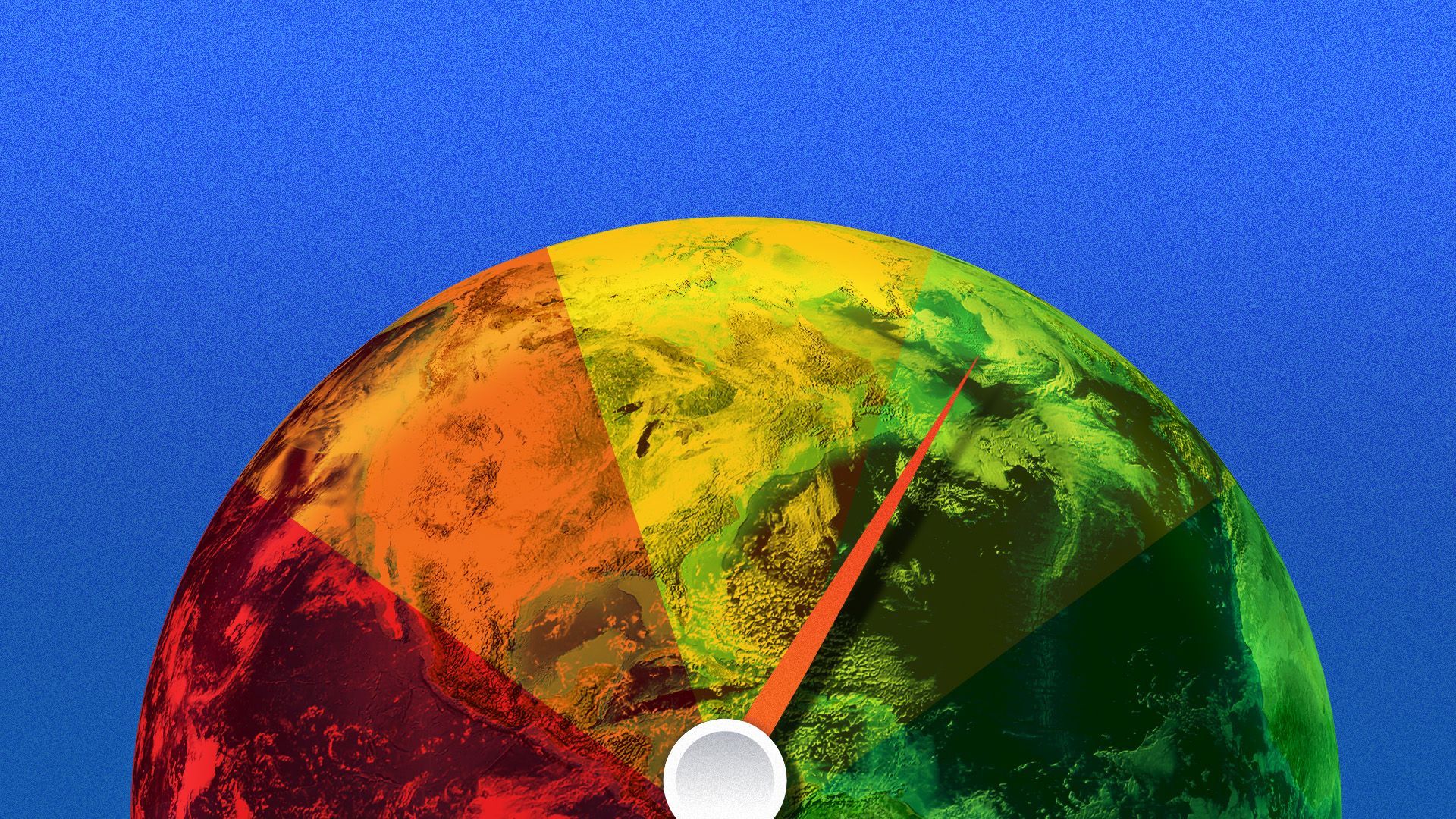
Shrinking snowpack, rising seas and smoke in the stratosphere mark the Pacific Northwest's changing climate — echoing global trends laid out in a sweeping new international report.
Why it matters: The 2024 "State of the Climate" report, compiled with data from hundreds of scientists worldwide, confirms Earth just had its hottest year on record — with rising humidity, soaring ocean temps and record greenhouse gases.
Threat level: The Pacific Northwest was flagged for its vulnerability to wildfire smoke as well as above-average warmth and shifting precipitation.
Stunning stat: "The global average number of high humid heat days ... over land reached a record of 35.6 days more than normal in 2024, surpassing the previous record set in 2023 by 9.5 days," per a U.K. Met Office analysis.
These humid-heat events limit the body's ability to cool itself, creating potentially life-threatening situations conditions.
By the numbers: Key climate indicators hit record highs in 2024, including greenhouse gases, global temperatures, global sea level and ocean heat, per the report.
Atmospheric concentrations of CO₂, methane and nitrous oxide hit new highs, with CO₂ now 52% above preindustrial levels.
2024 was the hottest year on record, and the last 10 years were the warmest decade.
Global sea surface temperatures were the warmest in the 171-year record.
What we're watching: "Unfortunately, it looks like we are seeing yet another year of extreme weather," said Laura Stevens, a climate scientist who edited the study's North America section.