Seattle to vote on renewing Democracy Voucher Program

Add Axios as your preferred source to
see more of our stories on Google.
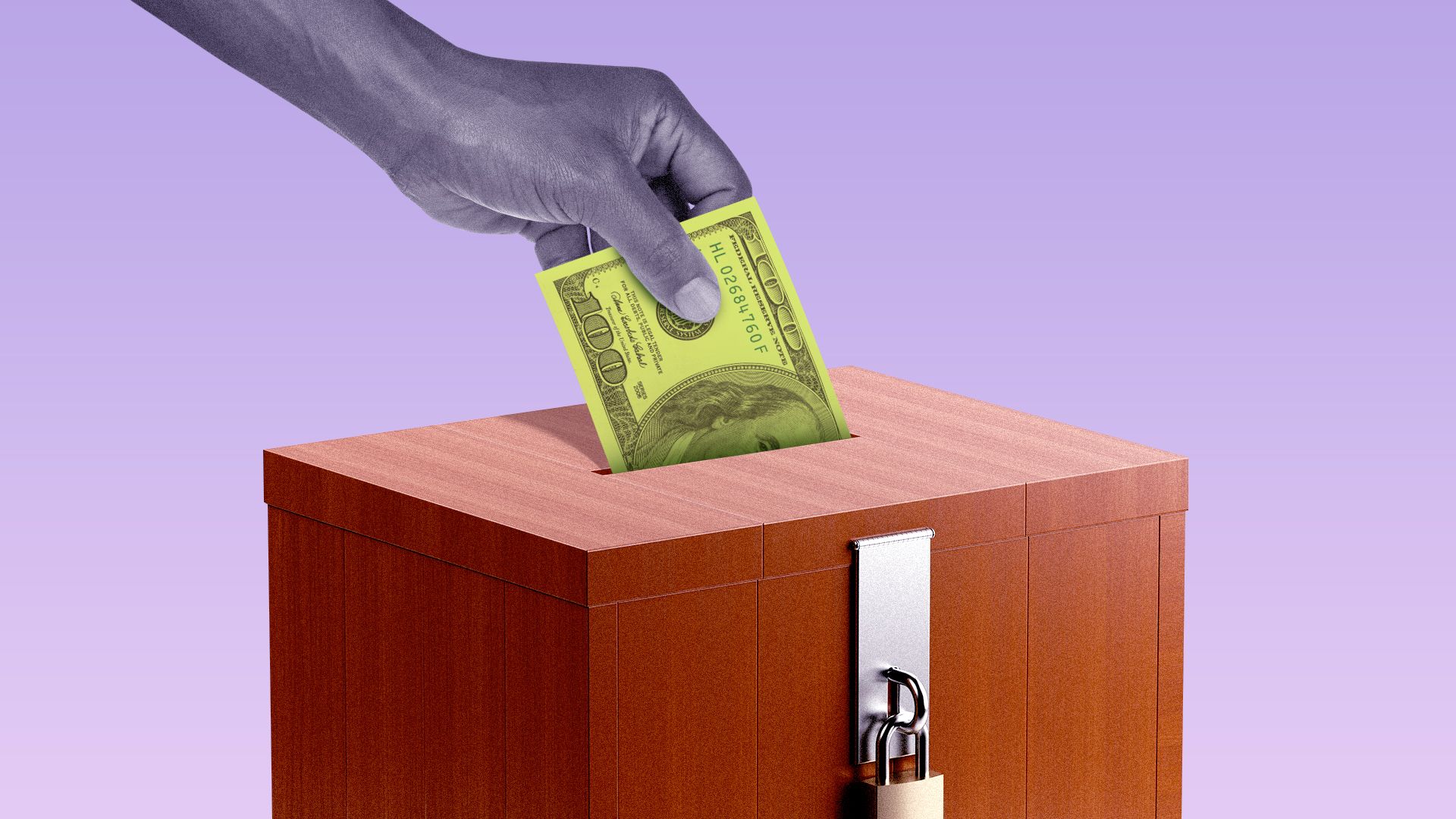
Illustration: Aïda Amer/Axios
The future of Seattle's Democracy Voucher Program is on Tuesday's ballot, as voters decide whether to renew the public campaign financing system for 10 more years.
The big picture: Supporters of Seattle's first-in-the-nation voucher program say it allows more people to participate in politics, while opponents argue that too few people use the system to justify its cost.
How it works: Seattle residents get four $25 vouchers each election cycle, which they can donate to candidates who opt to participate in the program.
- Most Seattle candidates this year are accepting the vouchers, which come with fundraising and spending limits.
- A citywide property tax has raised $3 million annually to pay for the program over the past decade, costing the average Seattle property owner about $8 per year, per city estimates.
The latest: If approved Tuesday, Proposition 1 will increase the tax slightly, generating $4.5 million yearly, or $45 million over 10 years.
- The owner of an $864,000 home — the median assessed value in Seattle this year — would pay $13 a year, about $5 more than under the existing levy.
What they're saying: Program supporters say it has broadened the city's pool of political donors and encouraged more people to run for office by reducing financial barriers.
- "Today, campaign donors better reflect the diversity of our city, by income, race, age, and neighborhood," King County Councilmember Teresa Mosqueda said in a video voter guide statement supporting Prop. 1.
The other side: Less than 5% of Seattleites used their vouchers in 2023, which opponent Ari Hoffman, a local talk radio host, says reflects a lack of interest in the program.
- "Seattle is one of the most expensive cities in America, and yet our city government is forcing you to pay a special tax just to fund political campaigns," Hoffman said in the video voter guide.
Yes, but: Donor participation was even lower before Seattle voters approved the vouchers a decade ago, sociologists Jennifer Heerwig and Brian McCabe wrote in a recent column.
- Only about 1.5% of Seattle residents donated to political campaigns in 2013, they wrote, with those donors concentrated in wealthier neighborhoods.
What's next: Ballots must be postmarked by Aug. 5 to be counted, or returned to a ballot drop box by 8pm on election day.