Popular Washington hikes see surge in search and rescue calls

Add Axios as your preferred source to
see more of our stories on Google.
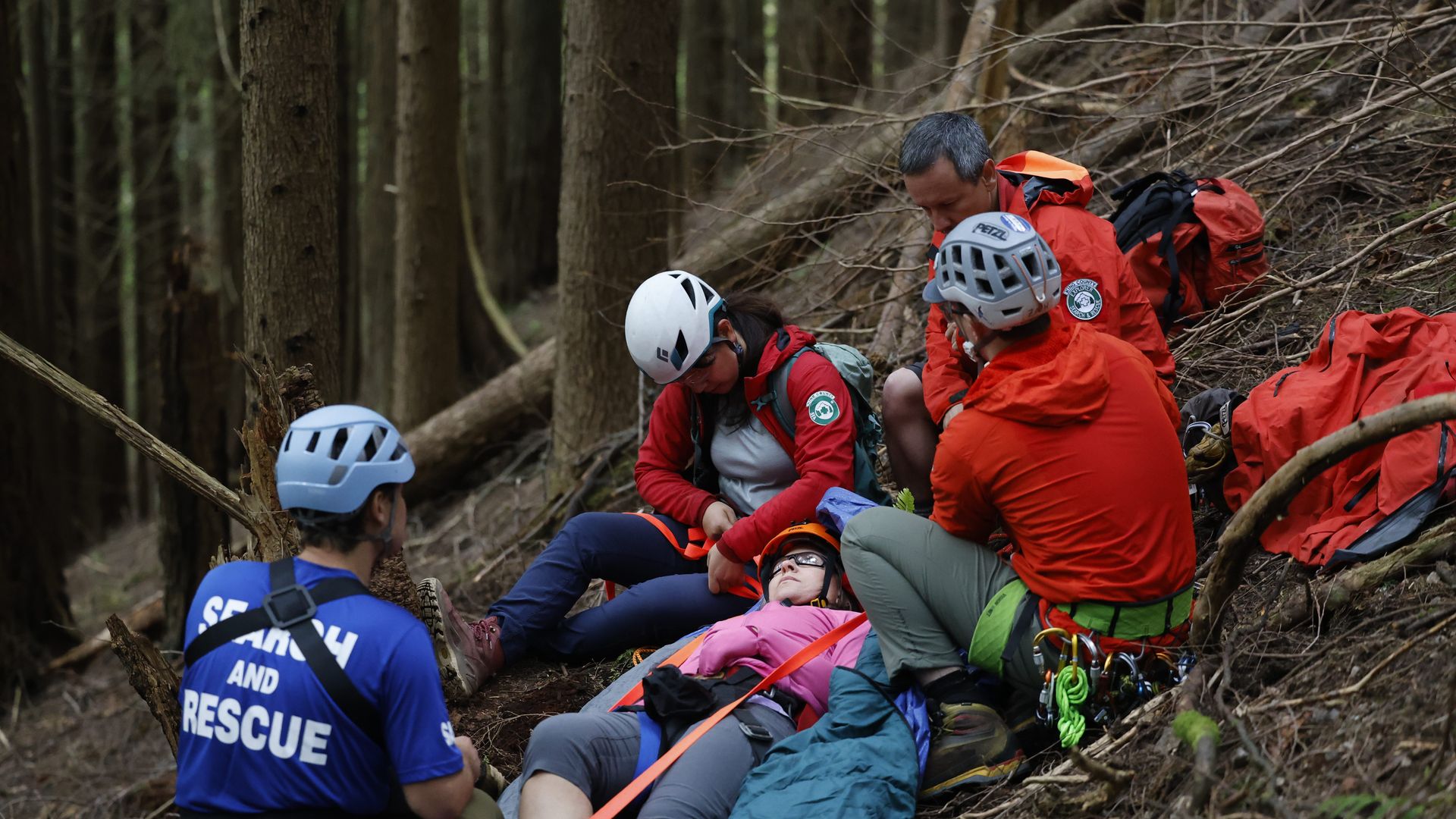
Search and rescue crews, seen here during a practice exercise, are stretched thin. Photo: Courtesy King County Search and Rescue
With the outdoor season in full swing, calls for help to Northwest search and rescue teams are surging.
Why it matters: Seattle's easy access to wilderness is a major perk, but as more people hit the trails, preventable mishaps and rescues are rising, stretching the region's all-volunteer teams, according to King County Search and Rescue spokesperson Sara Autio.
Driving the news: Between Memorial Day weekend and the July Fourth holiday, KCSAR responded to 27 backcountry missions, according to new numbers provided to Axios.
- Most calls have come from the challenging climbs on Mailbox Peak, Mount Si and Snow Lake — all Instagram-famous hikes less than an hour from Seattle, said Autio.
What they're saying: "What this tells us is that hikers may not be doing enough research on just how hard they are, from steep switchbacks to rock fields and hundreds of feet of elevation gain," she told Axios. "These aren't hikes to try unprepared."
Between the lines: After seeing rescue calls spike by 400% in May and 550% in June, Skamania County Sheriff Summer Scheyer told Axios she's pushing for an ordinance that would allow her office to fine hikers up to $1,000 for "absolutely reckless" decisions on trails.
- The goal, she says, is to make people think twice before heading unprepared to Mount St. Helens or Mount Adams, not to recoup public safety costs.
- Case in point: "We've seen people on very treacherous hikes in flip-flops. That is sheer negligence."
Yes, but: Some search and rescue groups — including KCSAR — warn that fines could make people hesitate to call for help, potentially making bad situations worse.
By the numbers: The average King County SAR mission takes about four hours using a ground crew of about 21 responders, though technical routes like Mailbox Peak and Mount Si can require 30 to 40 volunteers, per Autio.
- Some weekends, KCSAR fields two or three separate missions in a single day.
- 26% of rescues occur between 8pm and midnight, when temperature swings increase risks.
The bottom line: Hikers should have enough gear to keep warm, dry, fueled and hydrated while they wait, sometimes for several hours, even in summer, Doug McCall of Seattle Mountain Rescue told Axios in an email.
- It's easy to overestimate your readiness. If you haven't hiked lately, start small before taking on big climbs, said McCall.
What to know: Stay off the SAR list with these tips from KCSAR.
- Plan ahead. Know your route, check the weather and understand your limits — don't let social media posts be your only research.
- Bring the right gear. The 10 essentials aren't just a checklist. They're lifesavers. Know how to use each item.
- Don't rely on a cellphone as your only light, navigation or communication tool.
- Tell someone your plans. Always let a friend or family member know where you're going and when you'll be back.
- Respect warnings. If a trail's closed, conditions are sketchy or your body says stop, listen.
- Don't hike alone. Most rescues are for solo hikers caught off guard.