After years of growth, wolf numbers fall in Washington state

Add Axios as your preferred source to
see more of our stories on Google.
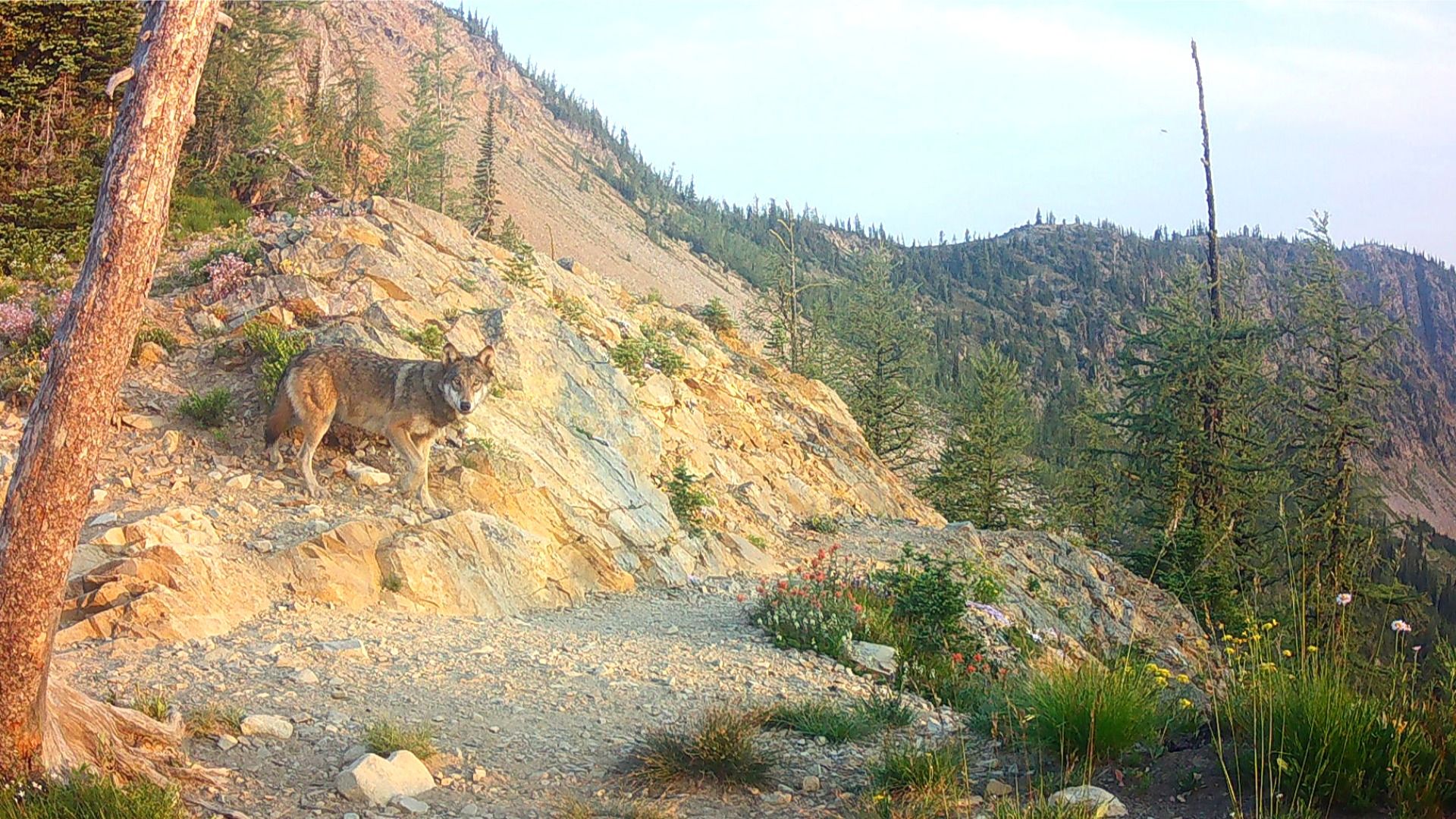
A gray wolf is caught on a game camera in north central Washington in August. Photo courtesy of WDFW.
Washington's gray wolves saw their first population drop since the species returned nearly two decades ago.
Why it matters: Gray wolves have been on the state's endangered species list since 1980, and their previous track of recovery marked a milestone in restoring a native species to the wilds of Washington.
By the numbers: A Washington Department of Fish and Wildlife (WDFW) report published this month counted 230 wolves in 43 packs at the end of 2024, down from 254 wolves in 42 packs a year earlier.
- The number of breeding pairs dropped from 24 in 2023 to 18 last year.
- At least 37 wolves died in the state last year, with the biggest decline reported at the Confederated Tribes of the Colville Reservation, per the report.
- Seven were poached or killed illegally, prompting rewards and investigations, six of which are still ongoing with one forwarded to prosecutors for charges, according to WDFW spokesperson Staci Lehman.
What they're saying: "The drop, especially in breeding pairs — which is an indicator of the population trajectory — shows protections are still needed," Amaroq Weiss, a senior wolf advocate at the Center for Biological Diversity, told Axios.
Yes, but: The decrease is not of significant concern to WDFW wolf biologists at this time, Lehman told Axios in an email, because it is common in wildlife management to see cyclical increases and decreases in population numbers, particularly in recovering species.
- "One year does not make a trend," Lehman said in an email to Axios. "Despite it taking longer than initially expected, Washington is moving toward recovery of gray wolves."
Catch up quick: The state's wolf population has been growing at a 20% annual clip since 2008, when the first modern resident pack was confirmed in Okanogan County, per the report.
- That long trend of steady growth helped reestablish wolves in parts of eastern and north-central Washington.
Flashback: The status of gray wolves under the federal Endangered Species Act has been debated and litigated since they were added to the list in 1974, with the level of protections shifting over time.
- Today, gray wolves in western Washington remain federally protected, while those in eastern Washington are protected only under state law.
Friction point: Last year, WDFW proposed reclassifying gray wolves from endangered to sensitive based on population growth and stability.
- The move would have lowered penalties for wolf poaching and made it easier for livestock owners to access permits to kill wolves that threaten herds.
- The state Fish and Wildlife Commission voted 5-4 in July to maintain wolves' listing as endangered.
What's next: WDFW will use this year's data to track seasonal pack shifts and refine long-term management strategies while working with communities affected by wolves to reduce conflicts, said Lehman.