Washington state industries feel the sting of new tariffs

Add Axios as your preferred source to
see more of our stories on Google.
Seattle and the state are beginning to feel the heat from President Trump's tariffs — including a 125% levy on Chinese imports.
Why it matters: China is Washington's largest trade partner. The state's economy is also among the most trade-dependent in the nation, with more than 40% of jobs tied to international commerce, Sen. Patty Murray (D-Wash.) said in a statement.
Driving the news: On Wednesday, Trump paused reciprocal tariffs imposed by the U.S. this week, but kept 10% baseline tariffs in place while increasing tariffs on China to 125%, writes Axios' Ben Berkowitz.
- The 125% effective tariff on Chinese goods follows a retaliatory spiral between Washington and Beijing.
By the numbers: In 2024, Washington exported almost $58 billion in goods worldwide — including $12 billion, or 21% of total exports, to China, according to the Office of the United States Trade Representative (USTR).
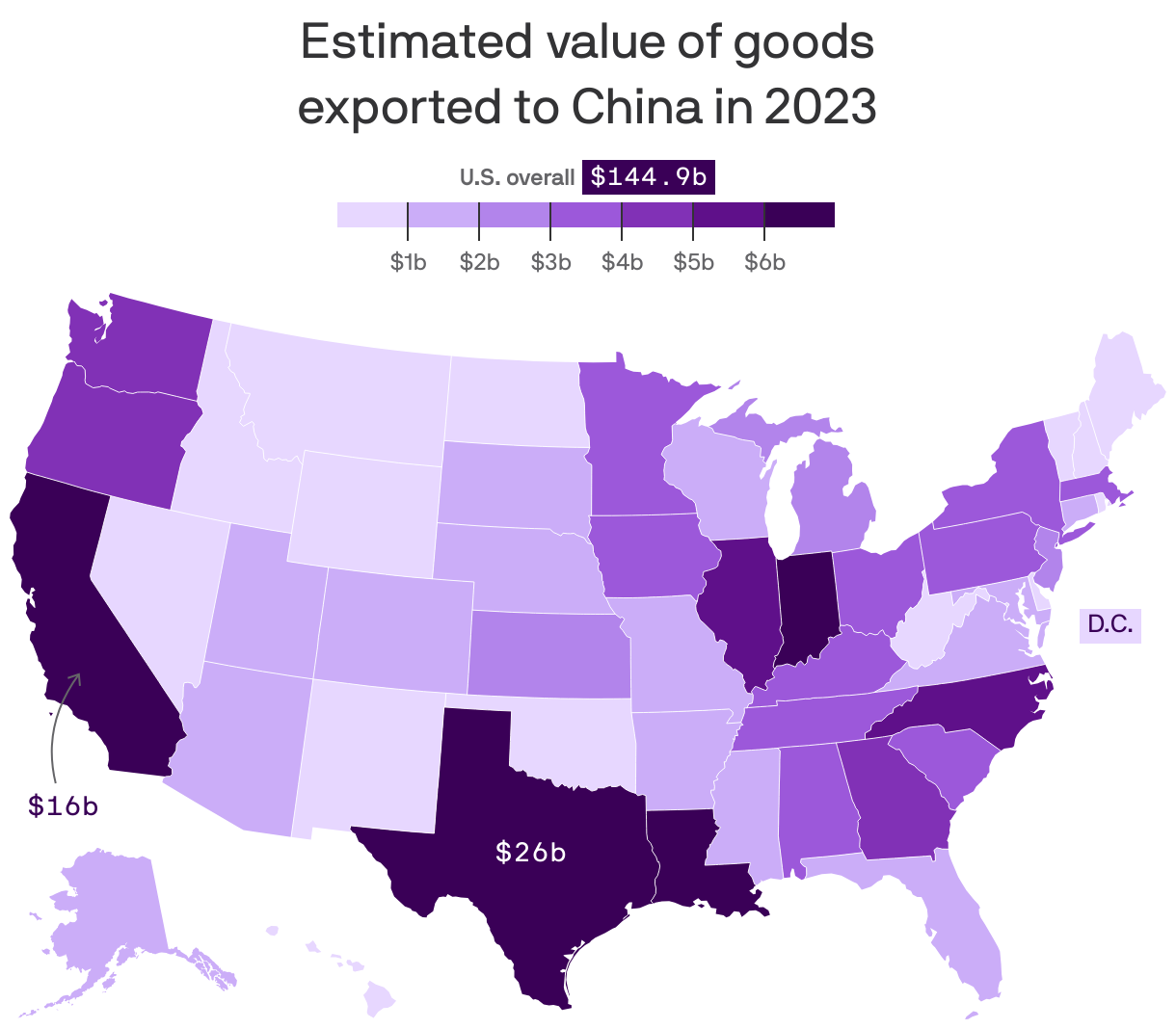
- That's up from $4.1 billion exported to China in 2023, per the U.S. China Business Council.
- Beef, seafood and wheat are among the state's top agricultural exports to China.
- China was followed by Canada ($7.9 billion), Japan ($5 billion), Mexico ($4.3 billion), and South Korea ($3.1 billion) as Washington's top export markets last year, per USTR.
What they're saying: "Trade is the lifeblood of Washington state's economy," Sen. Maria Cantwell's office said in a tariff fact sheet.
State of play: The ripple effects of the tariffs are already surfacing across Washington's core industries, according to lawmakers and industry experts.
Backups at ports
Businesses rushed to import goods before tariffs took effect, leading to a 28% surge in cargo at the Northwest Seaport Alliance in February, KOMO reported.
- An overflow of automobiles at Terminal 46 is "a direct result of the pulse that came in to beat the tariffs," said Port of Seattle Commissioner Fred Felleman.
- But port officials warn of a sharp slowdown ahead, threatening longshore jobs and logistics contracts.
Farmers' fears
Washington leads the U.S. in producing apples, blueberries, hops, pears, spearmint oil, and sweet cherries, exports that are currently at risk due to retaliatory tariffs, said Murray.
- Murray said Trump's first-term tariffs proved costly to Washington, causing apple exports to India to plummet by 99%.
Tourists staying home
Canadian travelers, frustrated by Trump's tariffs and rhetoric, are crossing the border into Washington far less often, leading to noticeable drops in spending at shops, restaurants, and hotels in Washington, the Seattle Times reported last month.
- Canadians made up nearly 79% of Seattle's international visitors in 2023 and contributed $555.5 million in spending, about 6.7% of the city's total visitor spending, per Visit Seattle.
- "Tourism greatly benefits local residents, and Canadian visitors play a key role in that impact," Visit Seattle's Liz Johnson told Axios in an email.
The bottom line: The U.S. is entering uncharted economic territory — and Washington state is on the front lines.