Seattle rainfall grows more intense with climate change


Add Axios as your preferred source to
see more of our stories on Google.
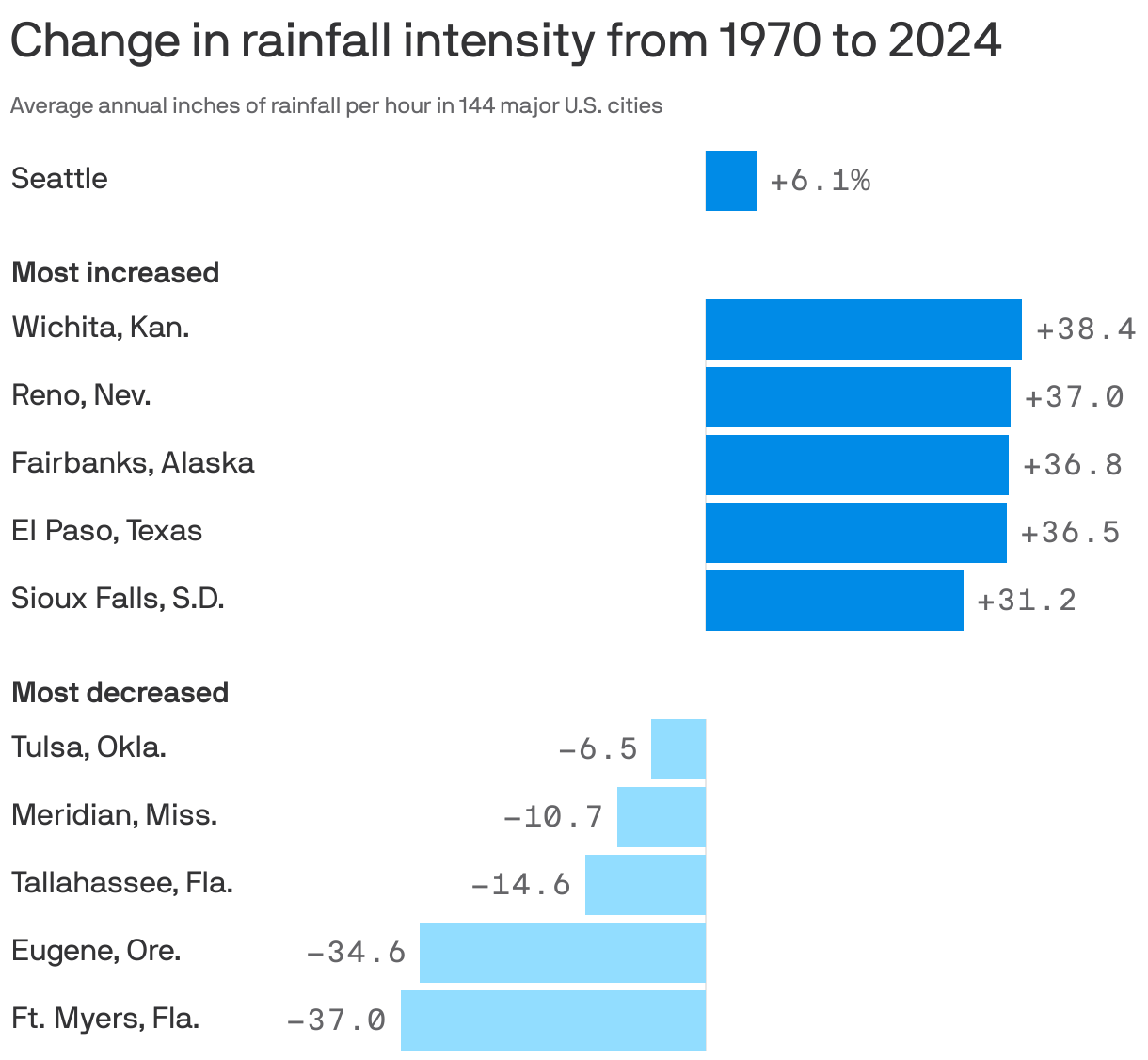
Seattle's rainfall really is more intense than it used to be.
Why it matters: The increased rainfall intensity in Seattle and other U.S. cities is a symptom of human-driven climate change, bringing with it increased risks of flooding and landslides, according to a report from the nonprofit Climate Central.
By the numbers: Hourly rainfall intensity increased between 1970 and 2024 in nearly 90% of the 144 locations analyzed, per Climate Central's report.
- Among the cities with an increase, hourly rainfall intensity rose by an average of 15%.
Zoom in: In Seattle, rainfall intensity increased by about 6% between 1970 and 2024, the report found.
How it works: The researchers divided each location's total annual rainfall by its total hours of annual rainfall, using NOAA weather station data.
- That approach quantifies how much rain fell for each hour it was raining in a given year — in other words, rainfall intensity.
Between the lines: Human-driven climate change is resulting in warmer air, which holds more moisture and thus can drive more intense precipitation.