King County's health wins come with affordability tradeoffs

Add Axios as your preferred source to
see more of our stories on Google.
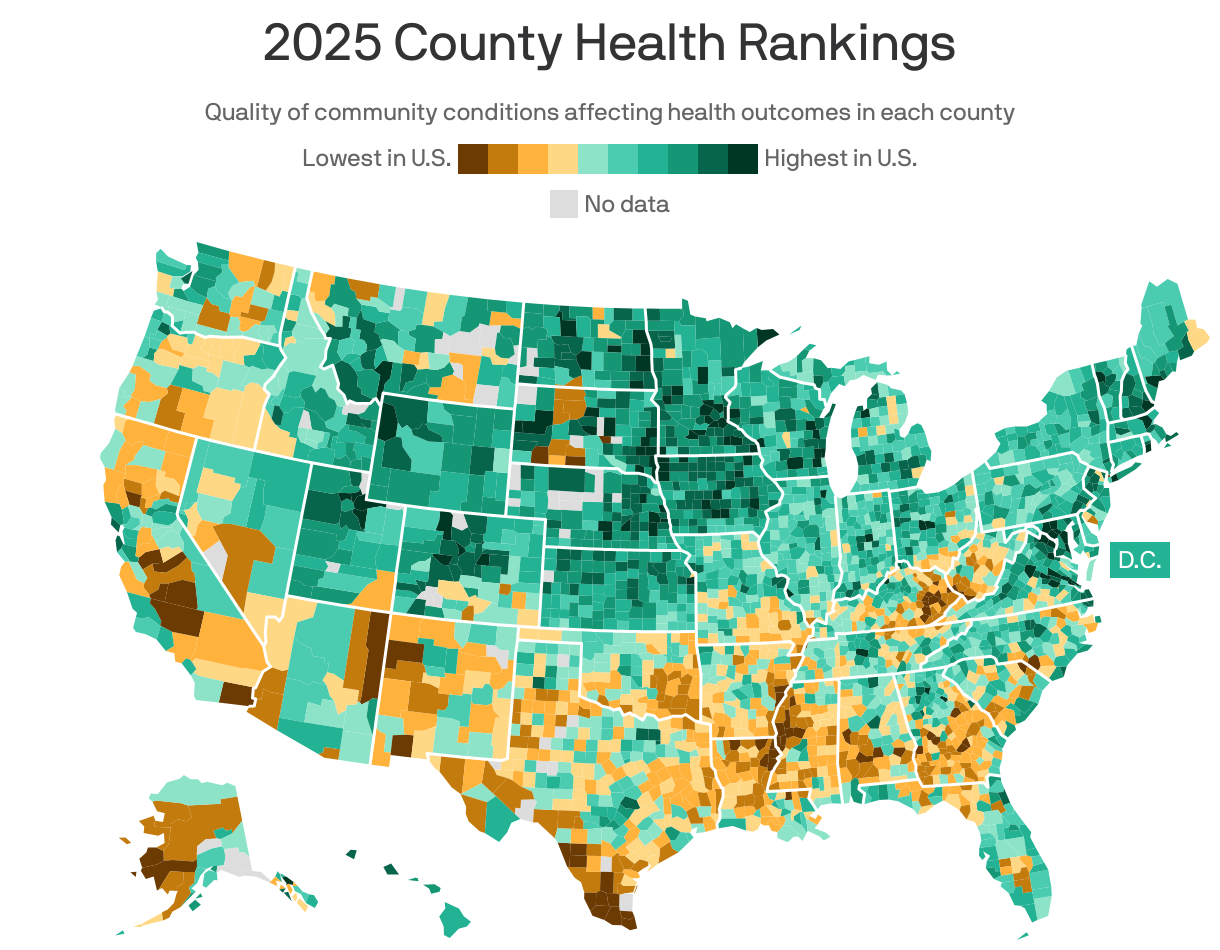
King County residents have above-average access to doctors, grocery stores, places to exercise and other community conditions that make for better health, but they still face issues like higher-than-average air pollution and child care costs, a new report finds.
How it works: The annual report from the University of Wisconsin Population Health Institute looked at dozens of metrics, including commuting data, income levels, unemployment rates, birth weights and obesity rates.
Zoom in: King County ranked high when it comes to health infrastructure, with high flu vaccination rates and a lower-than-average percentage of people who lack health insurance.
- We also had lower rates of smoking, higher levels of physical activity and lower rates of food insecurity than the state and national averages.
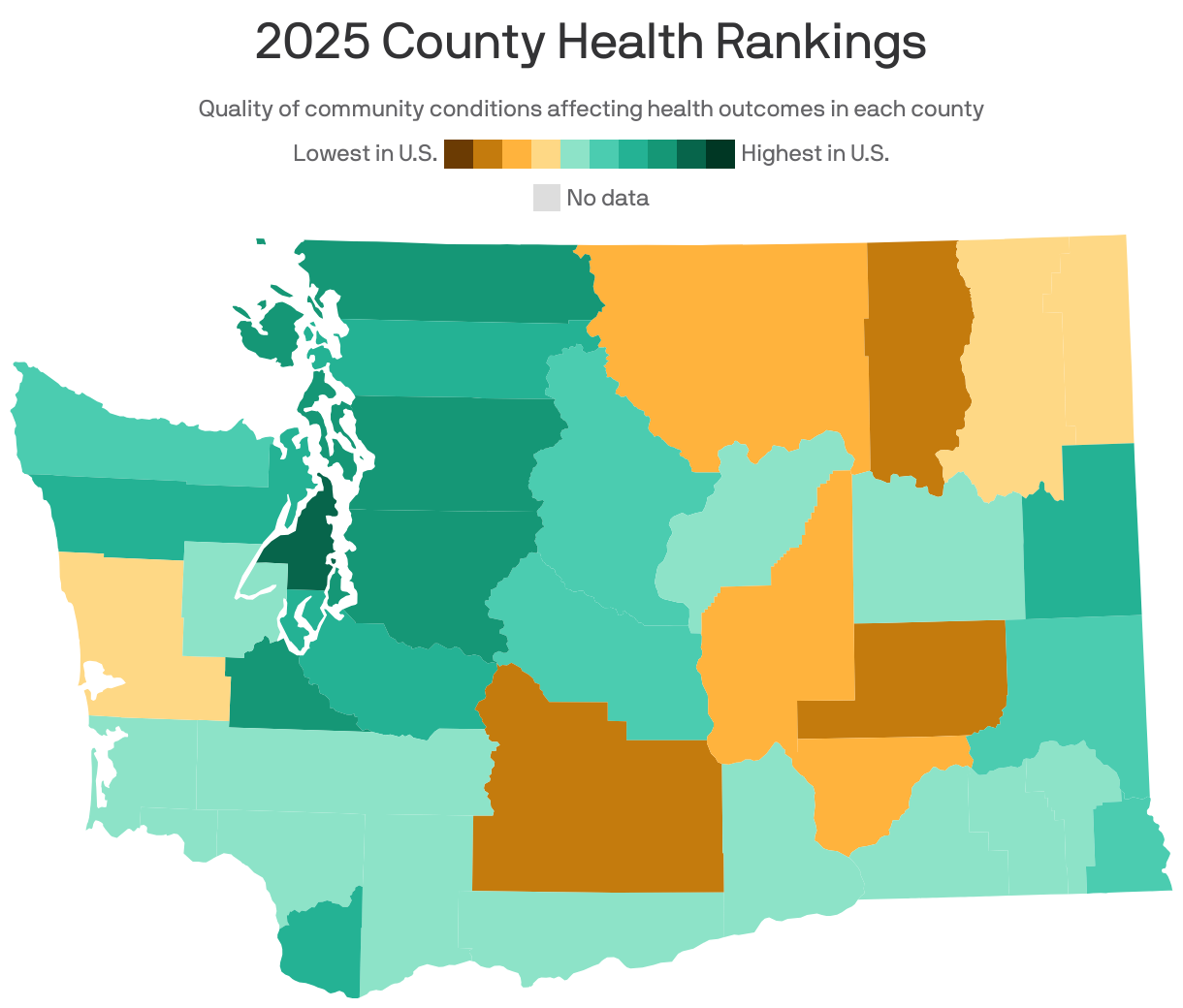
Yes, but: Compared with the nation as a whole, King County has higher-than-average levels of fine particulate matter pollution, the report finds.
- Exposure to this type of pollution is linked to health conditions such as asthma, as well as heart and lung problems, the EPA says.
Child care costs pile up here, too.
- King County households with two children spend an average of 37% of their income on child care, while the national average is 28%, the report says.
Between the lines: A slightly higher-than-average share of King County residents —18% — also experience severe housing problems, such as overcrowding, high housing costs, or a lack of kitchen or plumbing facilities, according to the report.
The bottom line: Though King County residents may benefit from access to doctors, parks and more, the high cost of living here continues to be a challenge.