Life and loss among southern resident orcas

Add Axios as your preferred source to
see more of our stories on Google.
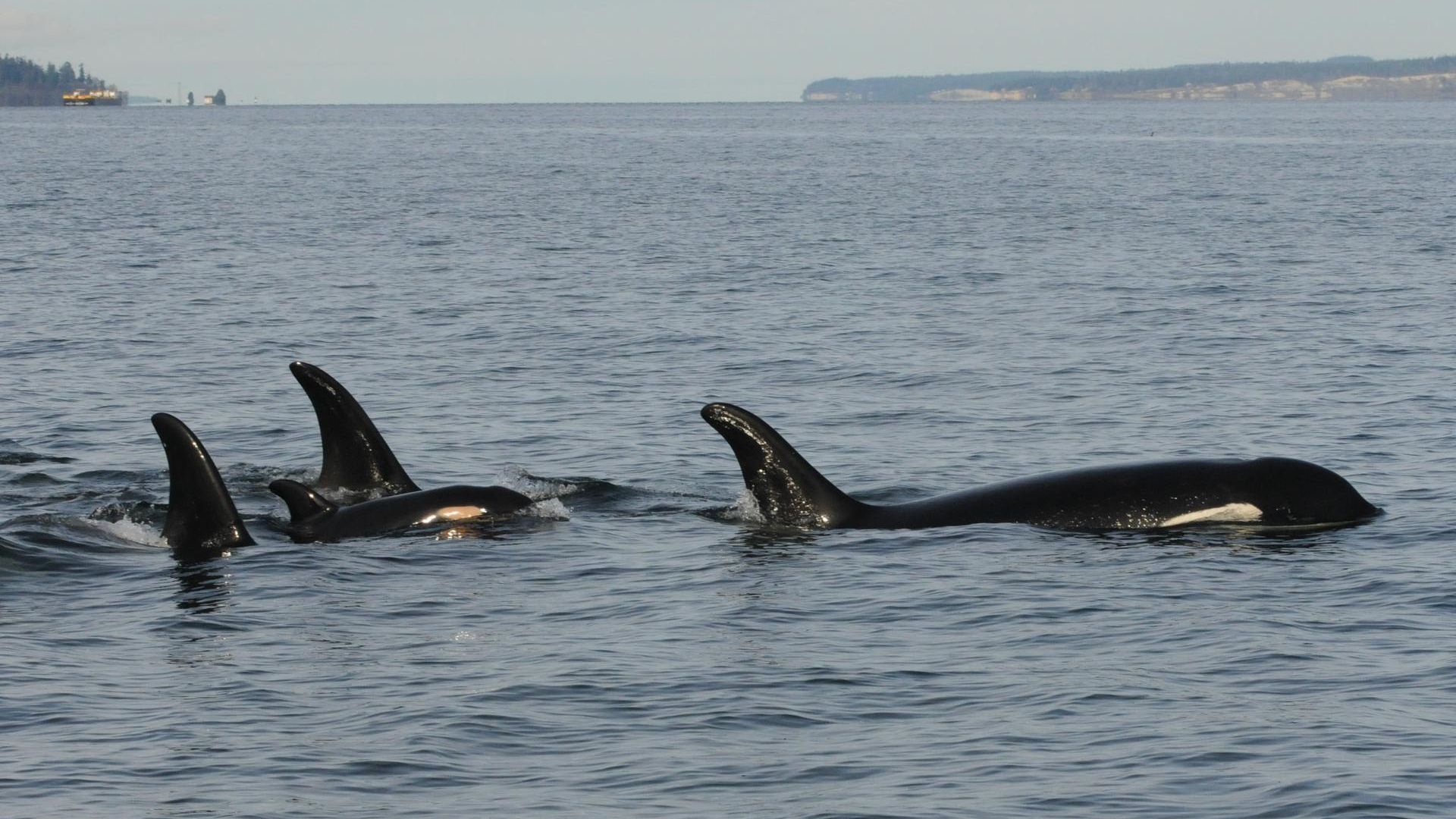
J62 swims alongside members of J-Pod, bringing a glimmer of hope to the endangered southern resident killer whales. Photo: Maya Sears/NMFS/NOAA Permit 27052/Center for Whale Research
The southern resident orca population marked the turn of the year with both heartbreak and hope: the death of a newborn calf and the birth of another, underscoring the precarious existence of this critically endangered group.
Why it matters: Every birth and death in this population of just over 70 whales represents a more than 1% change, highlighting the fragility of their survival.
Driving the news: A female calf, designated J61, was born to J35 — also known as Tahlequah — around mid-December, per the Center for Whale Research (CWR), but was confirmed dead on New Year's Eve.
- Tahlequah, who has two living male descendants, captured international attention in 2018 by carrying her first dead female calf on her head for 17 days across 1,000 miles.
- Echoing her previous mourning behavior, Tahlequah was seen carrying the body of her newly deceased calf, also a female, on Sunday, Brad Hanson, a biologist with the National Oceanic and Atmospheric Administration's Northwest Fisheries Science Center, told Axios.
- Days earlier, on Dec. 30, researchers confirmed the birth of another calf, J62, traveling with the J19 and J16 pods. The calf's sex is unknown, but it appears healthy and strong, said CWR research director Michael Weiss last week.
The big picture: The southern residents face four primary threats, according to Weiss: Reduced Chinook salmon runs — their primary food source — are the most critical factor affecting survival, and vessel traffic disrupts their ability to hunt and communicate. Water pollution and inbreeding are two other concerns.
- Despite occasional good salmon returns, long-term declines have pushed the orcas to the edge of viability, Weiss noted.
- "There's no strategy that increases the population without increasing salmon abundance," Weiss said.
Another local orca species, however, is making a comeback, with record sightings of Bigg's killer whales reported last year, according to the Pacific Whale Watch Association and Orca Behavior Institute.
- Unlike southern residents, Bigg's prey on marine mammals such as seals and sea lions.
By the numbers: About 43% of southern resident calves die before their first year. Even among those observed, 20% do not survive, said Weiss.
- "It's been a lot of ups and downs for sure. It was a tough week for everyone who watches and cares," Weiss said.
What they're saying: Southern resident orcas are more than marine mammals; they're cultural icons and symbols of the Pacific Northwest. Their deep family bonds and frequent presence in Seattle waters connect them to the region in a way that feels personal, Weiss said.
- "They do feel like our whales," he said.
What's next: Researchers will monitor J62's progress and investigate its parentage, while continuing efforts to bolster Chinook salmon populations.