Murder hornets have been eradicated in the U.S., officials say

Add Axios as your preferred source to
see more of our stories on Google.
A dead northern giant hornet is shown in 2020. Photo: Elaine Thompson/Pool/AFP via Getty Images
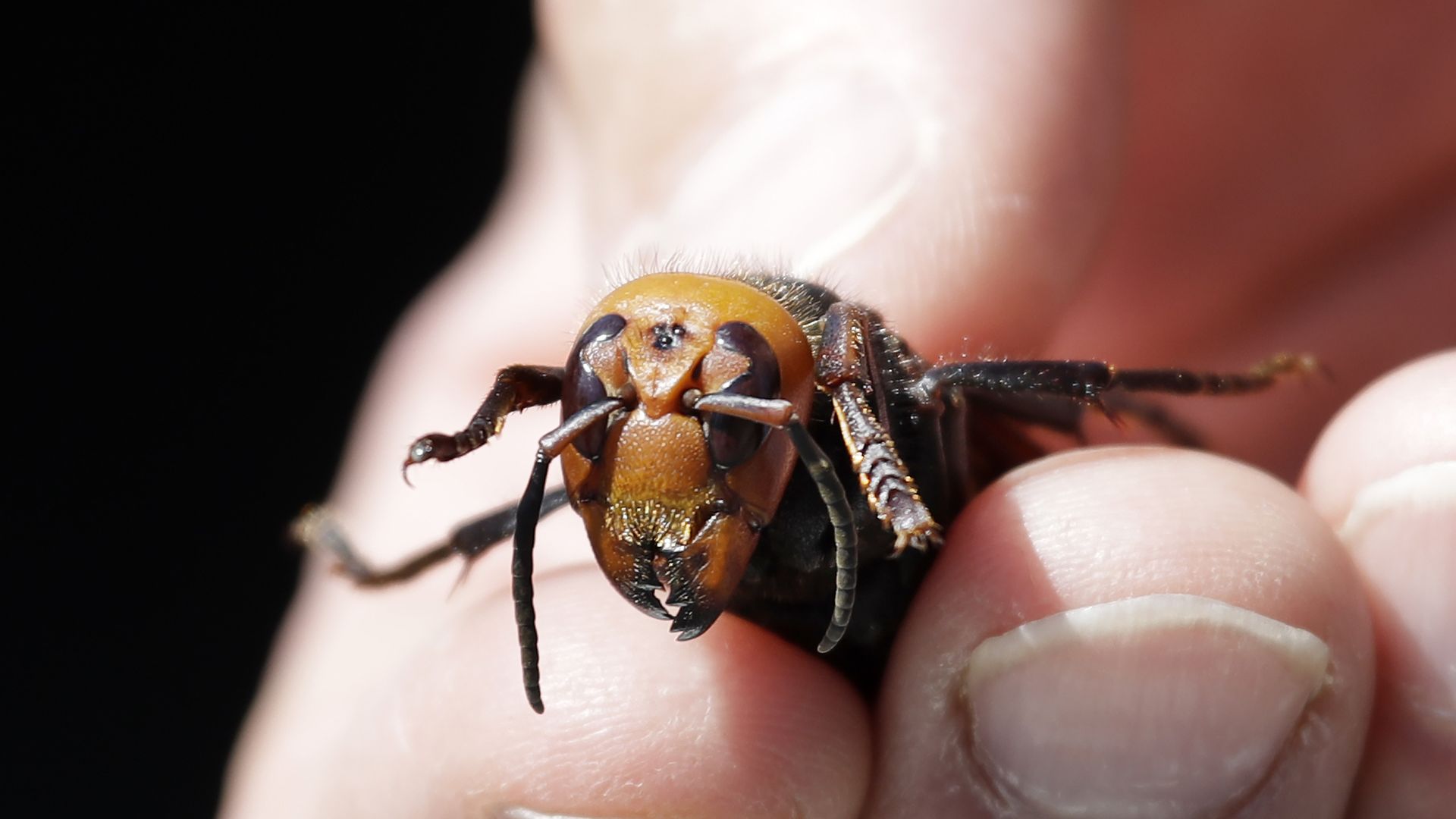
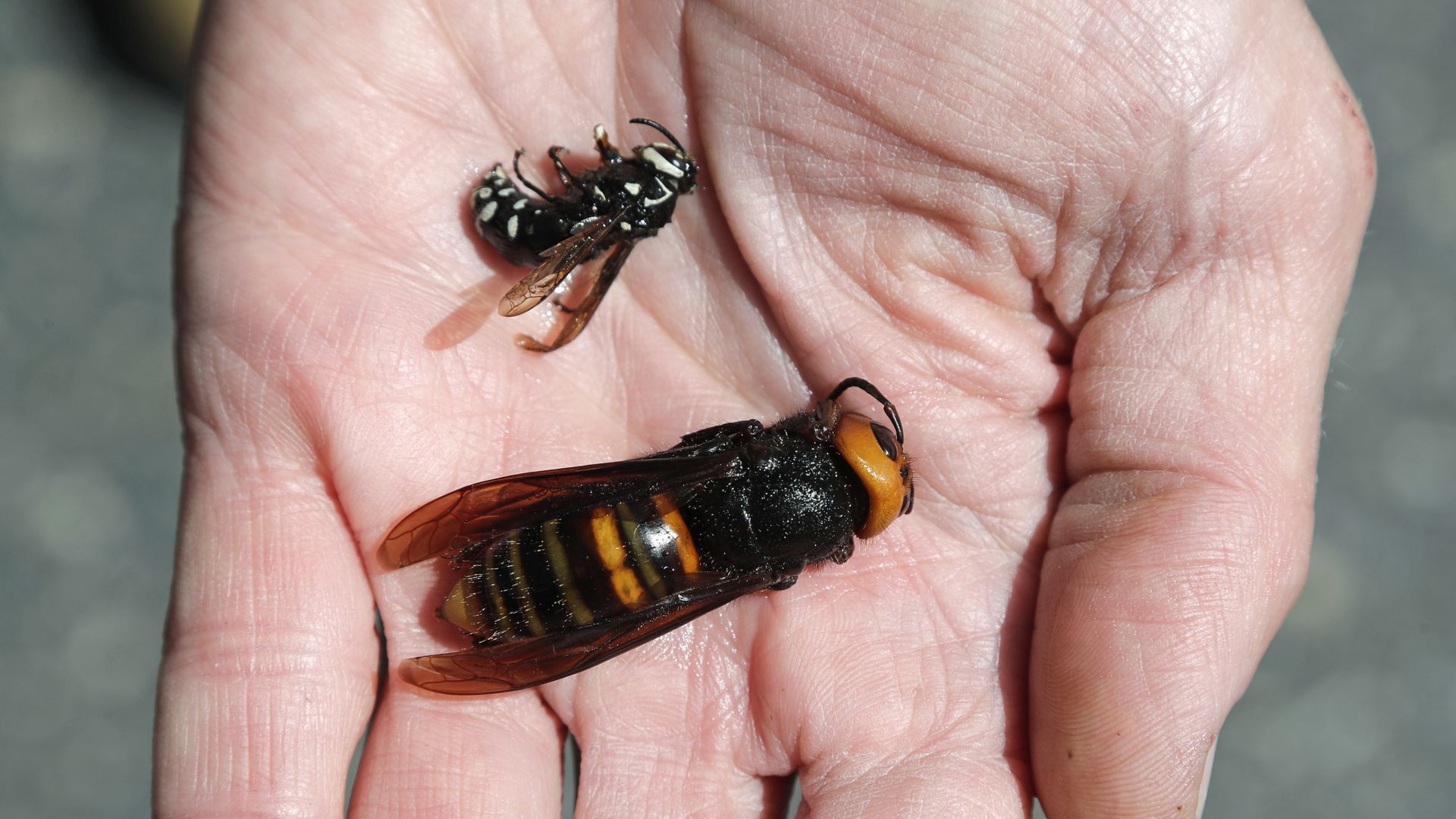
The northern giant hornet — commonly referred to as the "murder hornet" — has been officially eradicated in the United States, federal and Washington state officials announced Wednesday.
Why it matters: Northern giant hornets, the world's largest hornet species, can destroy a honeybee hive in as little as 90 minutes, and their extremely painful stings have occasionally been fatal to human beings.
Catch up quick: State and federal agriculture officials have been working to eradicate the invasive hornet species ever since it was discovered in North America five years ago.
- The hornets, previously called Asian giant hornets, first showed up in British Columbia in August 2019, then in Washington state in December 2019.
What they did: Washington state's Department of Agriculture found and destroyed four northern giant hornet nests between 2020 and 2021.
- None of the hornets have been detected since then, per the department.
- While someone in Kitsap County, Washington, reported a suspicious hornet about two months ago, state officials say they were never able to locate it and confirm what it was.
What they're saying: "By tackling this threat head-on, we protected not only pollinators and crops, but also the industries, communities and ecosystems that depend on them," Mark Davidson with the U.S. Department of Agriculture said in a news release Wednesday.
Between the lines: Reports from members of the public proved critical in locating and destroying the hornets, Sven Spichiger, pest program manager for Washington's agriculture department, told reporters at a news conference Wednesday.
- "It is a rare day when the humans actually get to win one against the insects," Spichiger said.
What we're watching: Officials say it's possible that the hornets could return, so they want members of the public to continue to keep an eye out.
- "We won a very significant battle here," Spichiger said Wednesday. "But the fight will always continue and we'll always be vigilant."