Nooksack evictions set to begin after Thanksgiving

Add Axios as your preferred source to
see more of our stories on Google.
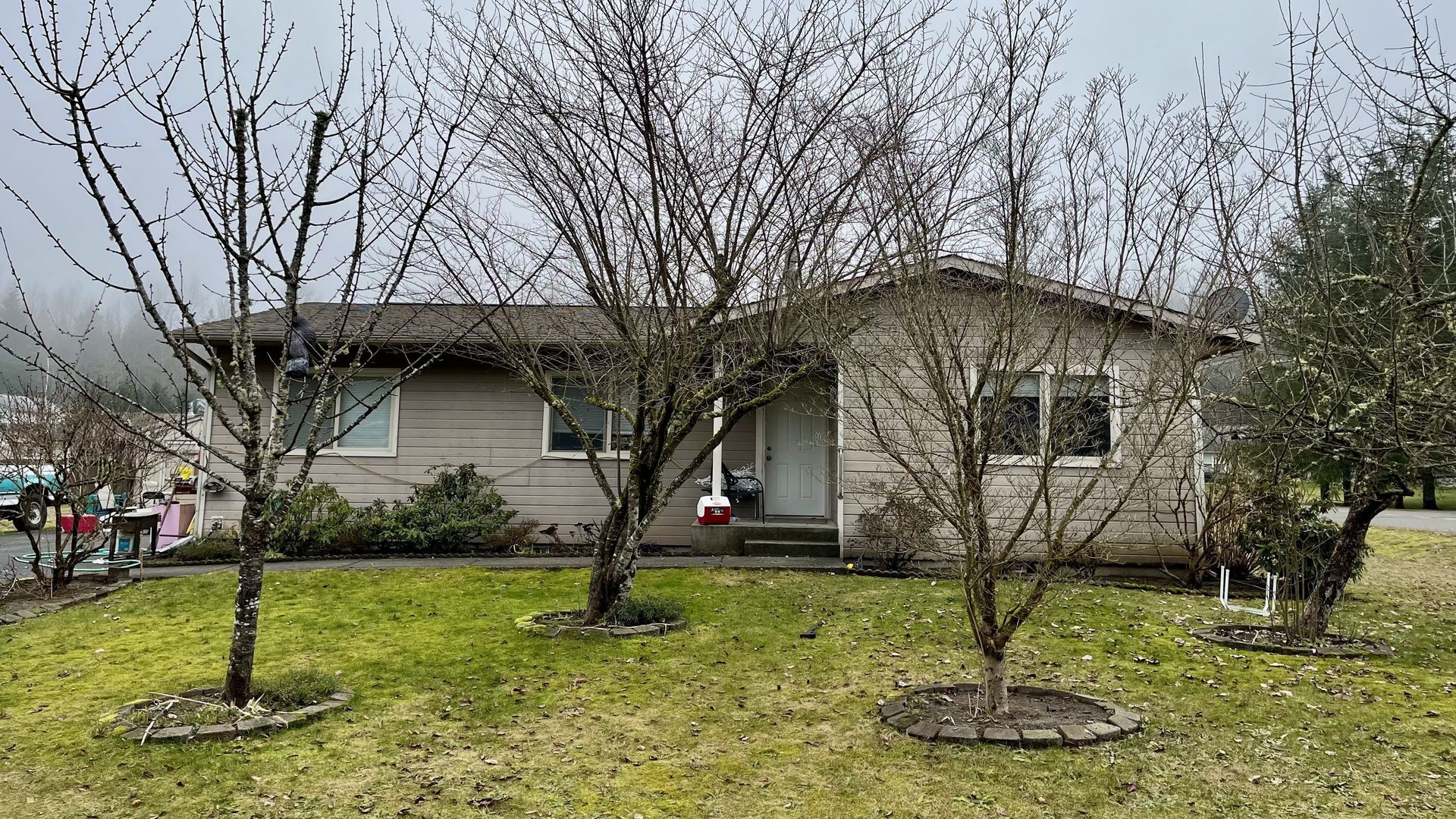
The evictions from Nooksack land are expected to include the occupants of this home. Photo: Courtesy of Gabe Galanda
Amid accusations of human rights violations and failed housing promises, the Nooksack Tribal Council is slated to begin evicting seven Indigenous families from their longtime homes on tribal land.
Why it matters: The evictions are the culmination of more than a decade of legal wrangling and tension between the Nooksack Tribe's sovereignty and what the UN has called a potential violation of "international human rights norms."
Driving the news: The evictions of three Nooksack families — members of the so-called Nooksack 306 who were disenrolled from the Nooksack Indian Tribe within the last decade — are set for the day after Thanksgiving.
- Four other families will be evicted from the homes east of Bellingham in the following weeks, said Gabe Galanda, an Indigenous human rights lawyer who is representing the families facing eviction.
Catch up quick: The Nooksack Tribal Council moved to disenroll more than 300 members from the tribe beginning in 2013, arguing that those members' common ancestor, Annie George, was not Nooksack.
- Galanda told Axios this was a political maneuver to consolidate power, casino revenues and other financial resources by reducing the tribe's population.
- State and federal leaders have largely declined to intercede, citing tribal sovereignty.
- Meanwhile, the U.S. Department of the Interior continues "to implore the Tribe's leaders to stop their planned evictions" but does not have the authority to intervene, said Bryan Newland, the department's assistant secretary for Indian Affairs.
The other side: The Nooksack Tribal Council declined to comment this week, but justified the evictions in a statement released this month by asserting its sovereign right to govern housing on tribal lands and to prioritize the needs of its current members.
- With more than 60 Nooksack people, including elders and homeless individuals, on a waiting list for housing, the tribe argues that continuing to allow non-members to occupy homes undermines its ability to provide for its community.
The big picture: The evictions raise questions about federal, state, and tribal accountability, Galanda said.
- "The evictions at Nooksack underscore a growing crisis in Indigenous housing, where sovereignty is too often wielded as a shield for neglect and systemic injustice," he said.
Between the lines: Even with the loss of tribal membership, the families in the Nooksack 306 group might not have faced eviction had the Washington State Housing Finance Commission effectively monitored tenant purchase options tied to federal low-income housing tax credits, said Galanda, who sued the state on behalf of impacted families in 2022.
- These options offer low-income tenants, including Indigenous families at Nooksack, the chance to purchase their homes, which the builders can sell after renting them out for 15 years.
- According to a report from the Washington state auditor's office released Tuesday, the Housing Finance Commission's oversight was "ineffective for ensuring … progress toward tenant purchases."
- But the audit did not specifically connect the impending Nooksack evictions with the state's oversight.
In a statement included in the auditor's report, the finance commission agreed that better "compliance oversight" was needed and said it is creating new policies and procedures that align with the auditors' recommendations.
- Yes, but: Housing Finance Commission executive director Steve Walker told Axios in an email that better monitoring would not likely have prevented the evictions because the Nooksack Tribe still could have excluded non-members from being eligible to purchase the homes.
What's next: The Shxwhay Band, a Canadian First Nation, has offered temporary housing for the affected families, though it won't be available until spring 2025.
Editor's note: This story was updated to reflect that a statement on averting the evictions came from Gabe Galanda (not the auditor's office), to correct the terms of tenant home purchases, and to make several clarifications.