Seattle-area commutes have gotten shorter



Add Axios as your preferred source to
see more of our stories on Google.
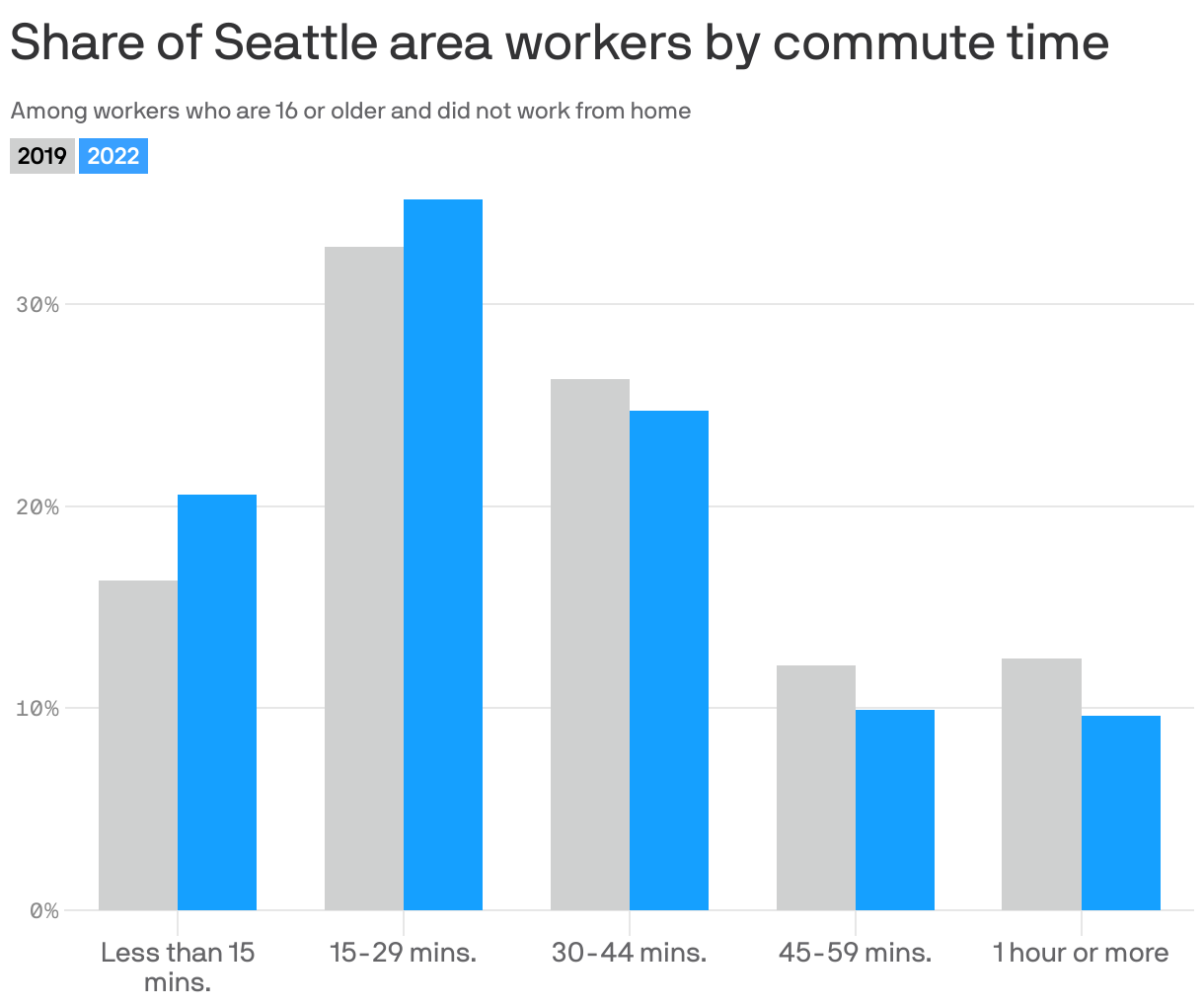
The share of Seattle-area workers with relatively speedy commutes has increased since the pandemic, per a new Axios analysis of census data.
Why it matters: Quicker commutes are linked to better mental health, greater job satisfaction and a host of other personal benefits.
- And driving less is better for the environment. (Of course, many people commute via public transit.)
Zoom in: A larger share of people in the Seattle metro area had commutes lasting less than 30 minutes last year, compared to before the pandemic.
- That includes people who traveled to work by any means, including walking, transit, driving or bicycling, according to census data.
By the numbers: Of Seattle-area workers who traveled to and from work, 35.2% had a commute of 15–29 minutes in 2022, up from 32.8% in 2019.
- Another 20.6% had a commute of less than 15 minutes, compared with 16.3% in 2019.
Meanwhile, only 9.6% of workers in the Seattle area had a commute of an hour or longer last year. That's down from 12.5% in 2019.
Driving the news: There are a few potential factors at play here.
- The "Great Reshuffling" led many Americans to move and/or find new jobs, and some of those who enjoyed the benefits of pandemic-era remote work decided to prioritize shorter commutes in favor of more personal or family time.
- Meanwhile, remote and hybrid work is persisting post-pandemic, leading to fewer cars on the road and thus less traffic and faster commutes.
Of note: These figures don't include Seattleites who work from home, whose commute time is zero.