Washington's a skin cancer hotspot — and it's gotten worse

Add Axios as your preferred source to
see more of our stories on Google.
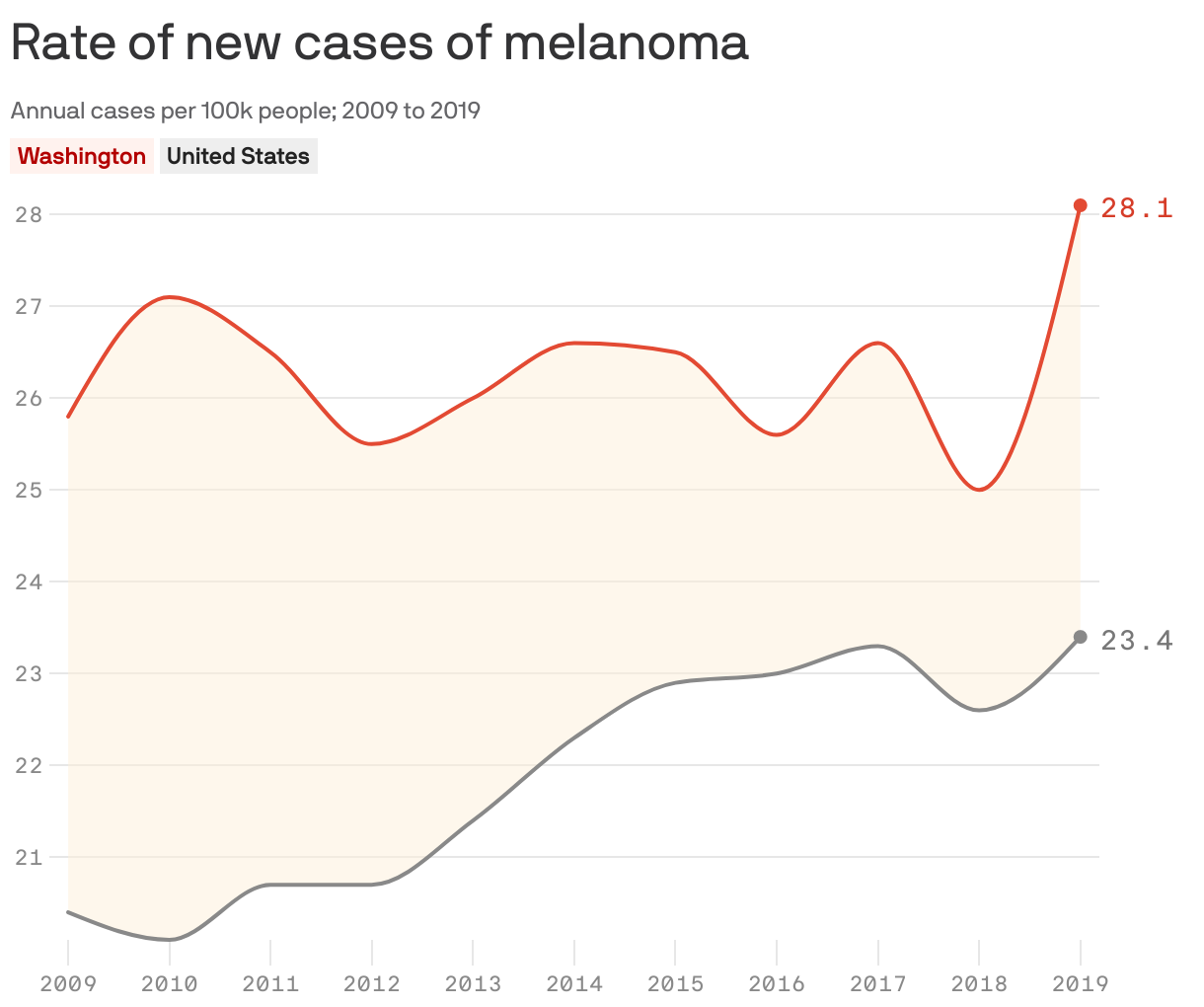
Washington's rate of skin cancer has increased over the past decade, with new melanoma cases here far outpacing the national average.
Why it matters: Skin cancer, if not caught early, can spread to other parts of the body and be deadly.
- More than 200 people in Washington died of melanoma in 2019, the latest year of data available from the state health department.
Details: Washington's rate of invasive melanoma was 28.1 cases per 100,000 residents in 2019, according to the Centers for Disease Control and Prevention (CDC).
- That's about 20% higher than the national rate, which was 23.4 cases per 100,000 people that year.
- Among the 50 states, Washington had the 11th-highest rate of new melanoma cases, per the CDC.
Of note: The Evergreen State has consistently ranked among the states with the highest incidence of melanoma, falling in the top 10 from 2011-2015, per the state health department.
- Since 2000, Washington's melanoma case rate has increased by about 1.8% each year, Mahesh Keitheri Cheteri, epidemiologist with the Washington State Cancer Registry, told Axios.
- The reasons for the increase are unclear, but it could be tied to more people getting tested and diagnosed early, Keitheri Cheteri said.
As for why Washington has such a high incidence of skin cancer in the first place, it might have something to do with people falsely assuming they don't need to take precautions in cloudy weather, said Katie Treend, comprehensive cancer control program coordinator within the health department.
- Treend told Axios that while there haven't been specific studies on this, "sun safety and skin cancer prevention may not be as intertwined into Washington state culture as much as it might be in a state that is very sunny all the time."
Be smart: Even if it's overcast, up to 80% of skin-damaging UV rays can still make it through clouds, Treend said.
- Check the UV index score on your phone's weather app. If it's a three or higher, layer on some sunscreen — and don't forget about hats and sunglasses, which can provide additional protection.
What we're watching: Data about melanoma cases from 2020 is unreliable due to disruptions in medical care caused by the pandemic. But new numbers from 2021 are expected in the first part of next year.
- Those will shed more light on whether Washington and other states' melanoma rates have continued to rise, Keitheri Cheteri said.