Get to know your neighbors: otters, coyotes and bears

Add Axios as your preferred source to
see more of our stories on Google.
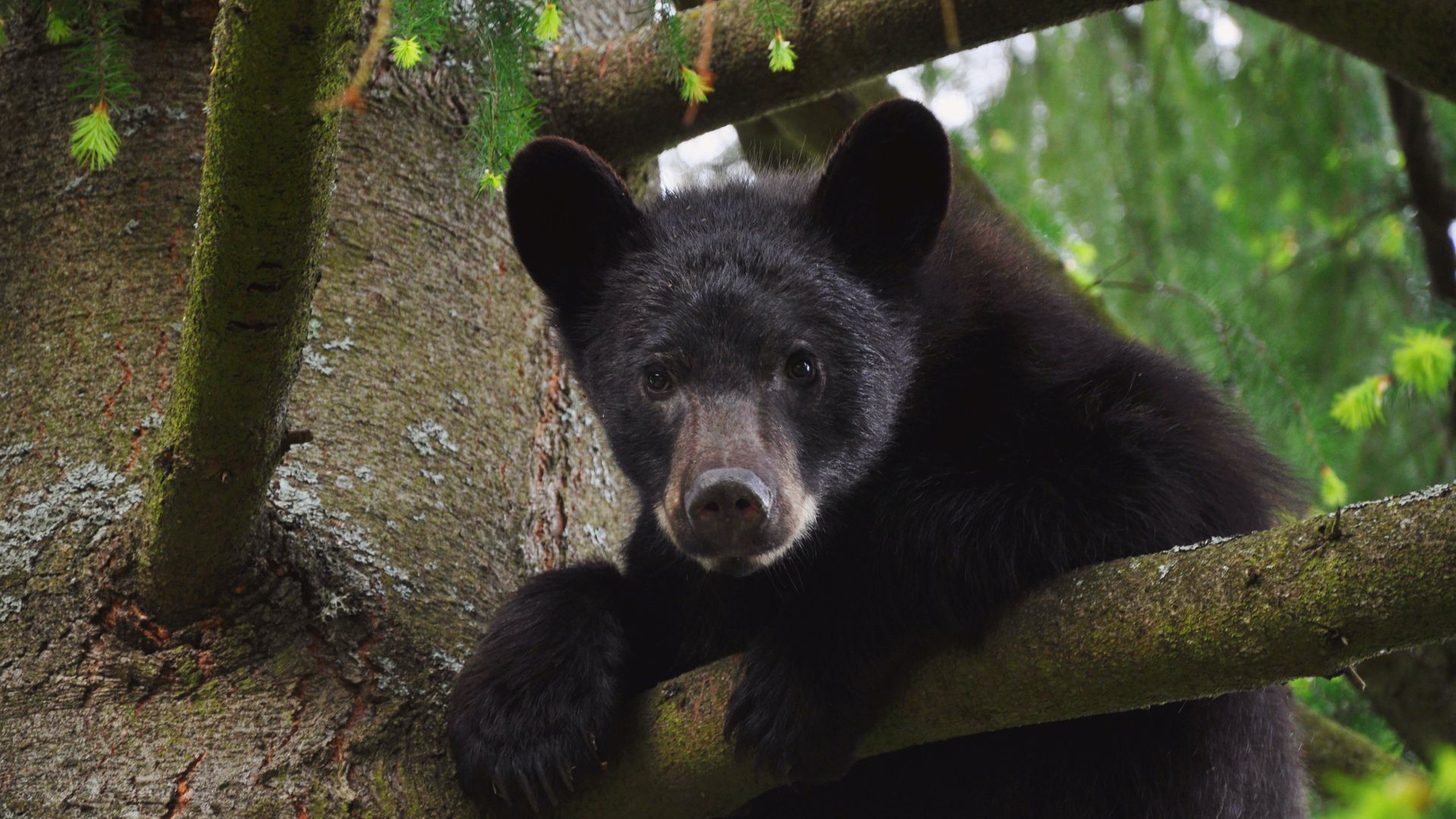
A young bear in a tree. Photo courtesy of Washington Department of Fish & Wildlife
Every spring, when Washington's black bears emerge from their winter snoozes hungry and on the prowl, the state's Department of Fish & Wildlife (WDFW) gets a flurry of reports from residents surprised to see wild animals roaming in populated King County.
Driving the news: Urban wildlife is becoming an increasingly common sight in Seattle and King County, said WDFW spokesperson Chase Gunnell.
- In addition to urban coyotes — which have a booming population right now — cottontail rabbits, eagles, herons, river otters and a small herd of black-tailed deer in the Washington Arboretum and Interlaken Park area, have all been spotted within Seattle, he told Axios.
Why it matters: Bears and other urban wildlife have adapted to living alongside humans, Gunnell said. They are a normal part of our ecosystem with populations that ebb and flow and they're here to stay. Living responsibly with them means securing garbage, barbeques, pet food and bird feeders that attract large carnivores into neighborhoods and yards.
- When conflicts arise because a wild animal has become habituated to human food at, say, one driveway or campsite and then seeks it out at others, that creates danger to humans that usually ends with the animal being "lethally removed," said Gunnell.
- Last year, a black bear that had been raiding trash cans near Issaquah for years had to be killed, he said, when it lost its wariness of humans and became a threat.
What they're saying: "So many new people are moving to the city and the suburbs and they're surprised when a bear shows up in their yard," he said. "But they shouldn't be because most of Washington state is bear country."
Be smart: It's against the law in Washington to feed or "negligently attract" black bears or other large wild carnivores under RCW 77.15.790.
- Fines of up to $1,025 may be issued in cases where people intentionally fed bears or repeatedly left out attractive food sources, Gunnell said.
By the numbers: There are about 20,000 black bears estimated to live in the state, according to WDFW, which gets about 500 bear conflict reports each year.
- WDFW does not want to receive reports of coyotes or black bears "going about their normal business" said Gunnell, but urgent reports of wildlife that threatens public safety can be made by calling 360-902-2936, emailing [email protected], submitting an online report, or by calling 911.
1 fun thing: You know who does want to get your report, though? A citizen science project run by Seattle University and Woodland Park Zoo that's gathering information about sightings of black bears, bobcats, cougars and other critters at Carnivore Spotter.
- The Seattle Urban Carnivore Project has gotten about 2,000 reports per year since it was launched in 2019, said Katie Remine, a conservation manager at Woodland Park Zoo.
- Many photos and videos submitted come from doorbell cameras, she said.
- "People may not have thought of these as wildlife research tools, but they are proving themselves to be just that!" she told Axios in an email.