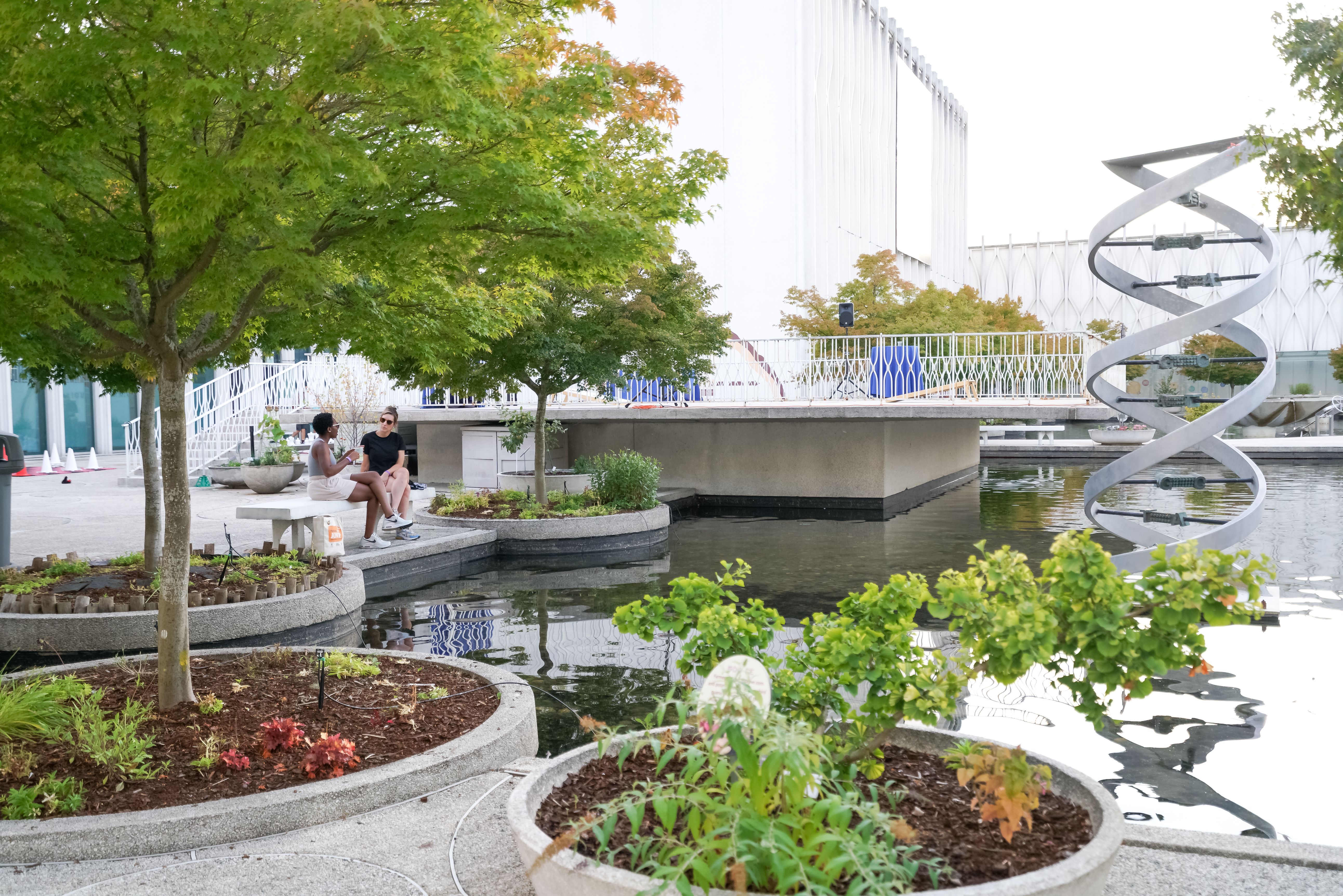
The Pacific Science Center's reflective pools could get a makeover

Add Axios as your preferred source to
see more of our stories on Google.
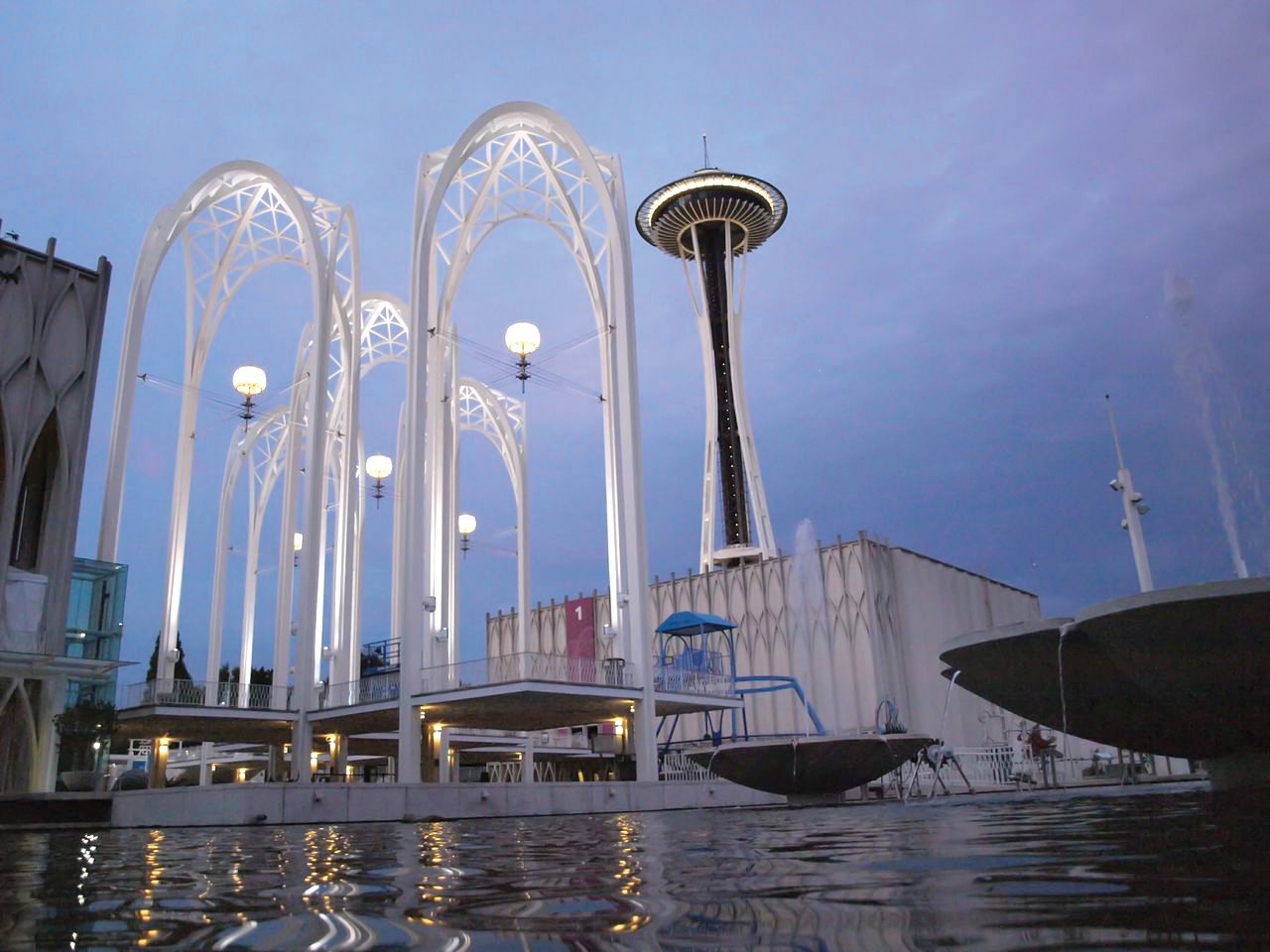
The landmark reflective pools at Seattle's Pacific Science Center are "at risk of catastrophic failure," the organization says, prompting a debate about how to best repair and possibly alter them.
Catch up quick: The reflective pools were built for the 1962 World's Fair, the same event that brought the Space Needle to Seattle.
- Local architect Minoru Yamasaki designed the reflective water feature, along with the surrounding science center buildings and arches, before going on to design the original World Trade Center in New York City.
The latest: The pools, however, are leaking and losing 71,000 gallons of water each day to seepage and evaporation, said Will Daugherty, Pacific Science Center president and CEO, in a written statement to Axios.
- Refilling the pools and conducting patchwork repairs costs the organization about $170,000 annually, while wasting about 26 million gallons a year of potable water, according to the science center.
- The current structures also "do not meet today's standards for accessibility," Daugherty wrote.
What's happening: One of the update ideas that has generated some controversy involves replacing one of the reflective pools with a grassy meadow.
- During a Feb. 15 presentation to Seattle's Landmarks Preservation Board, science center officials said the meadow redesign would help "transform the courtyard of PacSci’s Seattle Center campus into an urban ecosystem that integrates water, native plants, and animals."
The other side: Eugenia Woo, director of preservation services at Historic Seattle, was one of several people who wrote to the landmarks board opposing the meadow proposal, saying it would "permanently alter the experience of a major character-defining feature."
- "Please do not open the door to allow important features of this landmark to be destroyed," Woo added.
Another option on the table would make less sweeping changes to the courtyard, by upgrading the pool systems without converting the entire lower pool to a meadow.
What's next: No final decisions have been made.
- Because the site is a city landmark, the Landmarks Preservation Board would have to sign off on any major changes — a process that will require at least one more public meeting, and likely will involve two meetings or more.