What trees to plant to survive the next 100 years

Add Axios as your preferred source to
see more of our stories on Google.
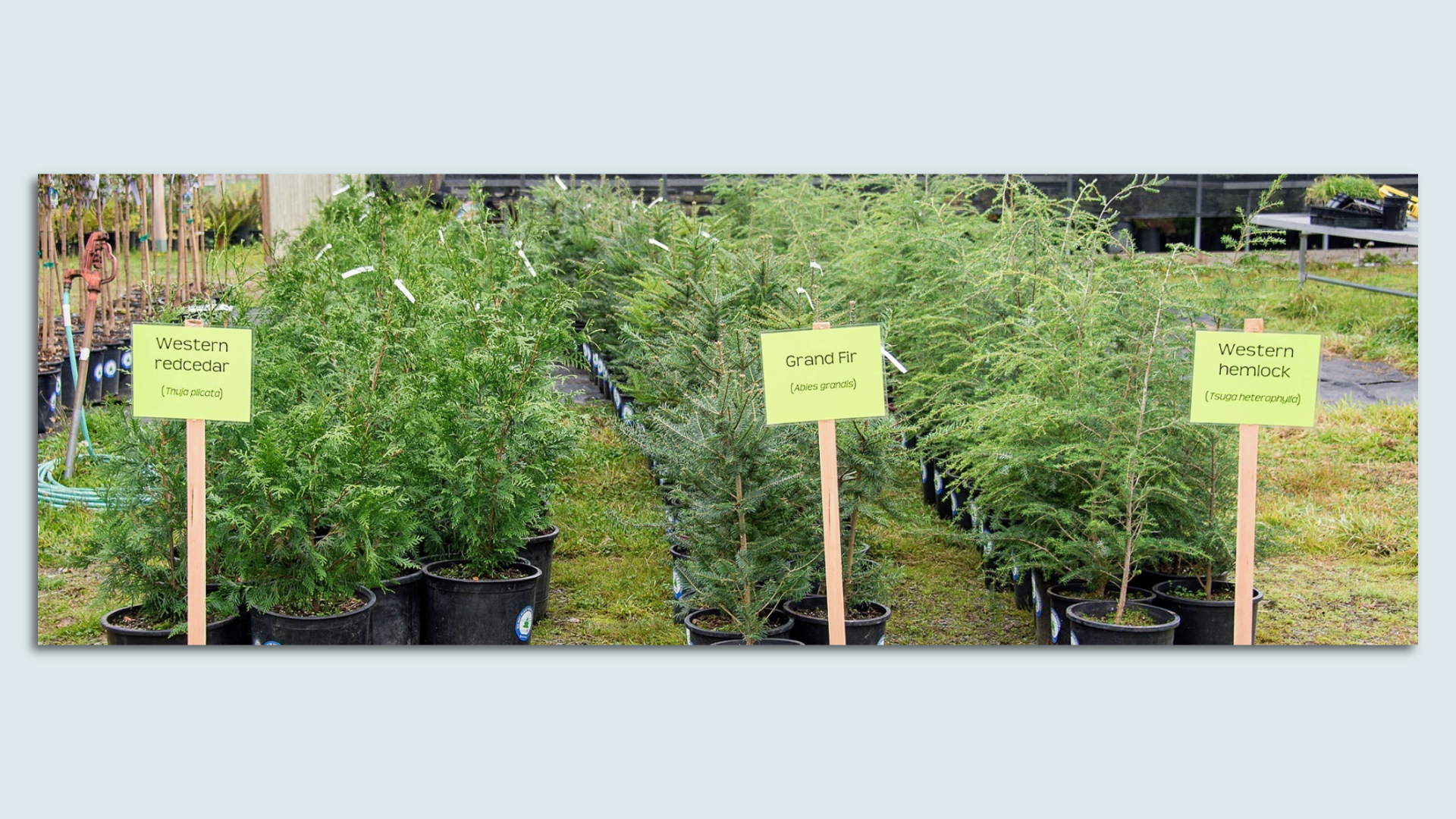
Courtesy of the Seattle Department of Transportation
Let's say you believe that planting trees is a good thing and also that the world is getting warmer, but feel a little overwhelmed about where to start.
We asked Pete Smith from the Arbor Day Foundation to give us some guidance on how to select trees to plant in the Seattle area that have a good chance of surviving the next 50 or 100 years.
Here is what he advised: Start with the Seattle Department of Transportation's Tree Selection Guidance Tool, which contains detailed information about 152 different species. Do some research and ask yourself: Do I like fall color, a spring flower, or do I want shade?
- When you find species you like, cross reference them by looking for information about their tolerance for warmer climates as well as their resistance to pests.
- For example, the Homestead elm or Ulmus "Homestead" is listed as being drought tolerant on SDOT's site. A search for scholarly articles showed the tree has good immunity to Dutch elm disease and flighted spongy moths and has generally good heat tolerance.
- Think beyond natives and the conifers that have historically dominated our region, he said. Lots of trees from the East Coast fare well on the West Coast.
For those looking for a little more help, here are some species he thinks are worth a closer look as well as few of his comments on them:
- Thrives well here and is non-invasive.
- Also known as a Chinese scholar tree, it has beautiful creamy white or delicate yellow spring flowers, a wonderful shape and works well in yards and parks.
- Well adapted to warmer climates and is likely to do well in the region long into the future.
- Incredibly tough, very long-lived and great at tolerating urban stresses such as compacted soil, salt and a high pH.
- A small statured tree with showy fruit, attractive yellow fall color, and distinctive bark that makes a nice accent to a yard.
- Has fragrant white flowers.
- East Coast tree that grows an edible fruit described as tasting like a banana.
- Found in the Seattle Japanese Garden and is a "another lovely tree!"