How — and when — to tell kids the truth about Santa

Add Axios as your preferred source to
see more of our stories on Google.
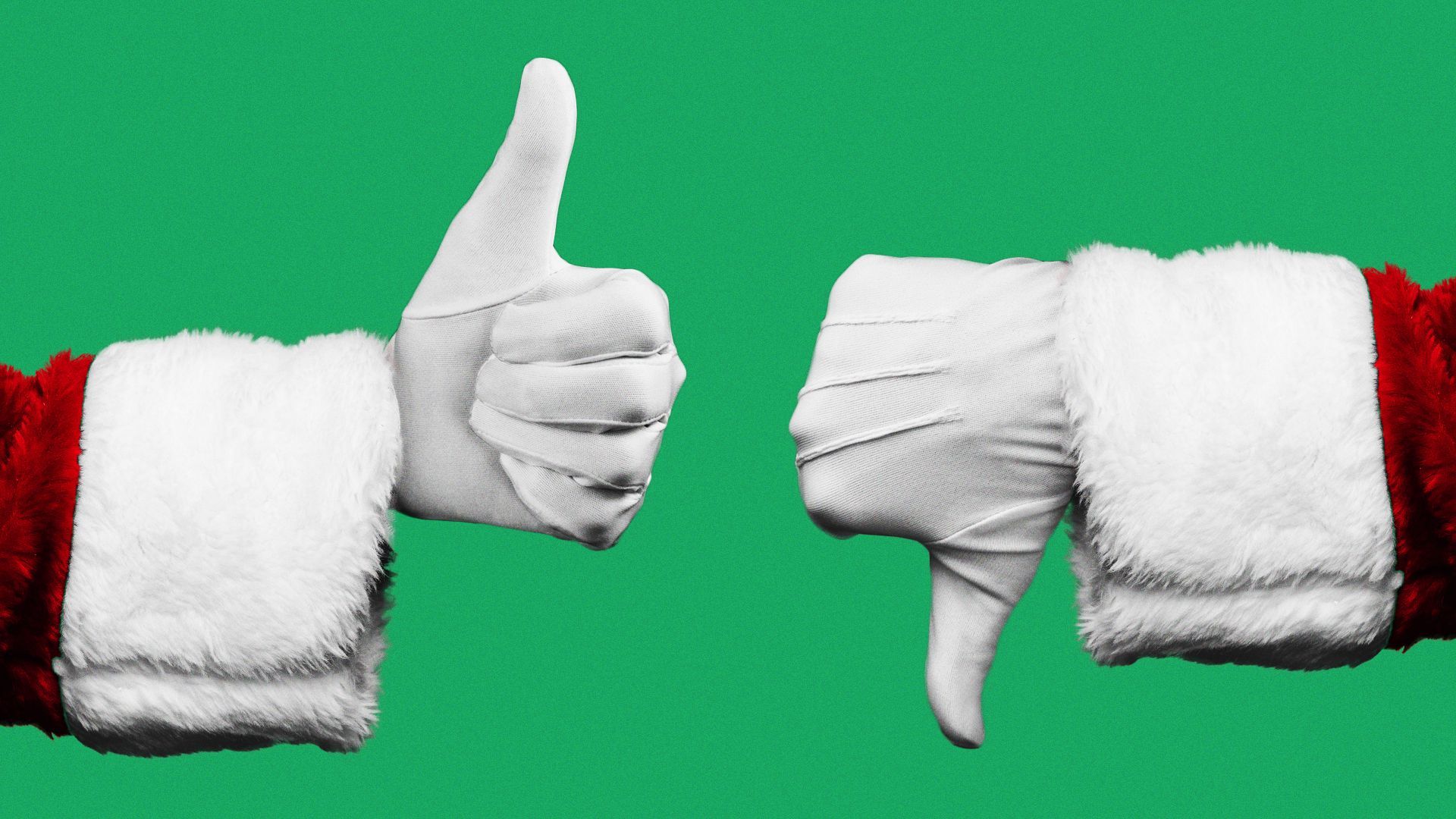
Illustration: Maura Losch/Axios
Local parents appear split on how to handle young kids' questions about Santa: whether to lean into the stories — Rudolph, elves and all — or sit down and level with them.
Why it matters: Some parents worry about the long-term consequences of lying to their kids, even about something as well-intentioned as Santa, while others feel it's important to let kids revel in a little holiday magic.
- Psychiatry experts don't offer much help, publicly disagreeing about whether lying about Santa is benign or potentially harmful.
What's happening: Axios Seattle asked readers last week about the best way to approach the Santa question, and when's the right age to tell kids it's their family behind the merriment. Here's what some of you said.
The "don't lie" camp
Kathy Austin discovered Santa wasn't real at 7, after she caught her parents eating the milk and cookies she left for him. "I was heartbroken, not that Santa wasn't real, but that my parents had lied to me for so long," she told Axios.
- With her own kids, she decided not to "play Santa," swayed by her own experience and discussions about how even trivial lies can model dishonesty for kids.
- Instead, "We tell our kids that Santa is not real but a symbol of generosity and caring for the season," Austin explained.
Meanwhile, reader Scott Pinzon said it was important for him to be able to tell his kids, "I have never lied to you," and that meant "we didn’t go full-in on Santa."
- " ... My kids are in their forties and I can still say I have never lied to them," he tells Axios.
Yes, but: Both Pinzon and Austin urged their children to not ruin the magic for others. " ... Our kids have only relished in the fact that they know the truth and haven't broken any kids' hearts," Austin writes.
The "let kids be kids" camp
Plenty of parents think it's important to let kids indulge in the fantasy. "Christmas is supposed to be fun! Let your child enjoy it, you don't have to set them straight," Bill Garrison writes. "Let the little brat on the playground be the villain."
Similarly, Rose Pinciotto votes to "keep the magic alive as long as you can."
- "Not because they will be harmed by knowing the truth, but because we all need a little magic in our lives."
Pro tip: If you want to keep the illusion going, but your kid has started to question why there seems to be a Santa at every mall, try what Megan Kilpatrick did: Tell them those are "helper Santas," who "represent the real Santa and relay wishes back to the North Pole."
- Kilpatrick told her 5-year-old that, and he's still believing in Santa at age 8, she tells Axios.
The bottom line: When your children are old enough to ask about Santa, only you can decide whether they are ready to know the truth — and perhaps just as importantly, whether you're ready to tell them.