SF's downtown visitor activity dropped over the past year



Add Axios as your preferred source to
see more of our stories on Google.
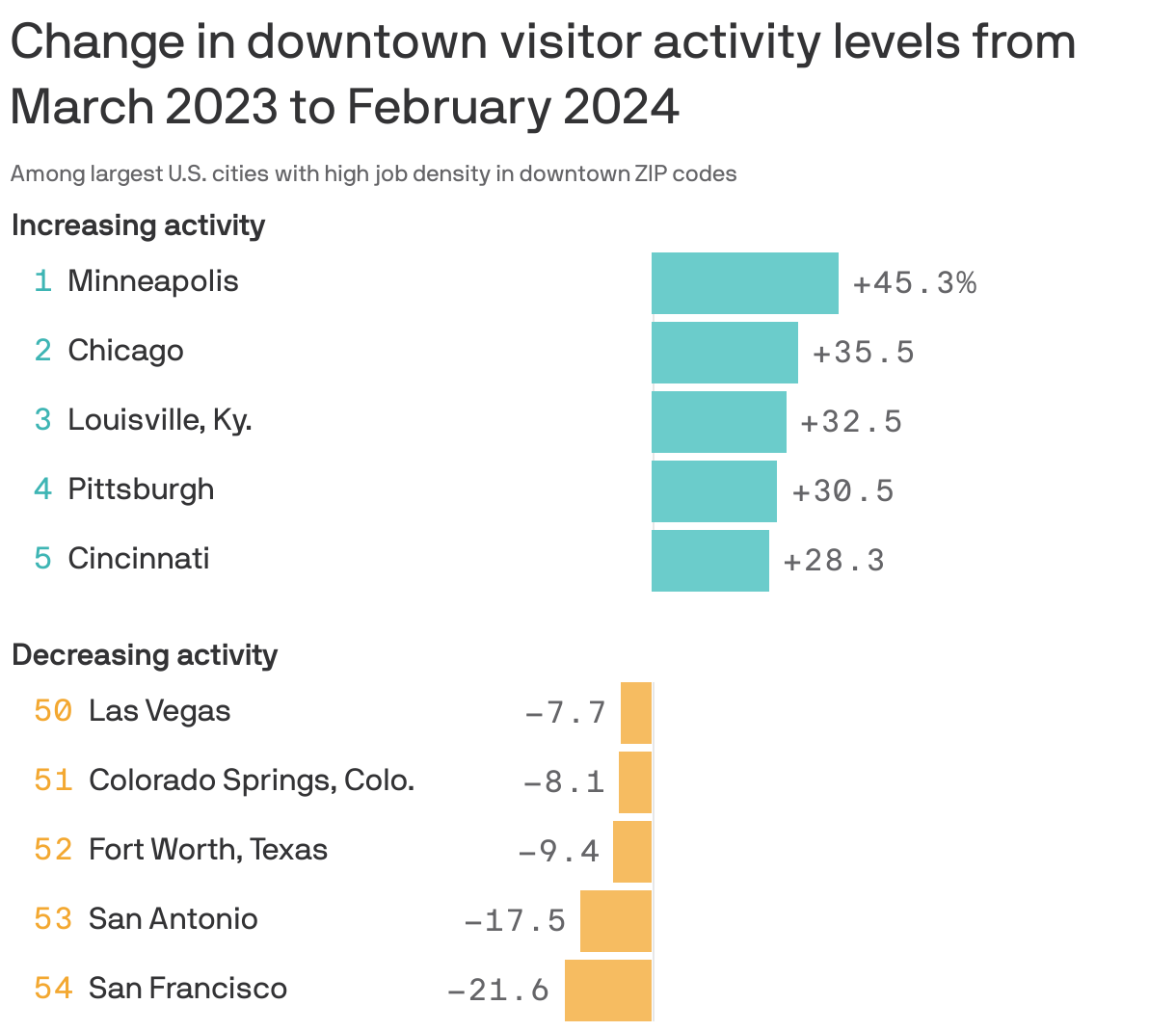
Most American downtowns saw a bump in visitor activity over the past year — but not San Francisco, new data shows.
Why it matters: Amid narratives about crime, store closures and an emptied downtown post-pandemic, local officials have launched a suite of initiatives aimed at revitalizing the city. The updated figures reveal that we haven't quite bounced back.
By the numbers: San Francisco's downtown visitor activity dropped over 21% between March 2023 and this past February, according to researchers at the University of Toronto's School of Cities.
- It's one of just 14 downtowns in a downward trajectory, compared to the 50 trending upward — a sign of "stagnating recovery," per the researchers' latest update, which counts some Canadian cities.
State of play: Mayor London Breed, who is up for re-election this year, announced a new plan in February to attract 30,000 residents and students downtown by 2030.
- "We can no longer rely on five days a week and 9-5 employment," she said at a legislative hearing with other mayors this month, saying that a "historic office vacancy rate" of over 36% downtown has resulted in a significant decrease in foot traffic.
- While San Francisco's office vacancy rate increased from 35.6% in the last four months of 2023 to 36.7% in the first quarter of 2024, its rate of increase has slowed, according to commercial real estate firm CBRE.
What we're watching: San Francisco has partnered with community organizations to host pop-ups, watch parties and art projects in the downtown area in a bid to reimagine how the space is used.
- Breed also secured an agreement with China last week to house giant pandas at San Francisco Zoo, which is likely to give the city a tourism boost.
The fine print: Researchers used anonymized mobile device location data to estimate visitor activity in the downtown areas of dozens of North American cities.
- They define "downtown" as the location in each metro area with the highest job concentration.