Texans increasingly facing heat-related mental health issues

Add Axios as your preferred source to
see more of our stories on Google.
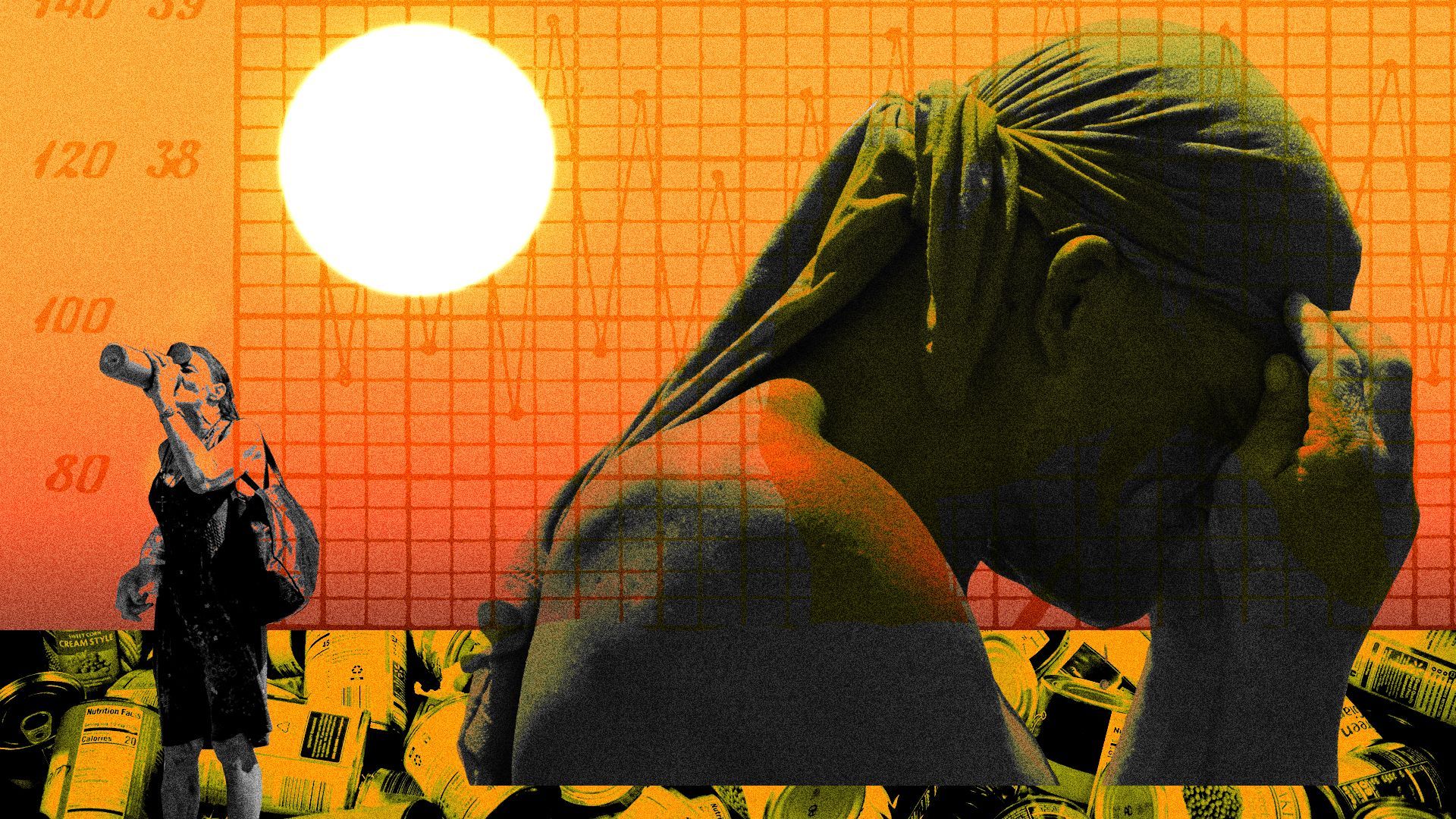
Credit: Shoshana Gordon/Axios, Luke Sharrett/Bloomberg, Patrick Fallon/AFP, Irfan Khan/Los Angeles Times via Getty
Many Texans have weathered their share of sweltering summers, but a growing number are now grappling with summer seasonal affective disorder (SAD), a condition that impacts mental health even in the warmer months.
Why it matters: As climate change intensifies and heat waves become more frequent, summer SAD could become a more prevalent issue.
Flashback: The concept of SAD was first introduced in 1984 by Norman Rosenthal, a clinical professor of psychiatry at Georgetown University School of Medicine.
Zoom in: There has been a noticeable increase in clients expressing frustration and lack of motivation from May through August, Alexander Portillo, a therapist at Pathlight Mood and Anxiety Center in San Antonio, tells Axios.
- Summer 2023 was the hottest on record for San Antonio with 26 daily high temperatures broken or tied.
- San Antonio has had 14 days of temperatures reaching 100 degrees or higher this year.
How it works: It's not just the heat contributing to summer SAD. Prolonged daylight hours can disrupt the body's sleep cycle, affecting the parasympathetic nervous system, Portillo says.
- For students, changing routines during summer break can disrupt the balance of brain chemicals that help with focus, motivation and mood. This disruption can lead to feelings of decreased motivation or sadness.
- Increased isolation to avoid the sun and summer activities, where people might feel pressured to wear less clothing, can worsen feelings of depression, self-esteem issues and anxiety, Portillo says.
The intrigue: Social media also plays a part in SAD. Scrolling through post after post of seemingly perfect summer adventures emphasizes feelings of isolation, UT Health Austin pointed out last year.
What they're saying: Portillo believes that summer SAD is underreported due to its relatively recent recognition and lack of widespread awareness.
- Many individuals may not realize they are experiencing it until the symptoms start to recede, leading to delays in seeking treatment.
- "A lot of people may not be motivated to go into treatment, because by the time they (realize) what they are dealing with, they're already coming out of it," he says.
Yes, but: While psychotherapy and antidepressants are available to treat general depression, there are no summer-SAD-specific treatments, according to the National Institute of Mental Health.
What's next: With August typically the hottest month in San Antonio, addressing and managing summer SAD is crucial.
To combat summer SAD, Portillo suggests strategies to support natural melatonin production and improve sleep quality like installing drapes to block out evening sunlight, prioritizing a consistent sleep routine, and practicing relaxation techniques like yoga.