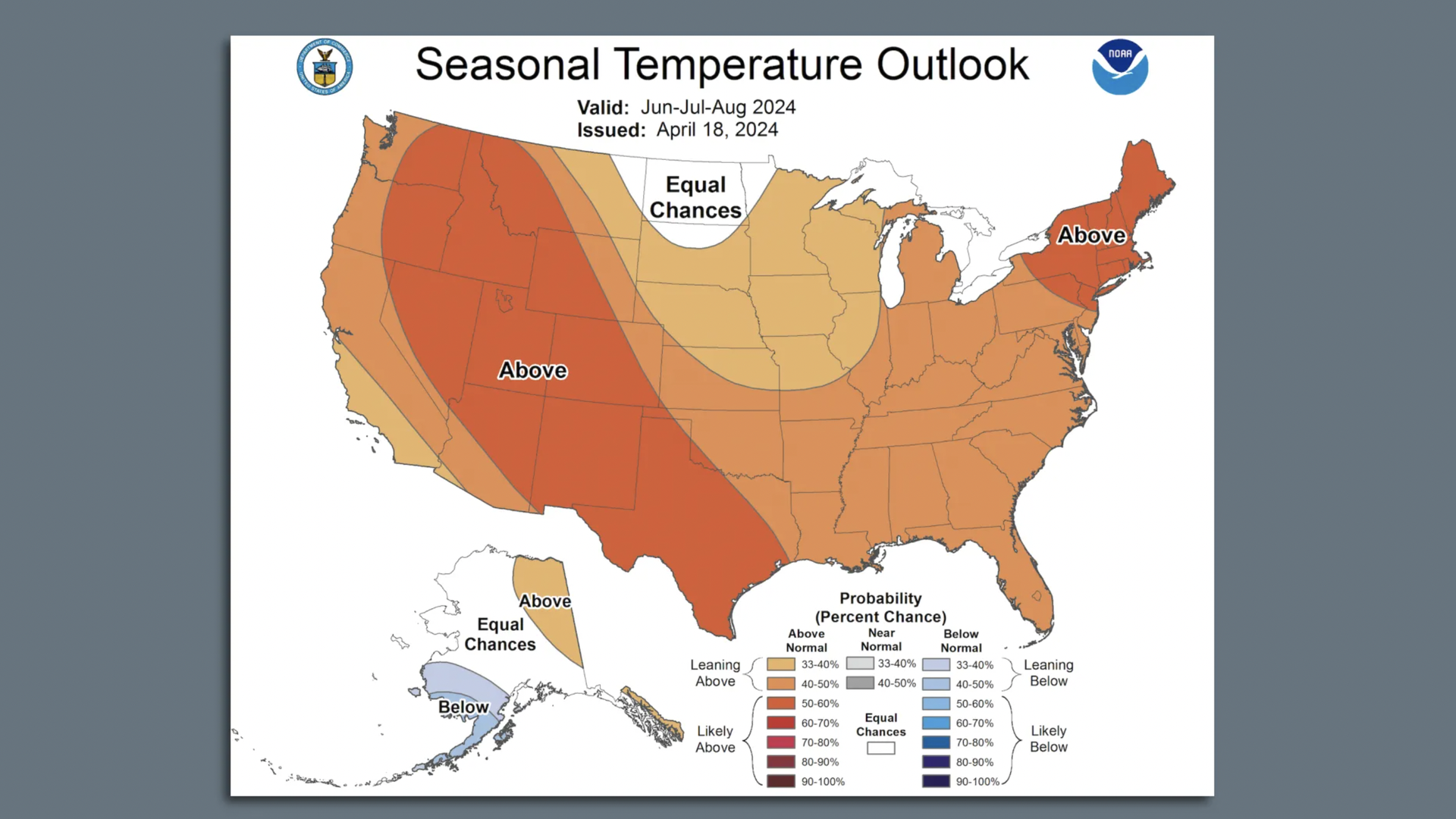
Map showing the likelihood of above-average and below-average temperatures across the U.S. during June, July and August 2024. Photo: NOAA/CPC
A hotter-than-usual summer is likely to occur in the U.S. and many other parts of the globe, according to new forecasts and scientific research.
Why it matters: Extreme heat is a major public health threat and plays a role in droughts and wildfires.
Hot weather, particularly when it occurs during prolonged heat waves, also strains Texas' power grid.
The big picture: An ongoing El Niño event in the tropical Pacific Ocean is quickly fading, with cooling ocean temperatures at and beneath the surface.
A La Niña climate cycle is expected to take shape, which features cooler-than-average tropical Pacific Ocean temperatures, later this summer.
Some studiesshow these transitions are associated with hotter-than-average summertime conditions across large parts of the U.S.
Zoom in: A recently released NOAA climate outlook for the June through August meteorological summer shows the chances for hotter-than-average conditions are highest across a swath of Texas.
Flashback: 2023 was the hottest year on record for San Antonio, with 75 days over 100° and 131 days over 90°, according to the NWS.
Yes, but: Anthony Artusa, a meteorologist at NOAA's Climate Prediction Center, pushed back against recent media headlines suggesting the lower 48 could see the "hottest summer ever" in 2024.
"Nevertheless, what [models] do support is an unusually hot summer this year, especially for the south-central and western areas of the contiguous U.S., and people should be prepared for this," he said.