Phragmites creativity inspires — but with risk

Add Axios as your preferred source to
see more of our stories on Google.
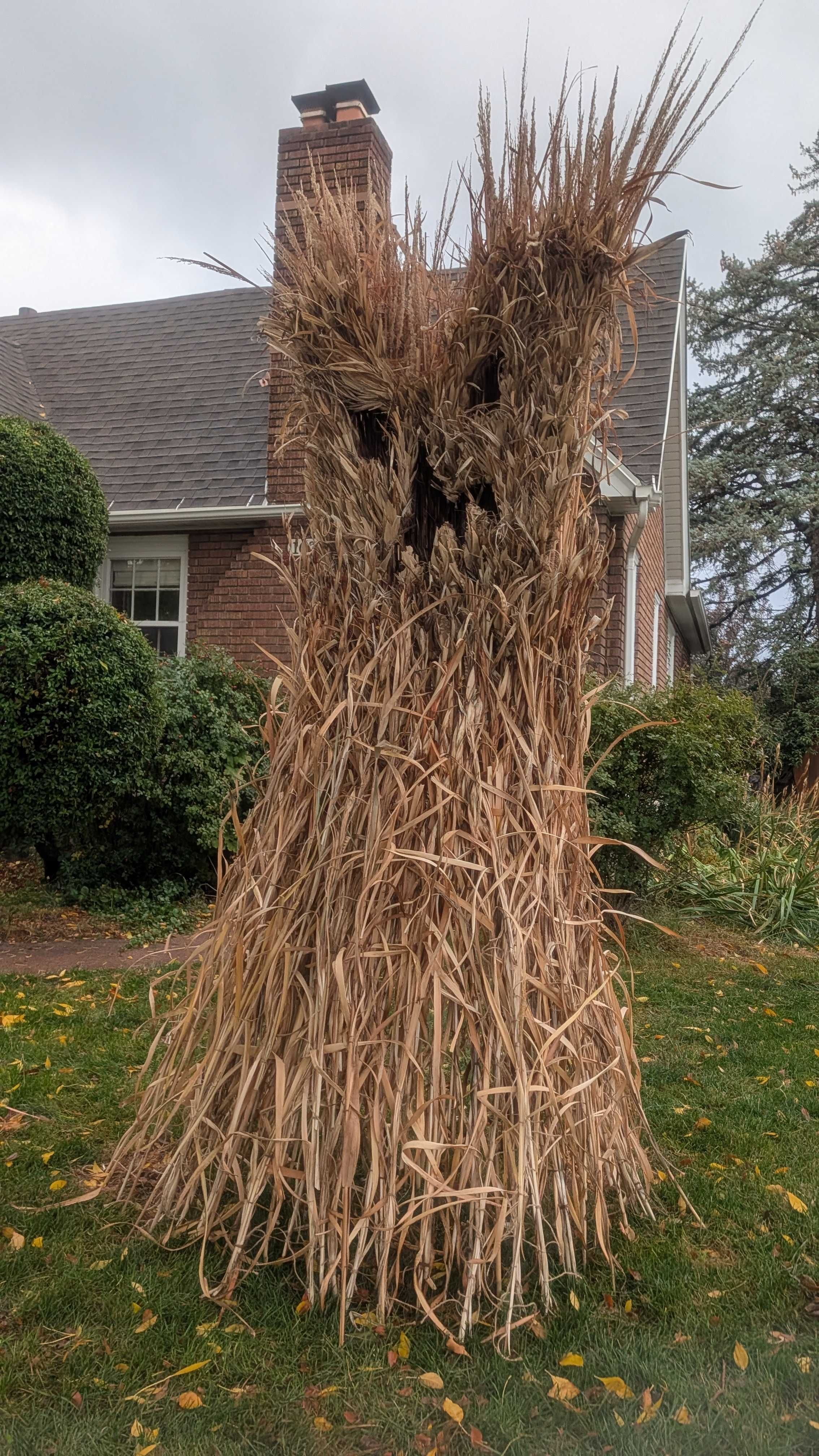
As invasive phragmites soak up water the Great Salt Lake desperately needs, I figured claiming a few stalks for my Halloween display would be a good deed.
- Turns out, I might have made things worse.
The big picture: Phragmites are a scourge to wetlands and marshes across the country, particularly around the Great Salt Lake.
- The immense reeds crowd out native plants, block water by shifting sediment and drain the lake of tens of thousands of acre-feet of water each year.
The intrigue: To raise awareness of the threat, some artists have made "phrag" their medium, creating sculptures, buildings, baskets, mats, weavings and even boats.
Case in point: When I was building the ghostly "corn" shock pictured above, I ran out of the ornamental grass stalks I'd collected from neighbors.
- Phragmites seemed an abundant option to finish my masterpiece — and I'd already seen the plant recommended for Halloween displays in Utah.
Friction point: The prolific seeds gave me serious pause.
- I painstakingly cut them into a garbage bag before harvesting an armful of stalks from the bank of the Jordan River.
Yes, but: State wildlife officials tell me that phragmites' seedheads are best treated like live smallpox cultures: Do not handle or transport them.
- Phragmites have already spread from fall decorations into wildlands near Herriman, Kim Wells, spokesperson for the state Department of Natural Resources, tells Axios.
Threat level: Phragmites seeds spread around via wind and water — and bits of stem can also propagate new plants.
- The more patches that form, the more indestructible the seeds tend to be, due to cross-pollination.
Zoom in: It takes hold so readily that even mitigation efforts can inadvertently spread it, says Chad Cranney, a state wetlands manager.
- "We have to meticulously clean those machines off before we move anywhere else," Cranney tells Axios.
What they're saying: "It's in ditches, canals, streams. It's all over the place," Keith Hambrecht, a state restoration manager, told lawmakers in a committee meeting last month.
The fine print: Moving the seeds without securely containing them also violates the Utah Noxious Weed Act, Cranney warns.
The bottom line: If you want a haunted harvest scene, stick with garden detritus rather than a literal swamp creature.