How to adopt an endangered desert tortoise

Add Axios as your preferred source to
see more of our stories on Google.
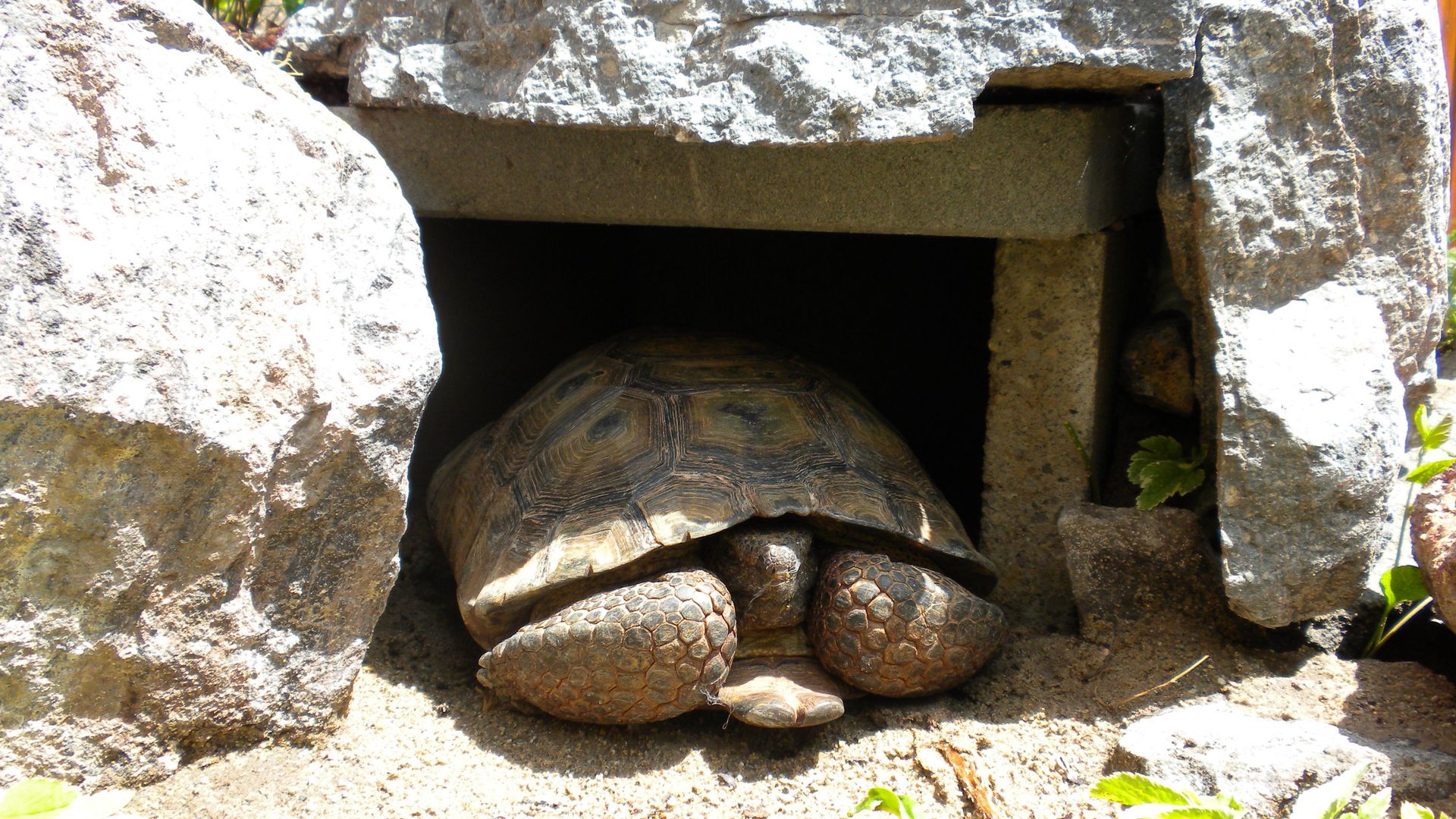
A desert tortoise chills in its burrow. Photo courtesy of the Utah DWR
State wildlife officials are looking for good homes for 15 desert tortoises.
Why it matters: The endangered reptiles can't be returned to the wild once they've been in captivity because of the risk of spreading disease to wild populations, per the state Division of Wildlife Resources.
Behind the scenes: The state usually ends up in possession of the tortoises because:
- Someone illegally removed it from the wild, and it was later found roaming outside of its native range or in an urban area.
- Someone was illegally housing it without state certification.
- A family with a legally adopted tortoise is relocating.
How it works: Submit an application and $10 fee to [email protected] for a chance to adopt.
- Design a tortoise living area per state instructions. A wildlife official will inspect it for a $75 fee.
What they need: At least 150 square feet outdoors, with sun and shade available.
- You need to prepare burrows outside and indoors, where they'll spend about five months of winter hibernating at 50-60°.
- You need to show the adoption committee that you've escape-proofed the yard, removed hazards and have appropriate plants in their area.
Friction points: They live 60-70 years, so plan for the long term.
- They can carry salmonella, so wash your hands.
What they're saying: "They have their own unique personality, they will gladly eat the weeds in your backyard, and they are fairly independent as long as they have shade and food," Alyssa Hoekstra, Utah's native herpetology coordinator said in a prepared statement.
Editor Jessica's thought bubble: Two decades ago, my family adopted a desert tortoise (we named him Tortuga). He eventually went to live with a friend's female tortoise, and they had babies!
- 10/10 would recommend.